
Last updated October 30, 2026
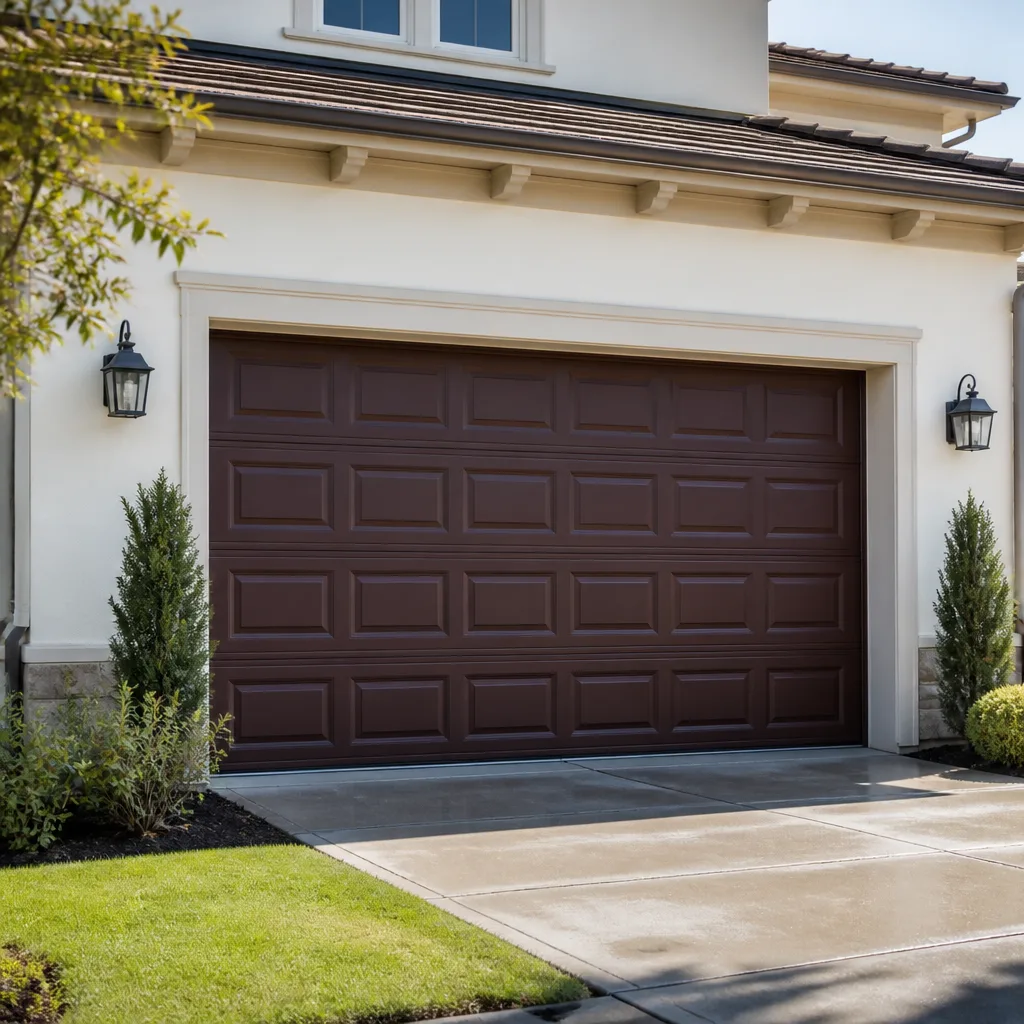 Raised-panel steel
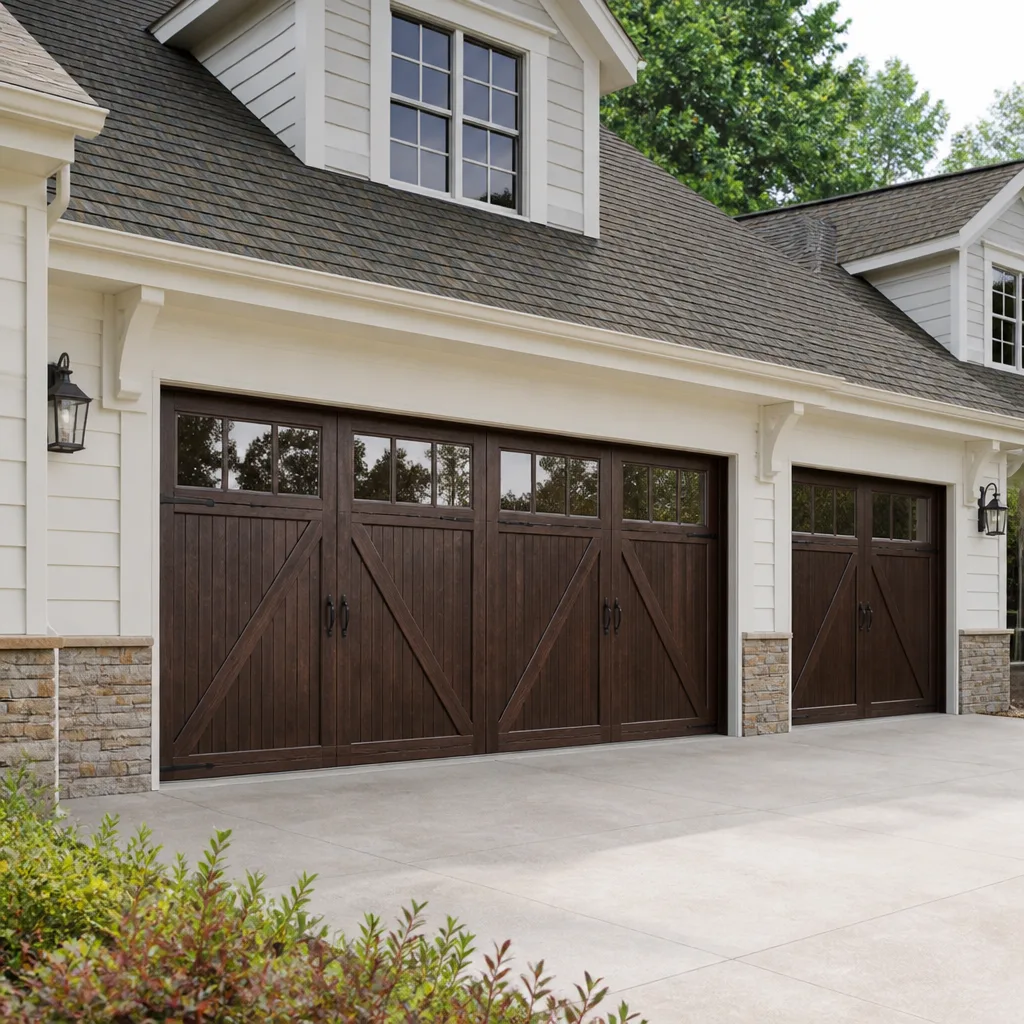 Carriage house
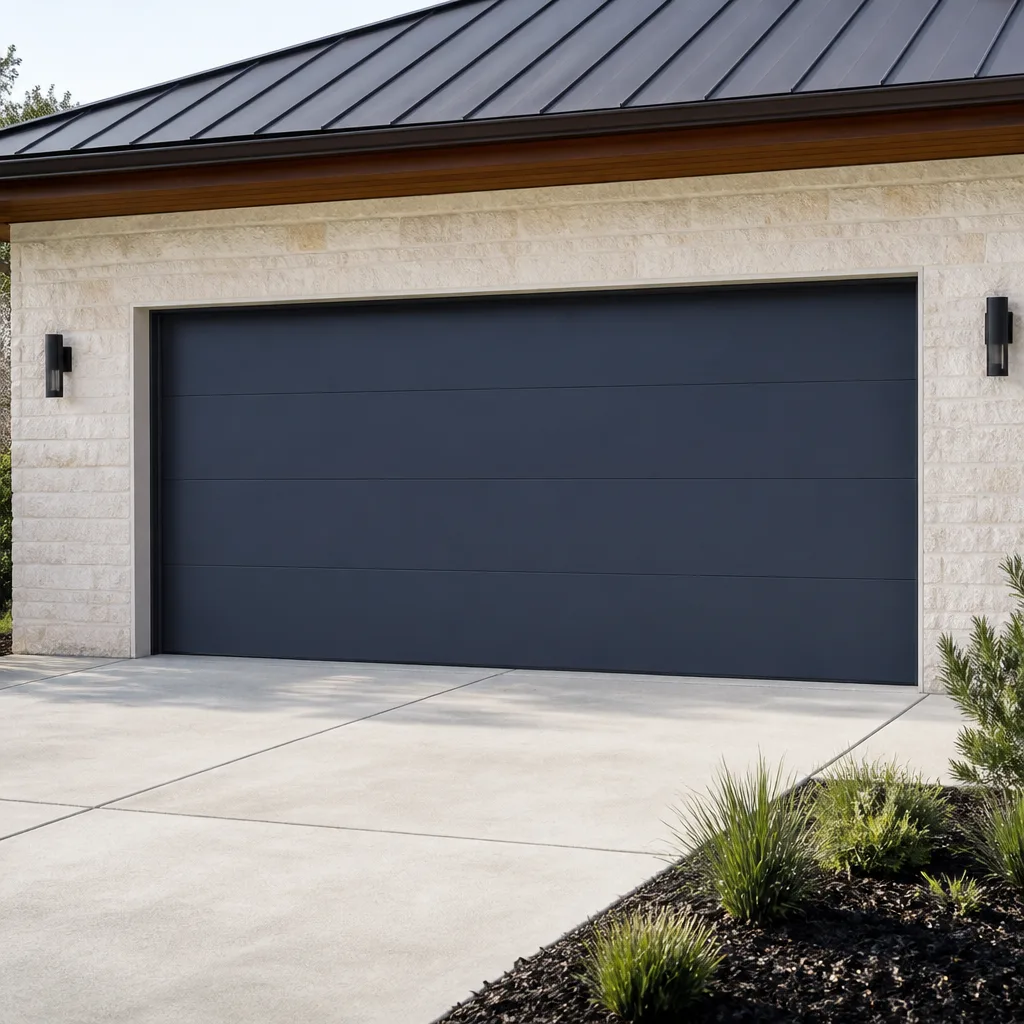 Modern flush
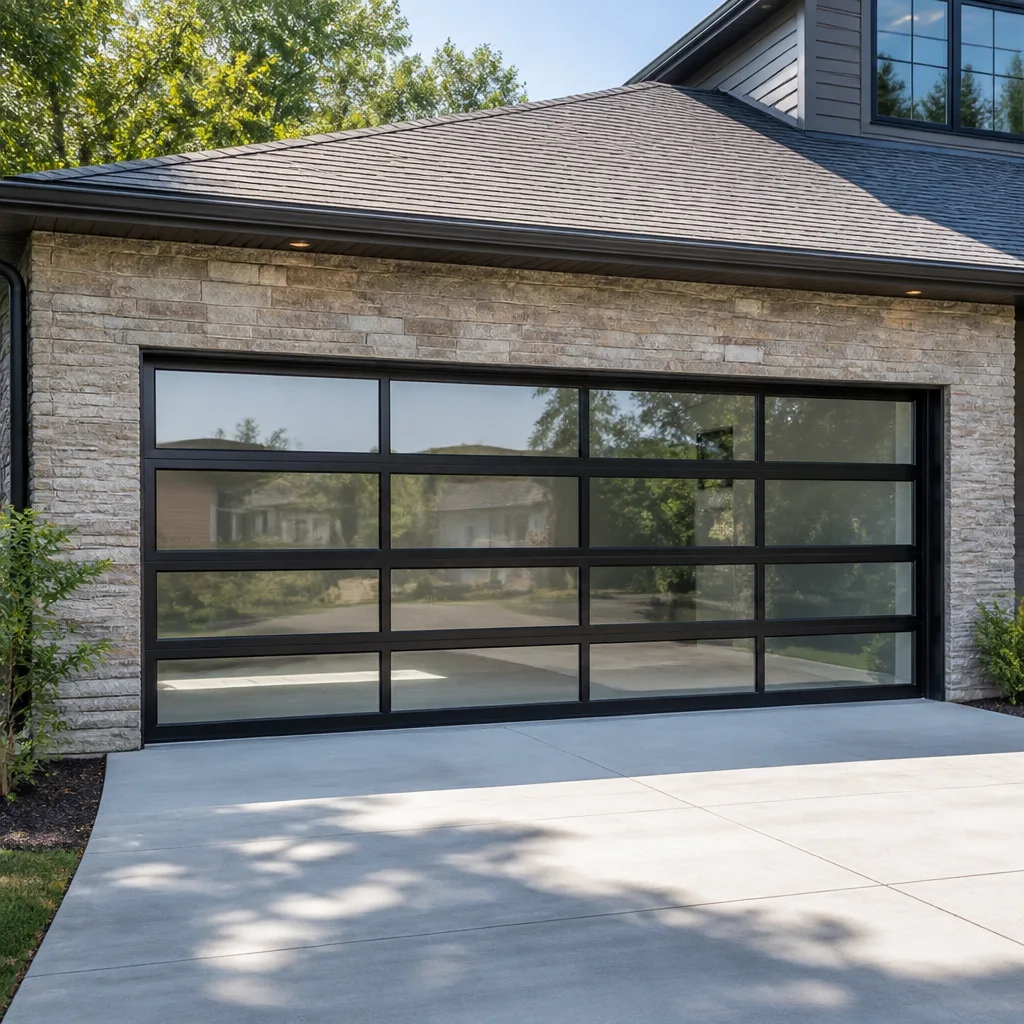 Full-view glass
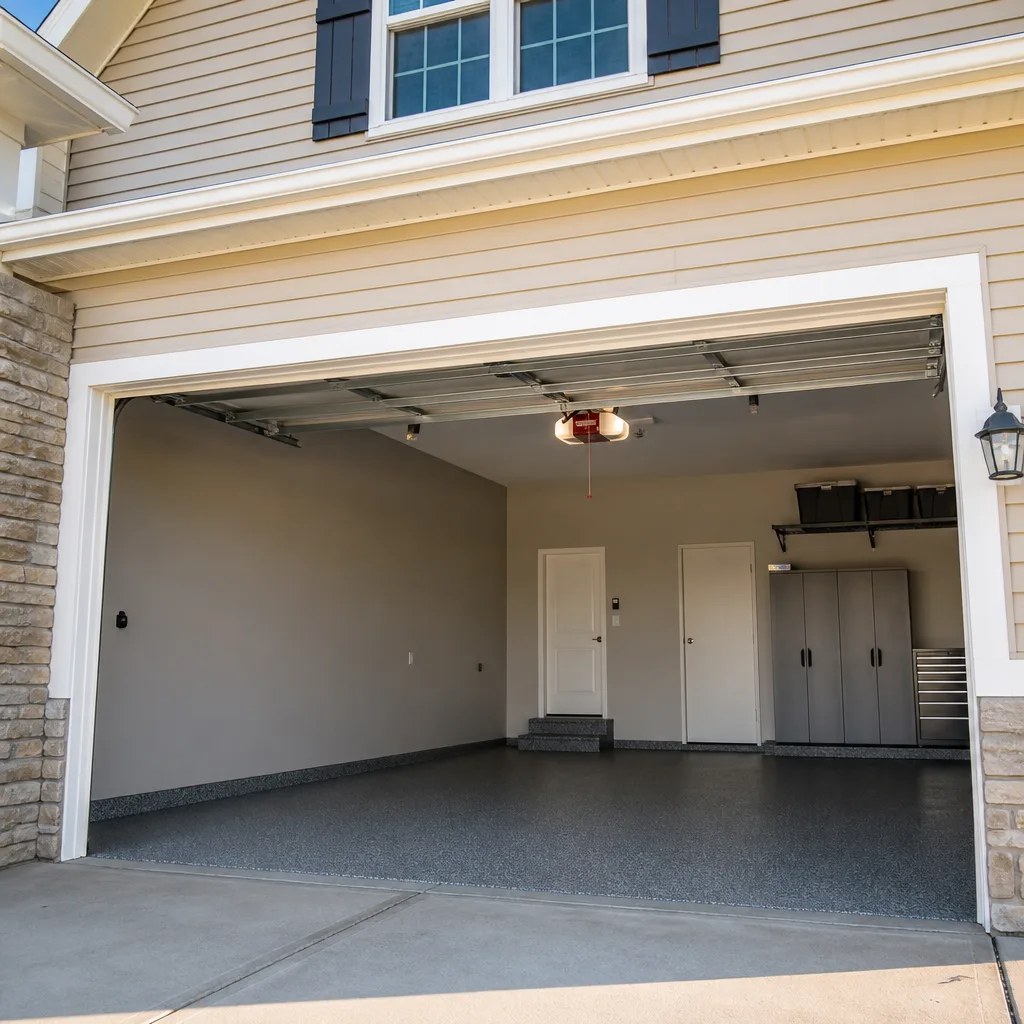 LiftMaster openers
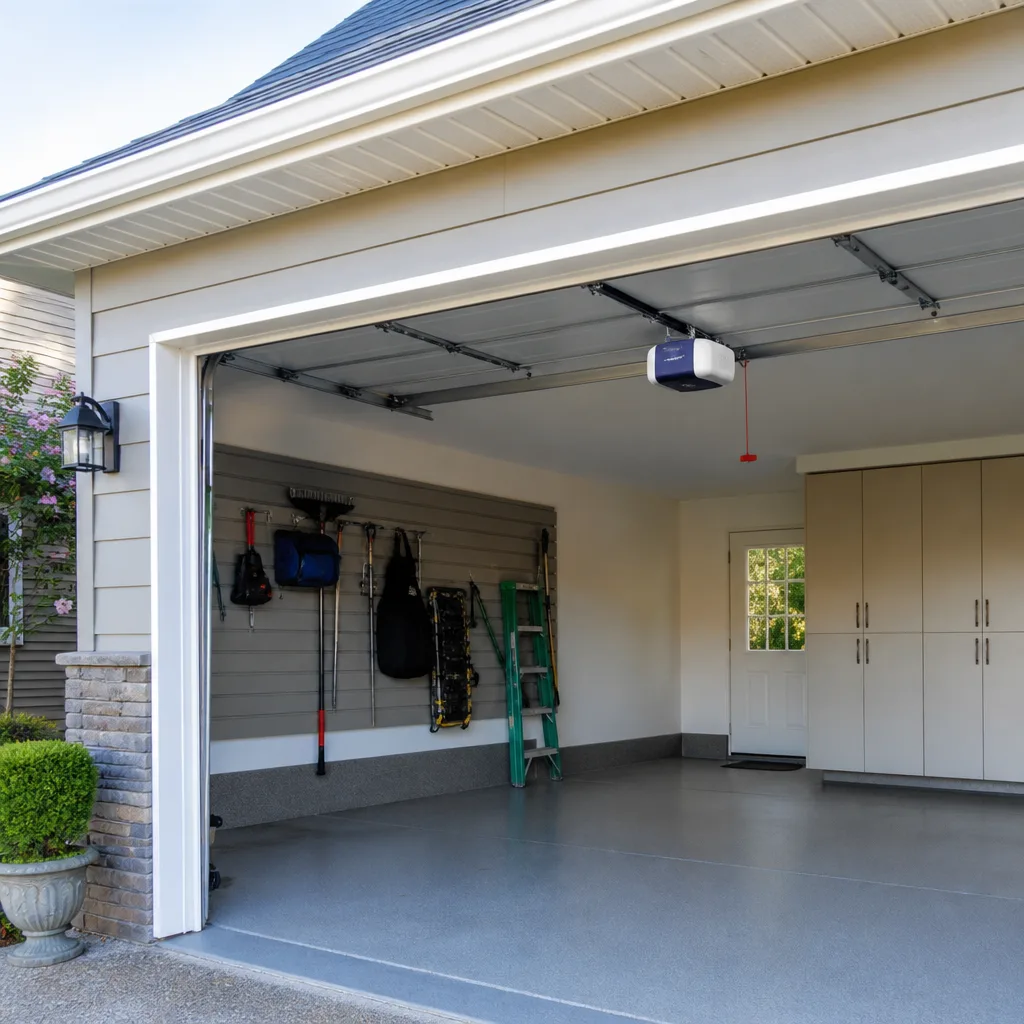 Chamberlain openers
Full 25-point door and opener safety check with every visit - springs, cables, rollers, tracks, and your LiftMaster or Chamberlain opener included
You get a price before we start. It does not change when the truck arrives.
Get your free estimateSeasonal Garage Door Care for San Bernardino: Year-Round Homeowner’s Guide
The Santa Ana winds that sweep through San Bernardino County each fall don’t just carry dust and tumbleweeds. They shove against your garage door with lateral force that most residential doors were never engineered to absorb. The door that folds under that pressure isn’t the one in the best condition. It’s the one with a loose track bracket, a worn roller, or a bottom seal that’s been silently failing since June. In this guide, we’ll walk you through a maintenance calendar built around San Bernardino’s actual weather patterns: two brutal seasons (summer heat and Santa Ana season) and two windows where your effort actually sticks. By the end, you’ll know exactly what to check, when to check it, and which jobs are worth a call to San Bernardino Garage Door Co home.
Quick Answer
Seasonal garage door care in San Bernardino means preparing twice a year: a pre-summer check in April or May for heat and UV damage, and a pre-Santa Ana check in September or October for wind resistance and track integrity. Winter, especially for foothill homes above 2,000 feet, is the best time for spring replacement and major hardware work. Most maintenance takes under 30 minutes per season and prevents the two failure patterns we see most: thermal expansion damage from summer heat and wind-induced track failures from Santa Ana events. For more detail on both, see The Complete Guide to Garage Door in San Bernardino.
Styles & brands we work with
Table of Contents
- Why San Bernardino Weather Beats Up Garage Doors Differently
- Pre-Summer Checklist: April to May
- Summer Heat and Your Garage Door Opener: What Actually Happens
- Santa Ana Season Prep: September to October
- Post-Summer Inspection: October to November
- The Winter Window: December to February
- Elevation Matters: Foothill Homes vs. Valley Homes
- Common Mistakes to Avoid
- When to Call a Professional
- Frequently Asked Questions
- The Bottom Line
Why San Bernardino Weather Beats Up Garage Doors Differently
San Bernardino doesn’t get four textbook seasons. It gets a long, dry heat season, a wind season, and two shoulder windows where maintenance actually holds. That’s not a complaint. It’s a maintenance calendar. The climate here punishes garage door components in specific, predictable ways, and a homeowner who understands those patterns can prevent most failures before they strand a car in the driveway or leave a door half-open overnight.
The dominant factor is heat. Summer temperatures in San Bernardino regularly push past 100°F, and the ambient temperature inside an attached garage can run 15 to 20 degrees hotter than outside air. That puts the interior environment of your garage in the 115 to 120°F range for hours at a stretch, day after day. Springs, cables, rollers, and weatherstripping all respond to that heat differently, and not well. Metal parts expand. Lubricant thins and runs off. Rubber seals bake, harden, and crack. The door you have in October is physically not the same door you had in May, because thermal cycling has changed the tolerances on every moving part.
Then comes the wind. Santa Ana events typically arrive between September and November, with gusts in the San Bernardino area that regularly exceed 40 mph and occasionally hit 60 to 70 mph in the foothill corridors. A garage door is a large, relatively flat surface. A 16-foot-wide door presents roughly 112 square feet of surface area to the wind. At 50 mph, the lateral load on that surface is substantial, and it’s a load the door’s track system was never designed to carry as a primary force. Tracks are meant to guide vertical movement, not resist sideways pressure. When a door folds inward during a Santa Ana event, the failure almost always traces back to a fastener that loosened, a bracket that cracked, or a roller that had been wearing unevenly for months. The wind just found the weak point first.
The good news is that both failure patterns are detectable. They show up as visible wear, unusual sounds, or changes in how the door moves. You don’t need specialized equipment to catch most of them. You need a calendar and a willingness to spend 20 minutes looking at your door four times a year.
Key Takeaways
- San Bernardino’s real maintenance calendar has two prep windows (April and September) and two repair windows (October and December through February).
- Summer heat changes your door’s physical tolerances: metal expands, lubricant fails, rubber seal material hardens and cracks.
- Santa Ana wind failures trace back to pre-existing conditions: loose fasteners, worn rollers, uneven tracks.
- Foothill homes above 2,000 feet experience freeze cycles that valley homes don’t, which affects spring longevity and lubrication choices.
- March through November is repair season. December through February is the smart season for major hardware replacement and new door installation.
Pre-Summer Checklist: April to May
The pre-summer check should happen before temperatures settle into the 90s for good. Late April or early May is the sweet spot in San Bernardino. The goal isn’t to fix everything. It’s to make sure your door enters the heat season with the right lubricant, intact seals, and a balanced spring system that won’t be fighting thermal expansion.
Here’s the step-by-step sequence we recommend, in order:
- Listen to the door. Close it slowly and listen. A door that squeaks, grinds, or rattles during normal operation is telling you something. Before you lubricate anything, identify where the sound is coming from. Squeaks are almost always dry rollers or hinges. Grinding is often a roller with a worn bearing or a track with debris in it. Rattling means something is loose.
- Inspect the weatherstrip. The rubber or vinyl strip along the bottom of the door and the weatherstripping around the frame are your first line of defense against heat intrusion, dust, and pests. In San Bernardino, bottom seals typically last 2 to 3 years before UV exposure and heat make them brittle. Look for cracks, flattened sections, or gaps where the seal no longer contacts the ground evenly. If you can see daylight under a closed door, the seal is done.
- Swap to a heat-stable lubricant. Standard white lithium grease breaks down in sustained high heat. It thins, drips off the moving parts, and leaves them running dry by August. For San Bernardino summers, a synthetic or silicone-based garage door lubricant rated for high temperatures is the better choice. Apply it to rollers (the bearings, not the track), hinges, and the torsion spring. Avoid WD-40. It’s a solvent, not a lubricant, and it actually strips the protective film from metal parts.
- Test the balance. Disconnect the opener by pulling the emergency release cord, then lift the door manually to about waist height. It should stay put. If it falls or rises on its own, the springs are not holding the correct tension. A door that’s out of balance forces the opener motor to work harder all summer, which shortens its life and increases the risk of a failure on the hottest day of the year.
- Check the auto-reverse sensors. Place a rolled-up towel or a 2×4 on the ground under the door and close it. The door should reverse before it makes full contact with the object. Test both the sensor mechanism and the force setting. Sensors drift out of alignment over time, and a sensor that fails silently won’t protect a child or pet from a closing door.
- Tighten visible fasteners. Go around the door with a socket set and check the bolts that hold the tracks to the wall brackets, the brackets to the frame, and the hinges to the door sections. Thermal expansion and normal vibration loosen these over time. A track that shifts 1/8 inch creates a pinch point where rollers bind and wear unevenly.
This is also the right time to make a decision about any repairs you’ve been putting off. A door that’s marginal in April will be failing in August. If you’re in the greater San Bernardino area and the balance test fails or the track looks questionable, this is the moment for Garage Door Repair in San Bernardino before the heat turns a small problem into an emergency.
Summer Heat and Your Garage Door Opener: What Actually Happens
The garage door opener is the component most likely to misbehave in a San Bernardino summer, and the reason is straightforward: heat. Modern openers, including Chamberlain and Genie models, have thermal overload protection built into the motor. When the motor’s internal temperature exceeds a safe threshold, the opener shuts itself off rather than burn out the windings. That’s a protective feature, not a defect. But it can feel like a defect when you come home at 4 p.m. on a 104-degree day and the opener won’t respond.
Here’s what’s actually happening. The opener sits near the ceiling of the garage, where heat collects. On a day when outdoor temperatures hit the high 90s or low 100s, the air temperature at the opener can exceed 120°F. The motor generates additional heat every time it runs. After a cycle or two in those conditions, the thermal cutoff activates. The opener goes dark. It comes back when it cools down, usually after 15 to 30 minutes, but by then you’ve already pulled the manual release cord and wrestled the door open by hand.
There’s no fix for physics. But there are three practical steps that reduce thermal cutout frequency:
- Ventilate the garage. A garage that holds heat all afternoon makes the opener’s job harder. Cracking the side door or adding a vent, even a small one, lowers ambient temperature enough to matter on the hottest days. If you have an insulated garage door from Clopay or Amarr, it’s doing some of this work already, but ventilation still helps.
- Schedule heavy use for cooler hours. If you’re running the door multiple times a day, the motor never gets a chance to shed heat. The worst case is a garage workshop or home gym where the door goes up and down every hour. Not much you can do about that, but if you’re planning a day of loading and unloading, do it in the morning.
- Keep the opener’s force settings correct. An opener that’s fighting a badly balanced door pulls more current, and more current means more heat. This ties back to the pre-summer balance test. A five-minute test in May can prevent a burned-out circuit board in July.
If the opener cuts out and won’t reset even after cooling, or if it trips its GFCI outlet repeatedly, that’s an electrical fault, not thermal protection. Don’t keep resetting the breaker. Call for Garage Door Opener Repair in San Bernardino and have the unit tested properly.
One more San Bernardino-specific note: power quality matters. Summer heat waves strain the grid, and voltage sags are common in the afternoon peak. Modern opener circuit boards are sensitive to undervoltage, which can cause erratic behavior, lost remote programming, or a dead logic board. If your opener acts strangely during a heat wave but works fine at night, line voltage may be the culprit. A whole-home surge protector at the panel is the cheapest insurance against this pattern.
Santa Ana Season Prep: September to October
Santa Ana winds are the most underrated threat to garage doors in San Bernardino County. People board up windows, bring in patio furniture, and forget about the largest movable surface on the house. The wind load on a 16-foot garage door during a 50 mph gust is significant, and it’s not a load the track system wants to carry. Most doors that fail during Santa Ana events fail because a pre-existing condition was already weakening the structure. The wind just finished the job.
Here’s the preparation sequence we recommend for late September, before the first strong event:
- Check every track fastener. The vertical and horizontal tracks are held to the wall by brackets and lag bolts. If any of them are loose, the track can flex under wind load, and a flexing track is a derailed door waiting to happen. Tighten everything you can reach with a socket. If a lag bolt spins in the hole, the wood behind it is stripped, and that’s a repair call, not a DIY fix.
- Inspect the bottom seal. A bottom seal that’s intact doesn’t just keep dust out. It keeps the door from chattering against the concrete in a wind gust. A door that moves in its tracks, even slightly, transfers that movement into the hinges and rollers. Over the course of a multi-day Santa Ana event, that vibration is cumulative. A good seal dampens it.
- Test the emergency release. Pull the red cord and open and close the door manually a few times. You’re checking two things here. First, that the release mechanism works smoothly without sticking. Second, that you can actually move the door by hand if the power goes out mid-event. Santa Ana winds knock down power lines all over San Bernardino County, and a dead opener means a manual door. Know how to operate yours before you need to.
- Look at the rollers. Rollers worn down on one side allow the door to shift laterally in the track during wind gusts. This is the most common failure point we see after Santa Ana events: a roller that’s been wearing unevenly for a year finally allows the door to jump the track. Nylon rollers with sealed bearings last longer in San Bernardino’s dry, dusty climate than steel rollers, which grind and wear the track over time. If you see flat spots or visible play in a roller, replace the set.
- Clear debris from the door’s path. This sounds obvious, but during Santa Ana season, the wind delivers a constant supply of leaves, palm fronds, and trash into garage door tracks. Debris in the bottom track interferes with the rollers and can wedge the door at an angle. A door that stops unevenly puts torque on the tracks, and the next gust is the one that bends something.
- Consider a strut upgrade. Many older doors in San Bernardino were installed without horizontal reinforcement struts. These are steel channels bolted across the inside of each door section. They add significant stiffness against wind pressure. If your door flexes visibly when you push on it from the inside during a wind event, or if it’s more than 15 years old, a strut retrofit is the single most effective wind-hardening improvement you can make. It’s a job for a garage door specialist.
Here’s the thing about Santa Ana prep: every item on this list takes five to ten minutes. The whole sequence is under an hour. But the difference between a door that rides out a wind event and a door that folds in the middle of one comes down to whether someone checked the fasteners and rollers before the first red flag warning.
Post-Summer Inspection: October to November
By late October, your garage door has survived five months of heat, UV exposure, and thermal cycling. That’s the test. The post-summer inspection is where you find the damage that heat season left behind, ideally before Santa Ana season finishes the job. The two main things you’re looking for are UV degradation and cable fatigue.
UV damage in San Bernardino is real, and it shows up in predictable places. Door panels fade, especially on south-facing and west-facing doors that get direct afternoon sun. That fading is cosmetic. The functional damage is in the seals and weatherstripping, which don’t just fade – they harden, shrink, and crack. A bottom seal that was supple in April will feel like brittle plastic by October. Run your fingers along it. If it’s stiff to the touch or if you see hairline cracks, it’s done. The same applies to the vinyl trim around the door frame. Hardened weatherstripping doesn’t seal, and in a city where dust is a constant, a failed seal means a dirty garage and a door that’s more vulnerable to wind intrusion.
Cables deserve specific attention after a long hot season. The cables on a torsion spring system cycle through load and release with every door operation. Heat accelerates metal fatigue in the cable strands. Look for any fraying, especially near the bottom brackets where the cable attaches to the door. A single frayed strand is a warning sign. A cable that’s visibly unraveling is a failure that will happen soon, and when a cable fails under load, the door drops unevenly, which stresses the tracks and can bend them. If you see a frayed cable, this is the time to act. Do not attempt to replace a garage door cable yourself. The spring is under enough tension to cause serious injury or death if mishandled. This is a job for a trained professional with the right tools and experience. For a full breakdown of safe repair practices, read The Complete Garage Door Repair Guide for San Bernardino Homeowners.
Also check the springs themselves. Torsion springs last 10,000 to 15,000 cycles, which translates to 8 to 12 years for most homeowners in San Bernardino. If you’re in that range and the door has been getting heavier to lift or the opener has been straining, the spring is telling you it’s near the end. A broken spring in December is not a fun way to spend a Saturday. A planned spring replacement in the mild months is.
Finally, take a step back and go through this mental checklist: Does the door close evenly? Does it sit flush against the ground with no gaps? Do the hinges look straight? Does the door make any sound it didn’t make in May? If the answer to any of those questions is no, you have a repair to schedule.
The Winter Window: December to February
Here’s the counterintuitive advice that most San Bernardino homeowners never get: winter is the best time for garage door replacement and major spring work. Not sure which door to choose? Start with Choosing the Right Garage Door Brand: A Buyer’s Guide for San Bernardino. Not because the weather is unpleasant enough to demand it, but because it’s the mildest stretch of the year, which makes it the window where the work is easiest, safest, and most precise.
Torsion springs are rated and installed based on door weight, drum size, and cycle count. In summer, high ambient temperatures change the effective tension in the spring. A spring wound in 100-degree heat will settle differently once temperatures drop. That’s a minor variable in the grand scheme, but it’s a variable. Install a spring during San Bernardino’s winter, when the door is at its most dimensionally stable, and you get the most consistent balance across the entire year that follows.
The same logic applies to full door installation. A new door installed in winter has its seals, hinges, and tracks set at the cool-weather dimensions. As summer heat arrives, everything expands uniformly. If you install in the middle of a heat wave, the metal is already expanded, and you’re more likely to end up with binding or rattling when things contract in November. Winter installation is simply a better starting point.
There’s also the practical matter of contractor availability. Most homeowners in San Bernardino think about their garage door when it breaks, which is statistically most common in summer and during Santa Ana season. By December, the emergency calls slow down. That means shorter wait times, more scheduling flexibility, and more time for the installer to do unhurried, precise work. The same logic applies to planning a Garage Door Installation in San Bernardino. If a new door is on your five-year horizon, book it for a winter month and you’ll get a better experience.
For rental property owners and landlords managing multiple units across San Bernardino, winter is the window to address deferred maintenance across a portfolio. Walk every unit, check every spring and cable, and batch the repairs. You’ll pay less for bundled winter work than for peak-season emergency calls, and your tenants won’t be the ones calling you at 6 a.m. when a door won’t open in July.
Elevation Matters: Foothill Homes vs. Valley Homes
San Bernardino sprawls across a significant elevation range. The valley floor sits around 1,000 to 1,300 feet. The foothill neighborhoods – think the streets running up toward the San Bernardino National Forest and the communities above the 210 corridor – climb to 2,000 feet and beyond. That elevation difference changes the maintenance calculus in ways that matter for garage door hardware.
The key variable is temperature. Foothill homes above 2,000 feet routinely experience winter nights that drop below freezing, especially in January and February. Valley homes rarely do. A freeze-thaw cycle is hard on metal components for the same reason it’s hard on roads: water in microscopic gaps freezes, expands, and widens the gap. For a garage door, the vulnerable points are the torsion spring, the cable ends, and any hardware that’s already carrying small cracks or stress fractures. A spring that would last another two years in the valley might fail a season earlier at elevation because the freeze cycles accelerate fatigue.
Lubrication also behaves differently at elevation. Grease and synthetic lubricants thicken in cold weather. A door that moves freely at 3 p.m. in a 60-degree foothill afternoon may be noticeably sluggish at 6 a.m. when it’s 28 degrees. For foothill homeowners, a low-temperature-rated synthetic lubricant is the right choice for winter, applied in early December. It flows well when cold and doesn’t contribute to the stiffness that makes openers work harder during cold snaps.
There’s also a wind consideration. Foothill homes sit in the canyons and slopes where Santa Ana winds accelerate. The same wind event that produces 50 mph gusts in downtown San Bernardino can produce 70 mph gusts in the foothill canyons where the terrain funnels the flow. Every point in the Santa Ana prep section applies doubly if your home is above 2,000 feet and sitting on a slope that faces the wind. In our experience, the doors that need structural reinforcement after wind events are disproportionately at elevation.
If you live in a foothill neighborhood and you haven’t had your spring and cable system inspected in the past two years, the winter window is the time to do it. The pre-freeze inspection catches small problems before the freeze cycles turn them into failures.
Common Mistakes to Avoid
These are the patterns we see repeatedly across San Bernardino, and they’re almost all preventable. Avoid these and you’ve solved 90% of the seasonal maintenance equation.
- Using WD-40 as a lubricant. It’s the most common garage door mistake in America, and San Bernardino’s heat makes it worse. WD-40 is a solvent and water displacer. It cleans, then it evaporates, leaving metal parts drier than they were before. For rollers, hinges, and springs, use a proper garage door lubricant that stays put in heat.
- Ignoring the balance test. A door that’s out of balance doesn’t just strain the opener. It distributes load unevenly across the spring system, which accelerates fatigue and shortens spring life. The fix is often a simple spring adjustment, but the longer it’s ignored, the more expensive the eventual repair.
- Waiting for the door to make a noise before doing anything. By the time a door is grinding or squealing, the wear has already happened. The maintenance calendar exists to catch problems before they announce themselves. A 20-minute seasonal check is cheaper than the repair it prevents.
- Assuming a new door means no maintenance. A brand-new Clopay or Amarr door still has moving parts, and those parts still wear. New doors need the same seasonal attention as old ones, just with a longer runway before the first repair. Skipping year one and year two maintenance is how a seven-year door becomes a five-year door.
- Testing the wind resistance of a door by pushing on it. When a homeowner shoves the door from the inside to see if it flexes, they’re applying a point load that doesn’t reflect how wind actually loads the door. More importantly, they can knock a marginal roller out of the track. If you want to assess wind resistance, check the fasteners and rollers, not the flex.
- Replacing one roller at a time. Rollers wear as a set. When one fails, the others aren’t far behind. Replacing a single roller fixes the immediate symptom but leaves you chasing failures every few months. Replace the full set and reset the clock.
- Doing spring work without the right tools. Torsion springs are under extreme tension. The winding bars, the knowledge of how to release that tension safely, and the experience to know when a spring is too far gone to adjust – these are not things you learn from a YouTube video. This isn’t a gatekeeping statement. It’s a safety statement. The most common serious garage door injury is a torsion spring that releases during an amateur repair. Call a professional.
When to Call a Professional
Most seasonal maintenance is DIY-friendly, but some situations call for a trained hand. A frayed cable is a sign of imminent failure, and cable replacement is not a safe DIY project. A torsion spring that’s broken or showing visible gaps between coils requires immediate attention from someone who has the right winding tools and knows how to handle the release sequence. A door that’s jumped its track, a track that’s bent from a wind event, or a door that won’t stay balanced after a manual adjustment – these all point to structural issues that get worse, not better, without proper correction.
If you’re in the San Bernardino area and you’ve found any of these conditions during a seasonal check, don’t wait for the failure. San Bernardino Garage Door Co offers free estimates in San Bernardino, and we work on the brands you already own – LiftMaster, Chamberlain, Genie, Clopay, Amarr, Wayne Dalton, Craftsman, and Raynor. Garage doors are all we do. Call (855) 763-8905 and we’ll assess the problem honestly and give you a clear picture of what needs doing, from panel to opener to spring.
Frequently Asked Questions
Twice a year – once in late April before summer heat sets in, and once in early December before the coldest stretch. Use a heat-stable synthetic lubricant, not WD-40. Focus on the roller bearings, hinge joints, and the torsion spring. In San Bernardino’s dusty climate, wipe down the parts with a dry cloth before applying fresh lubricant so you’re not trapping grit in the grease.
It’s likely the thermal overload protection. In San Bernardino summers, the temperature at the opener (near the garage ceiling) can exceed 120°F, and the motor shuts itself off before it overheats. Let it cool for 20 to 30 minutes and it should reset. If it doesn’t, or if it trips a GFCI outlet repeatedly, the problem is electrical. Call (855) 763-8905 for a diagnosis.
Yes, especially doors that already have loose track fasteners, worn rollers, or a failing bottom seal. A 50 mph gust against a 16-foot door creates substantial lateral force that the track system isn’t designed to resist. Doors with existing weaknesses fold first. The preventive check is to tighten fasteners and inspect rollers before the first major wind event of fall in San Bernardino.
Winter, specifically December through February. Spring tension is affected by temperature, and the mild, stable winter temperatures in San Bernardino allow for the most accurate spring winding and door balancing. It’s also when garage door specialists have the most scheduling flexibility. If your spring is more than 8 years old and showing gaps or rust, plan the replacement for winter.
Yes. Homes above 2,000 feet experience winter freeze-thaw cycles that valley homes don’t, which accelerates metal fatigue in springs and cables. Foothill homes also face stronger Santa Ana winds due to terrain funneling. If you’re at elevation, add a December inspection to your calendar and consider low-temperature-rated lubricant for winter.
DIY seasonal maintenance costs under $30 per year for lubricant, and most checks take 20 to 30 minutes. If a professional inspection finds something that needs fixing, repair costs vary widely by the component. We quote every repair before starting work, and the price you’re quoted is the price you pay. Call (855) 763-8905 for an exact quote – estimates are free.
The Bottom Line
San Bernardino’s garage door calendar is built around two prep windows and two repair windows. Spend 30 minutes in April preparing for heat season, another 30 minutes in September preparing for Santa Ana season, and you’ve eliminated most of the surprises. Use the October inspection to catch heat damage before wind season exploits it. And if you’re planning spring replacement, cable work, or a full door installation, December through February is the smartest window for the work. The payoff is a door that opens and closes reliably all year, in every neighborhood from the valley floor to the foothills above 2,000 feet, without the 6 a.m. emergency calls that could have been prevented months earlier. For more guides & resources, visit our blog.
Written by the team at San Bernardino Garage Door Co, serving San Bernardino since 2016.
If your door needs attention and you’d rather leave it to specialists who work on garage doors exclusively, call (855) 763-8905 for a free estimate. We’ll tell you what’s wrong, what it costs, and what you can safely ignore. The right repair, not just the fast one.
See the difference
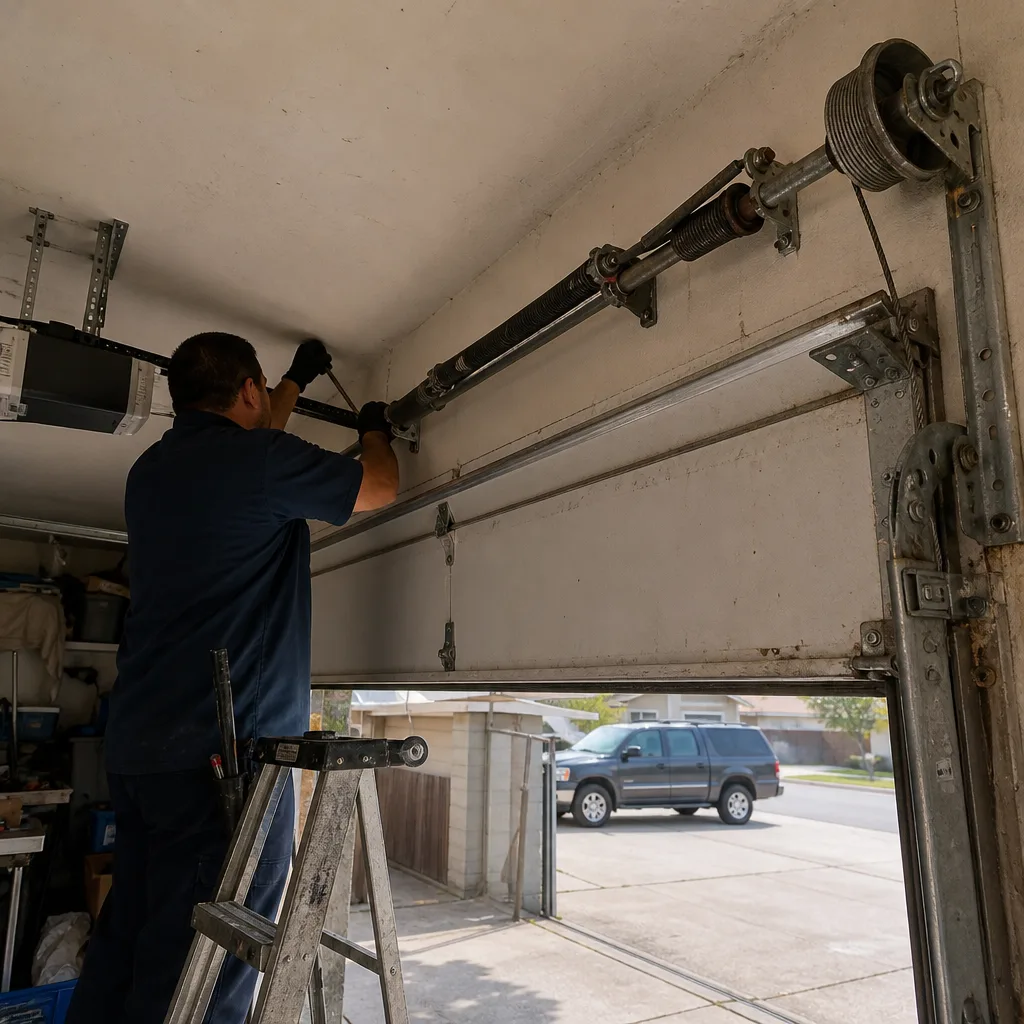 Before
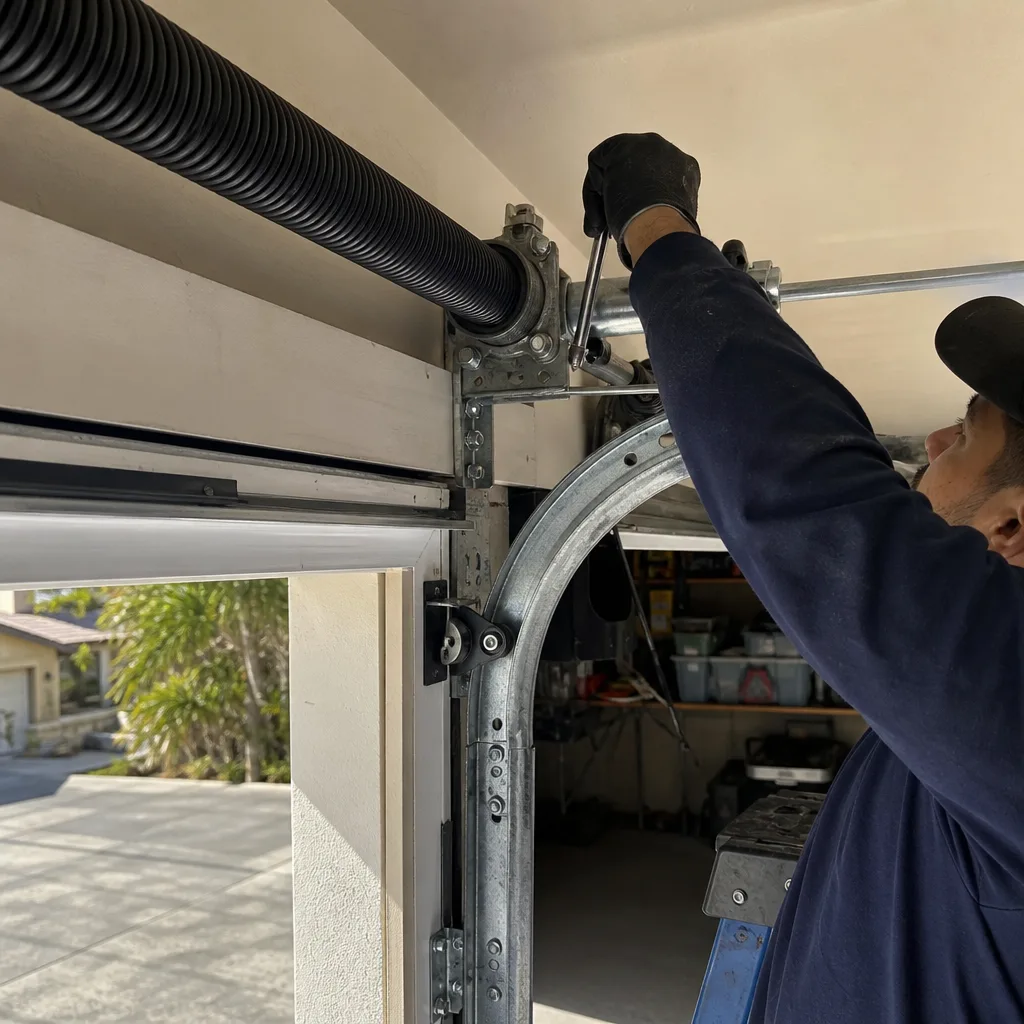 After
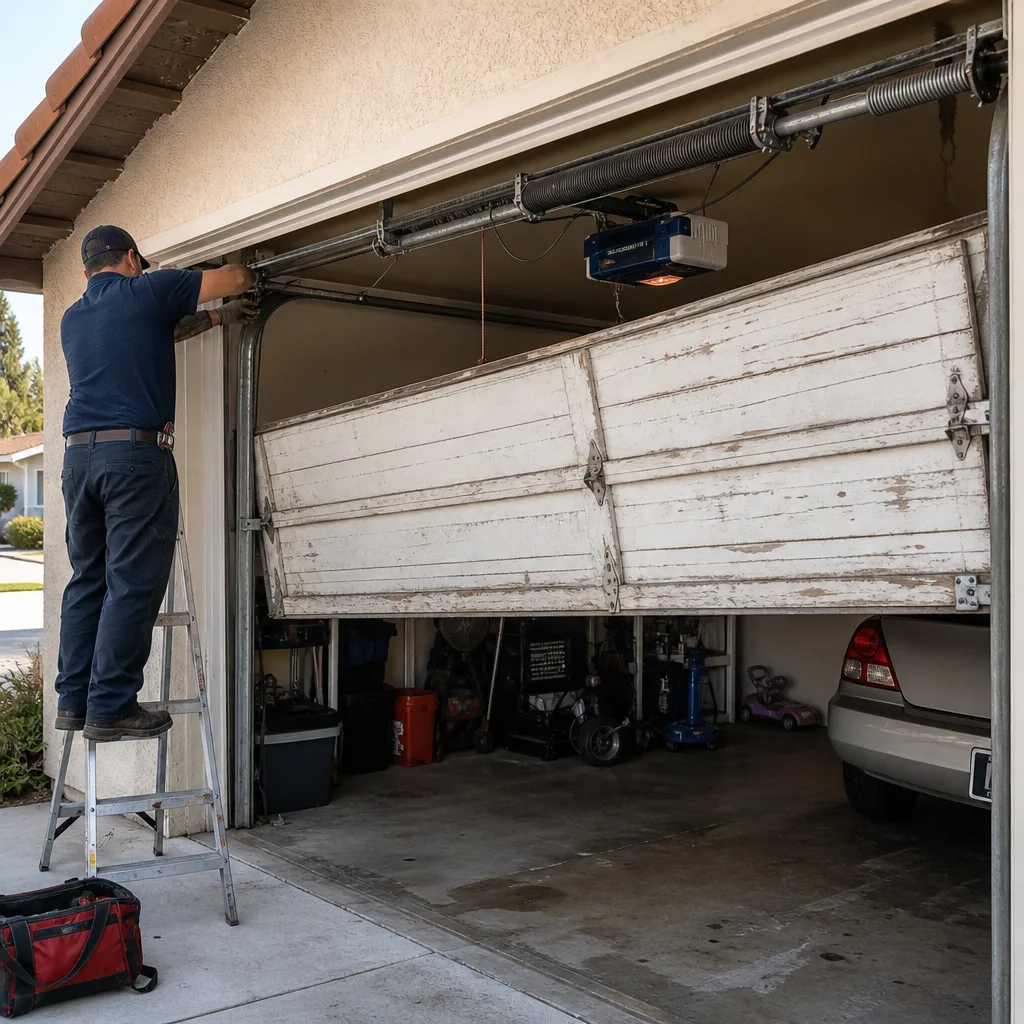 Before
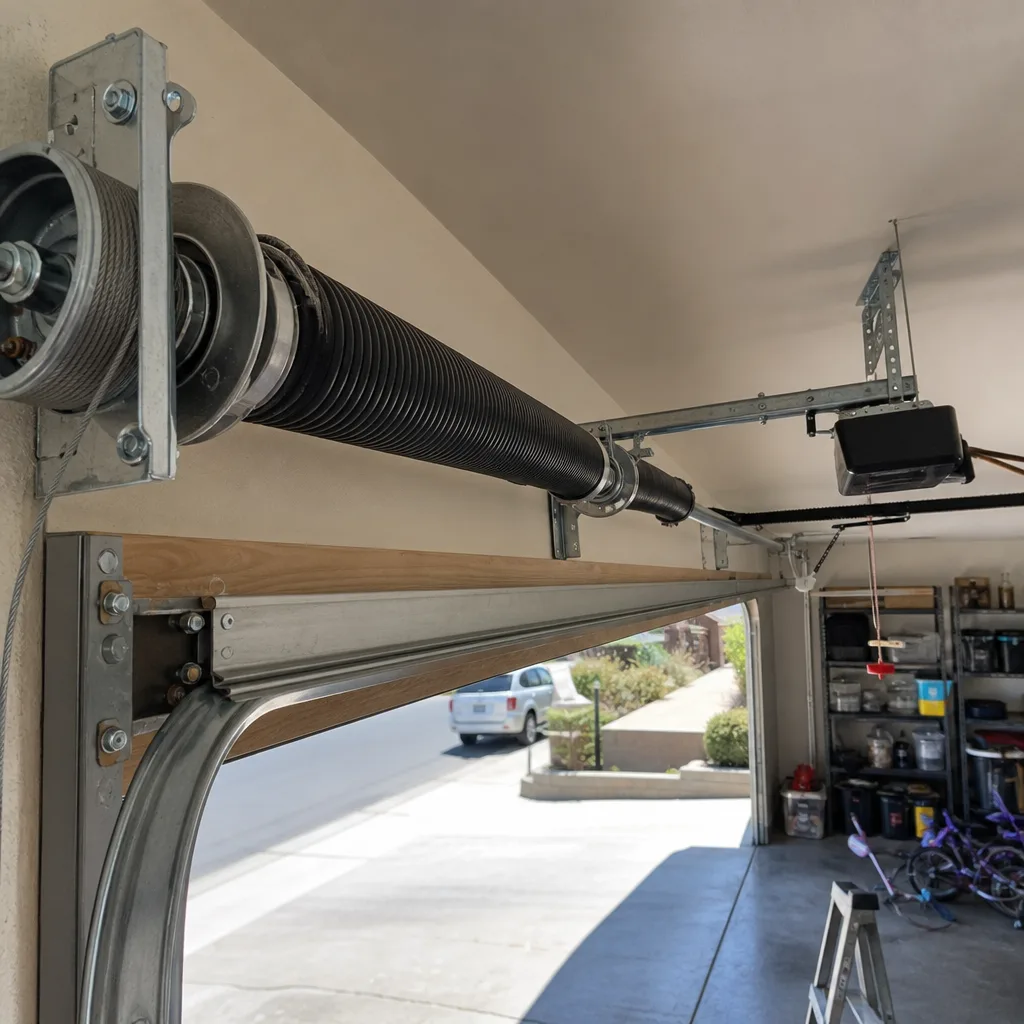 After
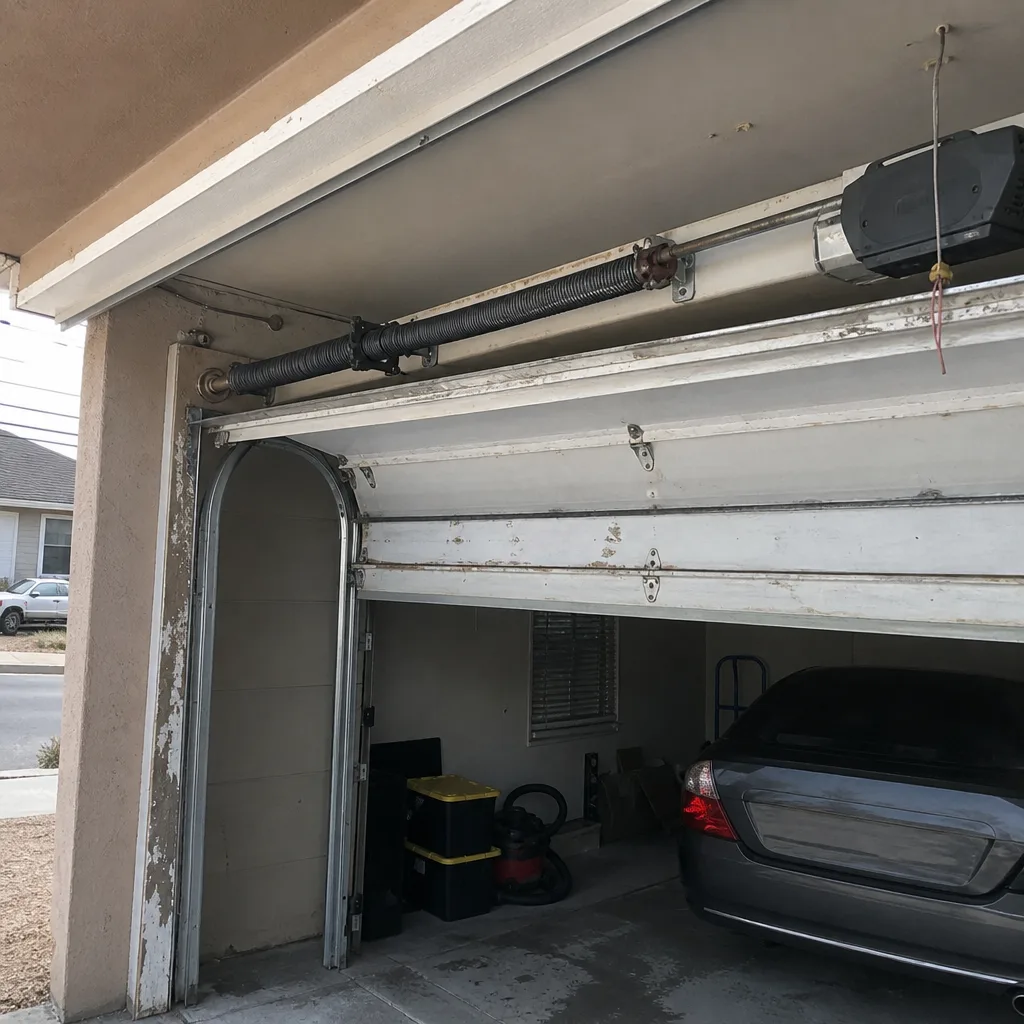 Before
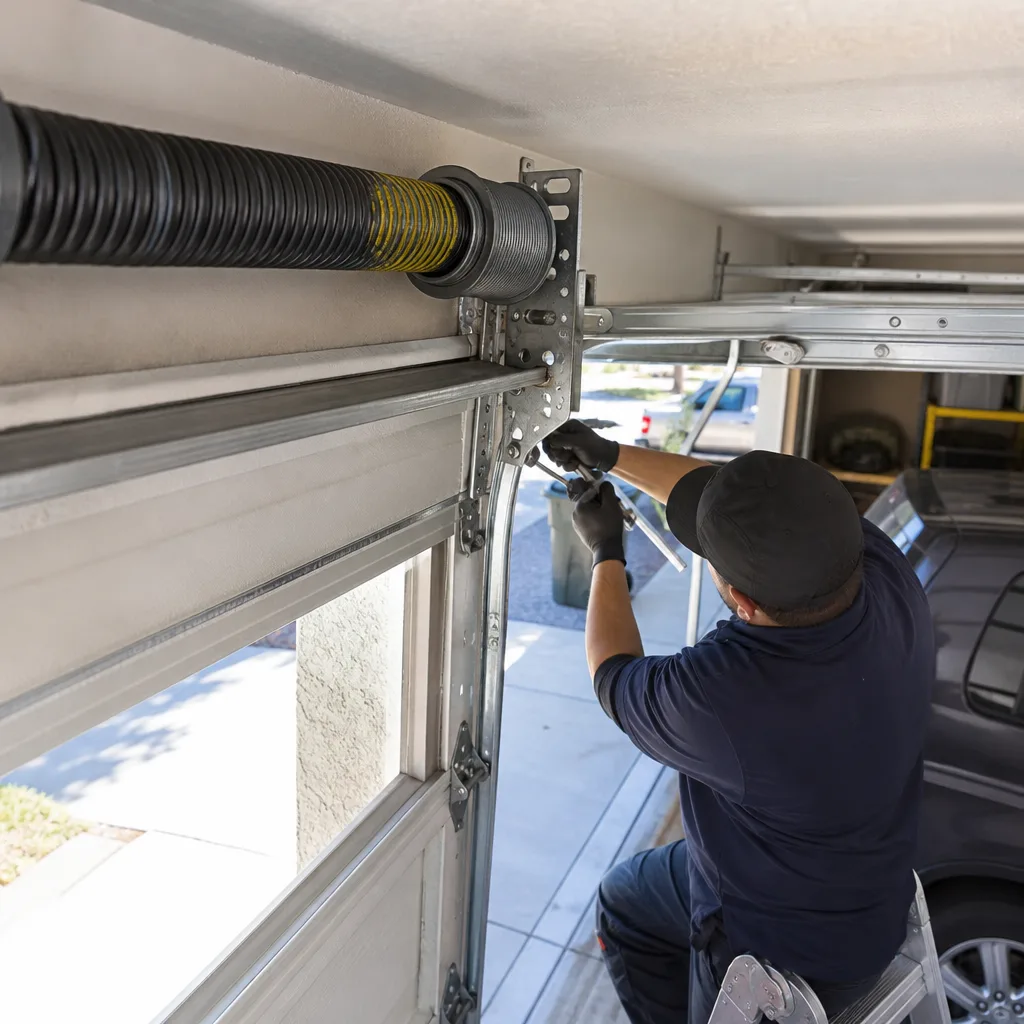 After