
Last updated October 30, 2026
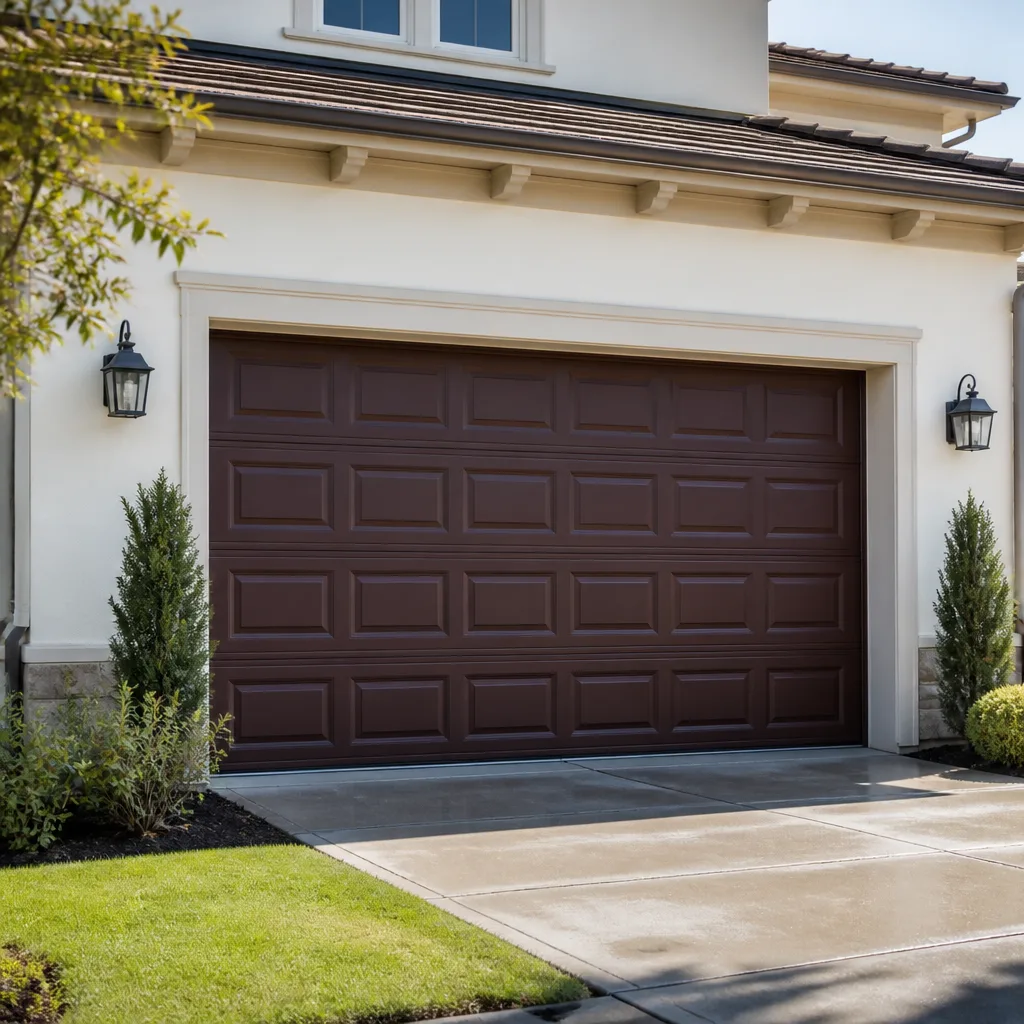 Raised-panel steel
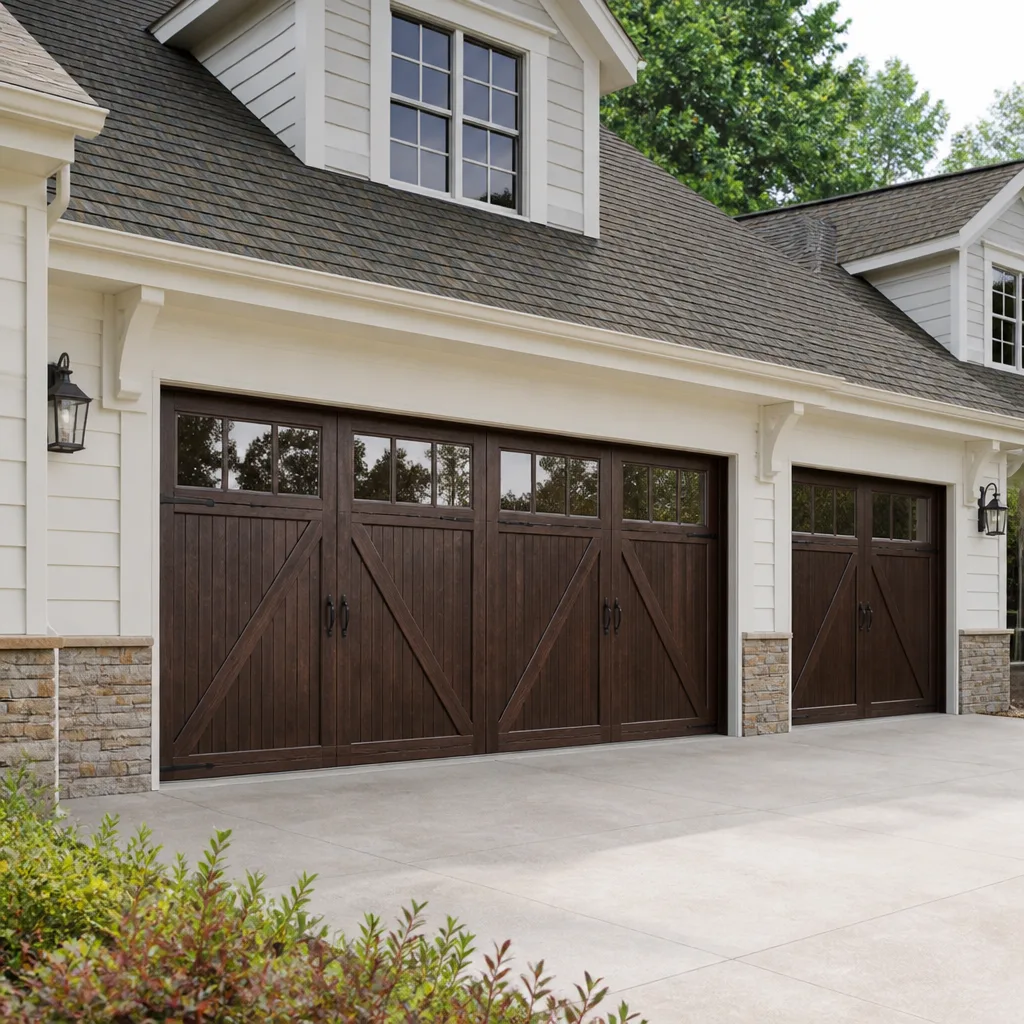 Carriage house
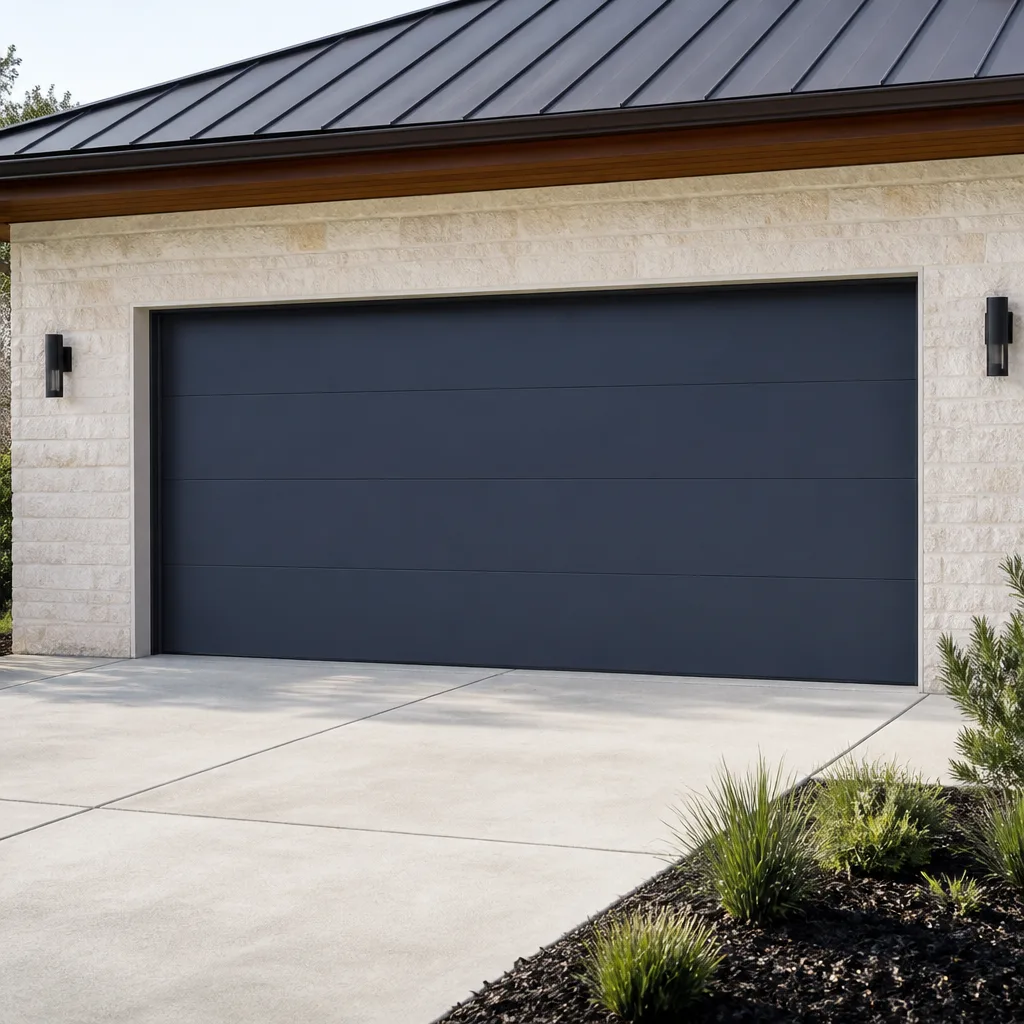 Modern flush
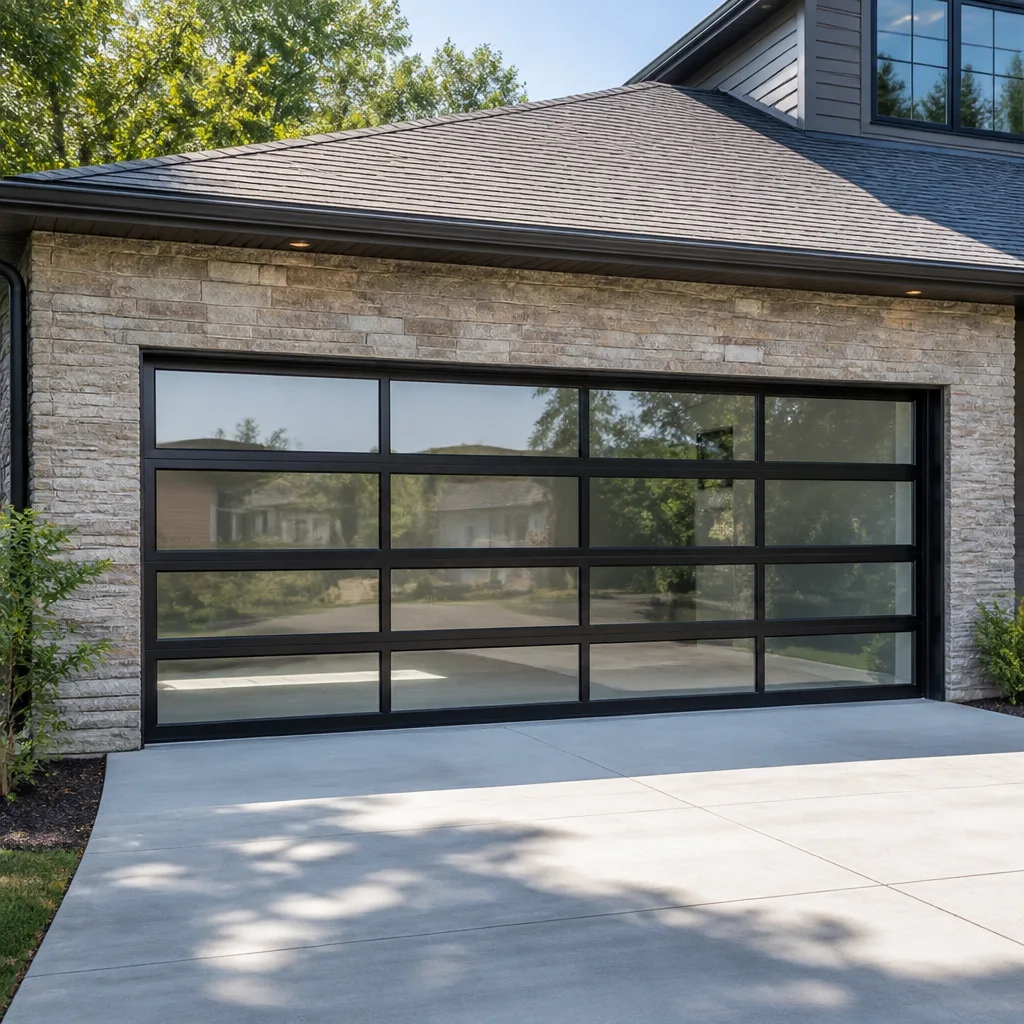 Full-view glass
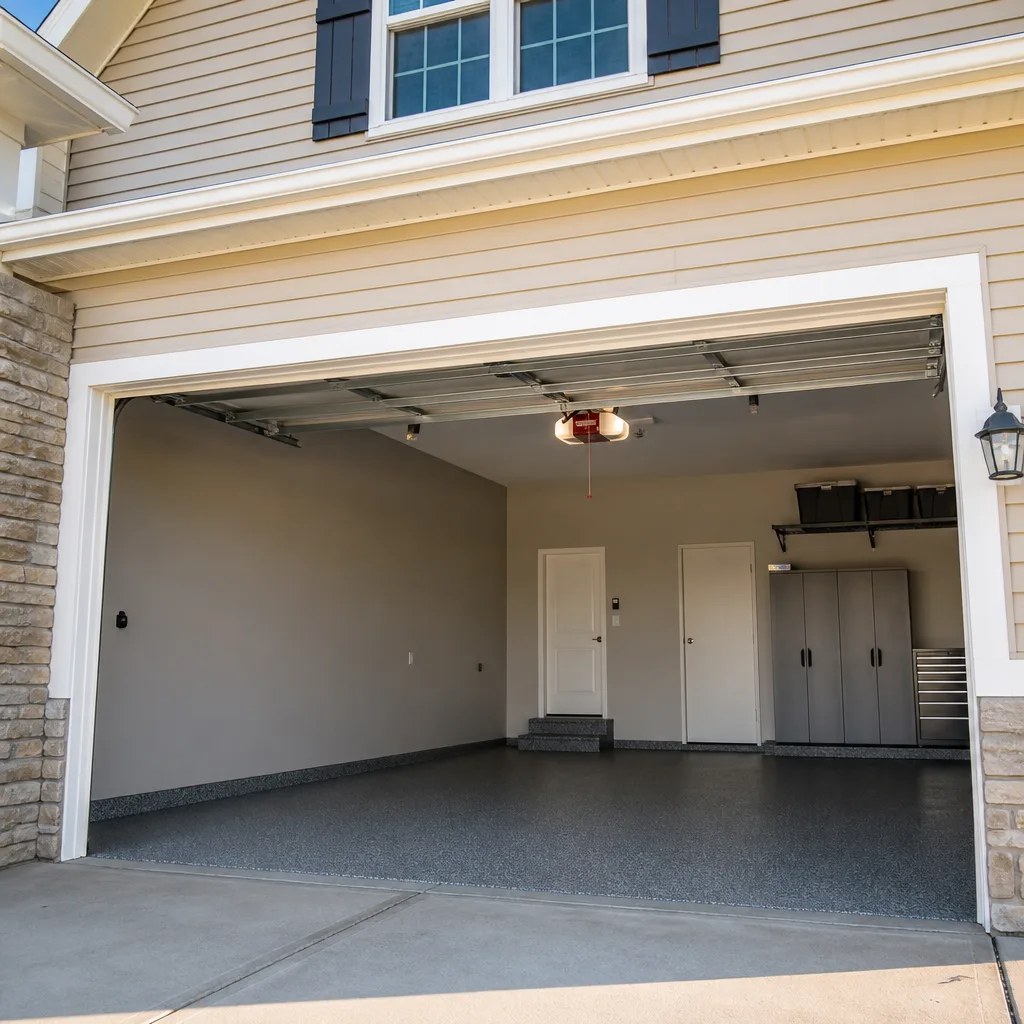 LiftMaster openers
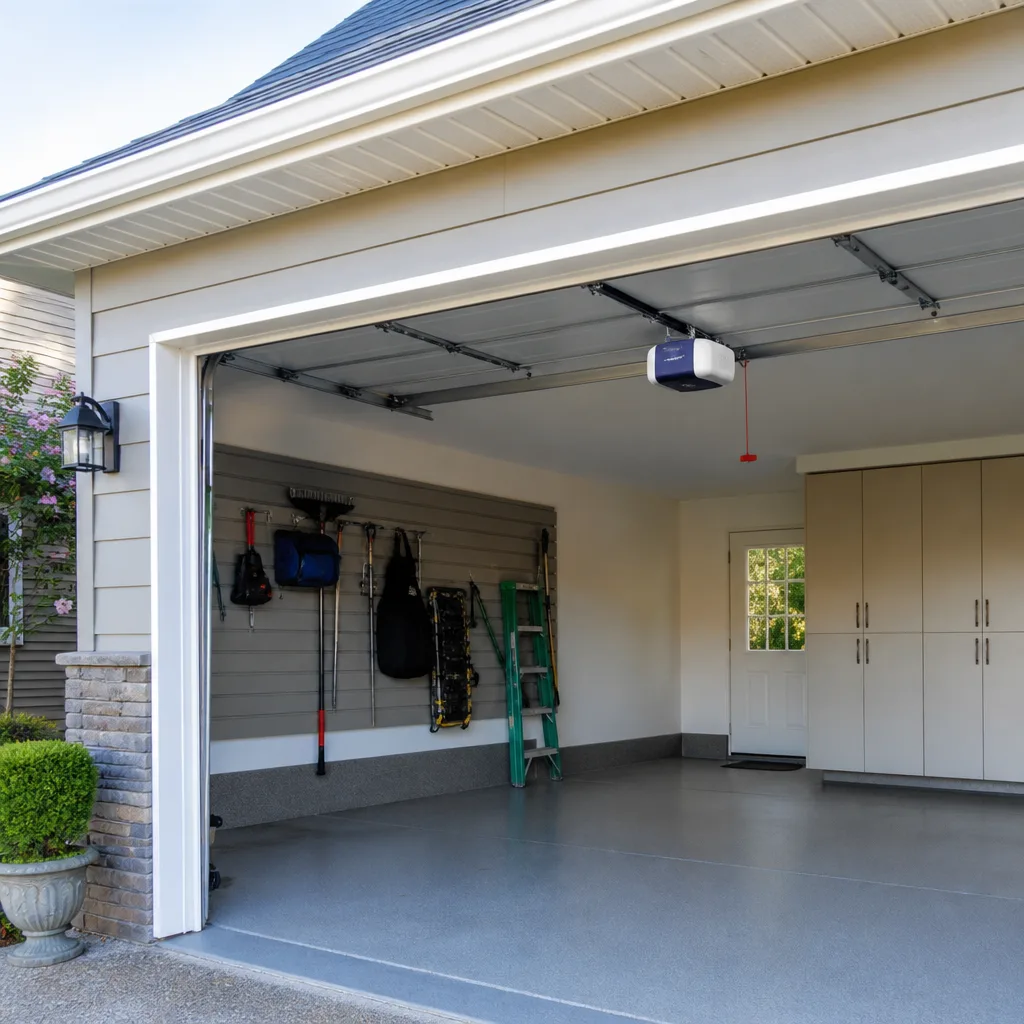 Chamberlain openers
Full 25-point door and opener safety check with every visit - springs, cables, rollers, tracks, and your LiftMaster or Chamberlain opener included
You get a price before we start. It does not change when the truck arrives.
Get your free estimateThe Complete Garage Door Repair Guide for San Bernardino Homeowners
Inland Empire summer temperatures regularly push past 105°F, and that sustained heat degrades torsion spring grease and nylon rollers at roughly twice the rate manufacturers test for in moderate climates. San Bernardino homeowners don’t just deal with heat either. Santa Ana winds carry fine desert dust into every track, hinge, and sensor eye, while winter nights dip cold enough to stiffen lubricants and strain opener gears. This guide walks you through which components fail first in this specific climate, how to spot trouble before it strands your car in the driveway, and what a realistic repair looks like from first symptom to finished job. For The Complete Guide to Garage Door in San Bernardino, see our detailed resource. If you own a home in San Bernardino, your garage door works harder than the manufacturer ever planned for.
Quick Answer
Our Garage Door Repair services in San Bernardino typically cover one of three things: a broken spring, a misaligned or worn track, or an opener that’s lost its calibration. Most spring and roller repairs are completed same-day by a specialist, while full opener replacements usually take one to two hours once parts are in hand. The single most important step a homeowner can take is catching a failing spring or fraying cable early, because that’s the difference between a scheduled repair and a door that won’t open at 7:00 a.m. on a workday.
Styles & brands we work with
Table of Contents
- Why the San Bernardino Climate Wears Garage Doors Faster
- The Five Most Common Garage Door Repairs in San Bernardino
- How to Spot a Spring That’s About to Fail
- The Brands Most Often Installed in San Bernardino Tract Housing
- A Seasonal Maintenance Calendar for the Inland Empire
- When You Can Defer a Repair and When You Can’t
- What a Realistic Repair Timeline Looks Like
- Common Mistakes to Avoid
Why the San Bernardino Climate Wears Garage Doors Faster
Garage doors are tested in controlled environments, and the Inland Empire is about as far from controlled as a climate gets. We see the same pattern across San Bernardino neighborhoods from Verdemont to the Cal State corridor: heat, wind, and dust combine to age components in a specific order. Understanding that order is how you avoid the 6:30 a.m. failure.
The Heat Factor
Torsion springs sit under constant tension, and that tension generates internal friction every single time the door cycles. Grease is what keeps that friction from becoming heat. When San Bernardino’s summer attic temperatures push garage interiors past 115°F, spring grease thins out and migrates, leaving coils to rub metal-on-metal. Nylon rollers face a similar problem. Their ball bearings rely on lubricant that evaporates faster in sustained triple-digit heat. A roller that would last 10,000 cycles in Seattle might last 5,000 here. That’s not alarmism. It’s physics.
Santa Ana Winds and Dust
Santa Ana events don’t just raise fire danger. They inject fine, abrasive particulate into every moving part of your door system. That dust settles into track channels, coats the opener’s drive rail, and works its way into hinge pins. Over a single season, accumulated grit along the tracks creates just enough additional resistance that the opener motor strains harder every cycle. Harder work means the opener’s plastic drive gears wear faster, and a door that once moved smoothly starts hesitating halfway up. In our experience, San Bernardino homes see track-roller wear concentrated on the lower section of both vertical tracks, exactly where wind-driven dust settles first.
Winter Night Drops
The high desert’s overnight temperature swings affect lubricant viscosity and metal contraction. A garage door perfectly balanced in July can bind slightly in January. Cables, which operate under the same tension as springs, lose flexibility and are more likely to fray at crimp points when cold. It’s usually not a dramatic failure. It’s a gradual stiffening that makes the opener work incrementally harder until a limit switch trips or a sprocket strips.
The takeaway is simple: San Bernardino garage doors require more frequent inspection than doors in coastal climates. It’s not that older doors are inherently bad. They’re just operating in conditions that punish neglected maintenance faster than anywhere else in Southern California except maybe Palm Springs.
If your door is showing early signs of climate-related wear, our Garage Door Repair in San Bernardino service covers springs, tracks, rollers, cables, and more.
The Five Most Common Garage Door Repairs in San Bernardino
We could list twenty repair types, but in San Bernardino, five dominate. Here’s what actually shows up on work orders, in order of frequency.
1. Torsion Spring Replacement
Torsion springs are the number one repair in every market, but San Bernardino’s heat pushes their failure rate higher than most. A spring’s cycle life is rated for a set number of open-close movements, usually 10,000. But heat-accelerated grease loss means many springs fail functionally before they hit their rated cycle count. You’ll know it when it happens. The sound is a sharp bang from the garage, often mistaken for a car backfiring. After that, the door won’t lift manually, which is the telltale sign.
Safety note: torsion springs hold enough stored energy to cause serious injury or death if they release unexpectedly. Never attempt to remove, adjust, or replace a spring without the proper winding bars and training. This is the one repair we always recommend leaving to a qualified technician.
2. Roller and Track Wear
As discussed, grit accumulates in tracks and eats at nylon roller surfaces. Early symptom: a grinding or squealing sound as the door moves. Mid-stage symptom: visible wear lines on the inside of one or both tracks, or rollers that wobble. Late-stage symptom: the door binds mid-travel and the opener reverses. Replacing rollers and re-aligning tracks is often a same-visit fix, but only if caught before the track itself is gouged.
3. Opener Drive Gear Failure
Chamberlain and LiftMaster openers dominate San Bernardino garages, and their most common failure point is the plastic drive gear inside the motor housing. These gears strip when the door fights against worn rollers, dry rails, or excessive dust resistance. The opener motor runs but the chain or belt doesn’t move, or you hear a loud grinding from the unit. It’s a diagnosed, reproducible failure with a standard fix. Our Garage Door Opener Repair in San Bernardino service handles this specific failure constantly.
4. Cable Fraying and Snapping
Cables work alongside torsion springs. As springs lose tension or doors fall out of balance, cables take uneven load and begin fraying at the drum or bottom bracket. A snapped cable is scary but not as hazardous as a spring, because the other cable and the spring still hold some tension. The door will lift crooked or refuse to move. Never try to re-seat a cable yourself while the spring is under tension.
5. Sensor Misalignment and Wiring Issues
Photo-eye safety sensors get bumped, dusty, or sun-bleached. In San Bernardino’s hard afternoon light, a sensor eye that works fine at dusk can false-trigger at noon. Wire connections at the opener’s terminals also work loose from vibration over years of daily cycles. This is the one repair homeowners can sometimes resolve themselves by cleaning the sensor lens and clearing debris, but if a re-alignment doesn’t fix it, there’s likely a deeper wiring problem.
How to Spot a Spring That’s About to Fail
The best repair is the one you schedule before the spring snaps. Here are the warning signs we’ve learned to recognize, and you can too.
- A visible gap in the spring coil. Torsion springs sit above the door on a metal shaft. If you see a separation anywhere along the coil, that’s a crack in progress. The spring has days to weeks left, not months.
- The door feels heavier than it used to. Disconnect the opener using the emergency release cord and lift the door manually. It should feel manageable, around 10 to 15 pounds of effort. If it feels like you’re lifting the whole door, the spring is losing strength.
- The door climbs unevenly. When a spring weakens, the door tilts slightly as it rises, with one side lagging. Watch it from inside the garage with the door halfway up.
- Squeaking that keeps coming back. If you’ve lubricated the spring within the past two months and the squeak returns, the coils are likely rubbing against each other because grease is no longer staying where it belongs. The spring surface may even look dry or darkened.
- The door jerks when opening. This suggests the spring is catching and releasing inconsistently, which means the metal has already started to fracture.
If you notice any of these, call a specialist before the failure. A torsion spring replacement is a routine job with a predictable price. The emergency version of that same job, the one that happens at 6:30 a.m. with your car stuck inside, is no more expensive but far more disruptive.
The Brands Most Often Installed in San Bernardino Tract Housing
San Bernardino’s housing stock ranges from 1960s ranch-style homes near Perris Hill to newer master-planned communities in the foothills. That means a wide mix of door brands, but three dominate in tract housing: LiftMaster openers, Amarr doors, and Clopay doors.
LiftMaster
LiftMaster is the opener brand we see most often in San Bernardino garages built after 2000. The units are generally reliable, but they have one notorious weakness: the plastic drive gear inside the motor. This gear strips when the door develops resistance, whether from worn rollers, a weakening spring, or dust-loaded tracks. The repair is straightforward for a technician who knows the model, but the gear must be replaced with the correct OEM part. Universal gears cause binding. LiftMaster controls and wall panels also have known capacitor failures that mimic sensor problems.
Amarr
Amarr doors are common in San Bernardino communities built in the 1990s and 2000s. Amarr steel doors hold up well to heat, but the factory-installed nylon bushings at hinge points wear more quickly in dusty conditions. When they wear, the door sections begin to scrape where they should pivot cleanly. It sounds like a metallic scraping and often gets misdiagnosed as a track problem. Replacing hinge bushings is a minor repair that restores smooth operation.
Clopay
Clopay doors show up in a lot of higher-end San Bernardino homes and custom builds. Their insulated doors are excellent for Inland Empire heat, but the bottom weather seal, which makes contact with a sun-baked driveway, degrades faster here than anywhere we’ve seen. When that seal goes, dust and heat pour in underneath the door, and the door loses its insulation benefit. It’s an inexpensive fix that most homeowners don’t notice until the garage becomes unbearable in July.
The point is that brand matters. A technician who only knows one brand is guessing when faced with a Raynor door or a Genie opener. That’s why San Bernardino Garage Door Co works on LiftMaster, Chamberlain, Genie, Clopay, Amarr, Wayne Dalton, Craftsman, and Raynor. We work on the brand you already have, not the brand we’d prefer to sell you.
For full door or opener replacement, our Garage Door Installation in San Bernardino service covers all major brands with new options matched to your current setup.
A Seasonal Maintenance Calendar for the Inland Empire
National maintenance advice says “check your garage door twice a year.” That’s fine for Ohio. It’s not enough for San Bernardino. Here’s the schedule we recommend to homeowners here.
March to April (Post-Rain, Pre-Heat)
Winter rains and Santa Ana events have coated everything in dust and grit. This is the time to clean tracks thoroughly, inspect rollers for wobble, and re-lubricate the torsion spring with a lithium-based grease or the manufacturer’s recommended product. Check the bottom weather seal for cracks. Order any parts before the summer rush.
June (Before Peak Heat)
Perform a balance test. Disconnect the opener, lift the door halfway, and let go. It should stay put. If it falls, the spring is weakening and will likely fail during the hottest weeks. This is also the time to check opener force settings, because heat increases motor strain and you want the safety reverse functioning perfectly.
August (Peak Heat Check)
Listen to the door. This is when dried-out rollers and starved springs announce themselves. A single lubrication in June may not last an entire San Bernardino summer. Check the spring for visible gaps and re-grease if the coil looks dry. Don’t ignore a new squeak in August. It means something is already rubbing.
November (Pre-Winter)
Cold nights stiffen cables and expose any imbalance that summer heat masked. Run the door through a full cycle and watch for hesitation. Check cable tension on both sides, looking for frays at the drum and lower bracket. Clean the photo-eye lenses, which collect dust all year but become critical when low winter sun hits them at an angle.
Four checks a year is realistic for this climate. If you do them, you’ll catch most failures before they happen. Find more guides & resources on our blog to keep your door running smoothly. If you don’t want to do them yourself, schedule a maintenance visit. It’s cheaper than an emergency repair, and it keeps your door from becoming a project at the worst possible time.
When You Can Defer a Repair and When You Can’t
Not every garage door problem is an emergency. Understanding the difference protects your budget and your schedule.
Safe to Defer
- Cosmetic panel dents and scratches. They don’t affect function. Fix them when you’re ready.
- A noisy but working door. Squeaking without visible wear is usually a lubrication issue. Address it within a month, but it won’t strand you.
- Weather seal replacement. Important for efficiency but not an immediate safety concern. You can schedule this whenever it’s convenient.
- Slow opener response. If the door opens fine but the remote takes an extra second or two, it’s a convenience issue. The opener won’t fail catastrophically from it.
Cannot Be Deferred
- A visible gap or crack in the torsion spring. This is a days-to-weeks countdown. A snapped spring blocks the door and can damage the opener if someone tries to force it.
- A frayed cable with more than a third of its strands broken. The cable will snap under load. When it does, the door can drop unexpectedly on the remaining cable side.
- A door that reverses on the way down or refuses to close. This is often a sensor issue, but it can also be a limit-switch problem or a broken spring. It means your garage is not secure overnight.
- Any impact damage that bent a track or knocked a roller out. A door that comes off its track is dangerous and gets worse every time someone cycles it.
- A burning smell from the opener. That’s an electrical failure in progress. Unplug the unit and leave it off.
The rule we use: if the failure creates a risk of injury, traps your car, or leaves your garage unsecured, it’s a same-day call. Everything else can wait a few days.
What a Realistic Repair Timeline Looks Like
Knowing what to expect from the repair process removes the anxiety of the unknown. Here’s how a typical San Bernardino repair plays out.
- Symptom recognition (day zero). You notice a noise, a hesitation, or worse, a door that won’t budge. You call a specialist. A good first call includes asking about the symptom: what the door does, what it sounds like, and when it started.
- Diagnosis (day zero to day one). For a standard repair, a technician arrives, inspects the door, checks spring tension, examines tracks and cables, and identifies the failure. This takes 30 to 45 minutes for a well-equipped specialist. For opener failures, diagnosis involves testing the logic board, motor, gear, and remote signals.
- Parts availability (day zero to day one). Torsion springs, rollers, cables, hinges, and common opener gears are standard inventory on our trucks. If we can diagnose it, we can usually fix it the same visit. Special-order panels, custom door sections, or rare opener models may take a few days to a week.
- Repair (same visit or scheduled). A torsion spring replacement takes 45 to 90 minutes. Roller and track work takes 30 to 60 minutes. Opener gear replacement takes about an hour. Full opener replacement runs one to two hours. Door installation runs half a day for a standard single or double door.
- Testing and verification (last 15 minutes). We run the door through multiple cycles, test the safety reverse, verify balance, and check that sensors are aligned. You should never sign off on a repair until the door is tested in front of you.
The difference between a 24-hour turnaround and a week-long saga is almost always parts availability and diagnosis accuracy. A specialist who knows your brand brings the right parts the first time. A general handyman often diagnoses by trial and error, ordering parts one at a time.
Common Mistakes to Avoid
- Lubricating the track to fix a grinding noise. Rollers ride on bearings inside the track, not on lubricant. Greasing the track just creates a paste with San Bernardino dust that makes things worse. The fix is replacing worn rollers, not feeding the grime.
- Ignoring the spring until it snaps. Springs give weeks of warning. Gaps, squeaks, heavy doors. Ignoring them turns a $300 scheduled repair into a $400 emergency with a car trapped inside.
- Using the opener after a spring breaks. When the spring fails, the opener is suddenly lifting the entire weight of the door alone. Running it strips the drive gear or sprocket, turning one repair into two. After a spring snaps, pull the emergency release and leave the door alone until a technician arrives.
- Buying a universal remote from a big-box store without checking compatibility. Older openers use different frequencies and security protocols. A cheap universal remote often won’t program to a Genie or early Chamberlain unit. You lose a trip and a return.
- Attempting spring work with improvised tools. Winding bars are not the same as screwdrivers, and a torsion spring releasing under tension can shatter a jaw or worse. This isn’t a YouTube project.
- Skipping the balance test because “it still opens.” An opener can lift a door with a nearly dead spring for months, working harder every week until the gear strips. The door opening doesn’t mean the spring is fine. It means the opener is carrying the load.
When to Call a Professional
Some jobs are worth doing yourself. Weather seals, sensor cleaning, and lubrication are reasonable homeowner tasks. Anything involving torsion springs, cables under tension, track removal, or opener internals is not. These components store enough energy to cause serious injury, and a botched repair often costs more than the original problem. If you’re in any doubt, or if the door simply refuses to work, that’s the moment to call. Garage doors are all we do at San Bernardino Garage Door Co, and we’d rather help you early than meet you in an emergency. We offer free estimates throughout San Bernardino. Call (855) 763-8905 and we’ll tell you what’s wrong, what it will cost, and when we can fix it.
See the difference
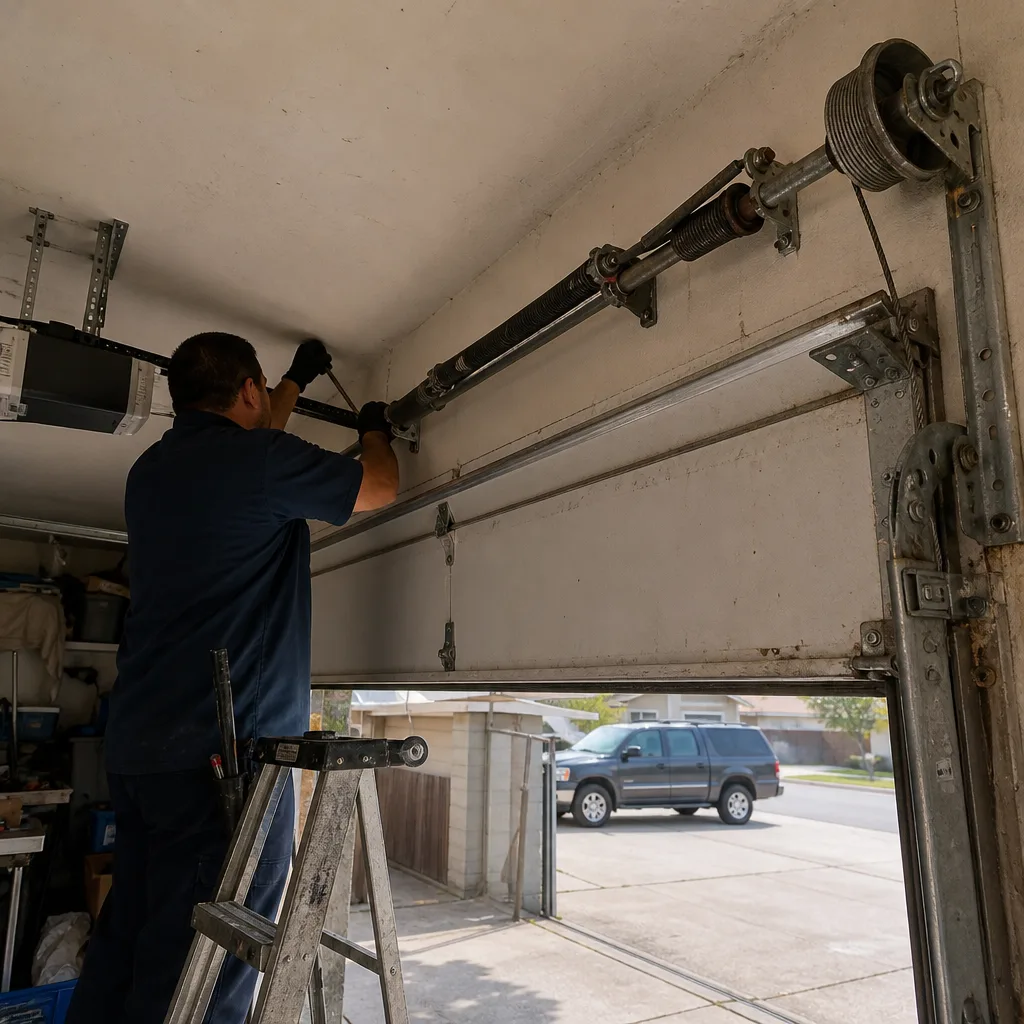 Before
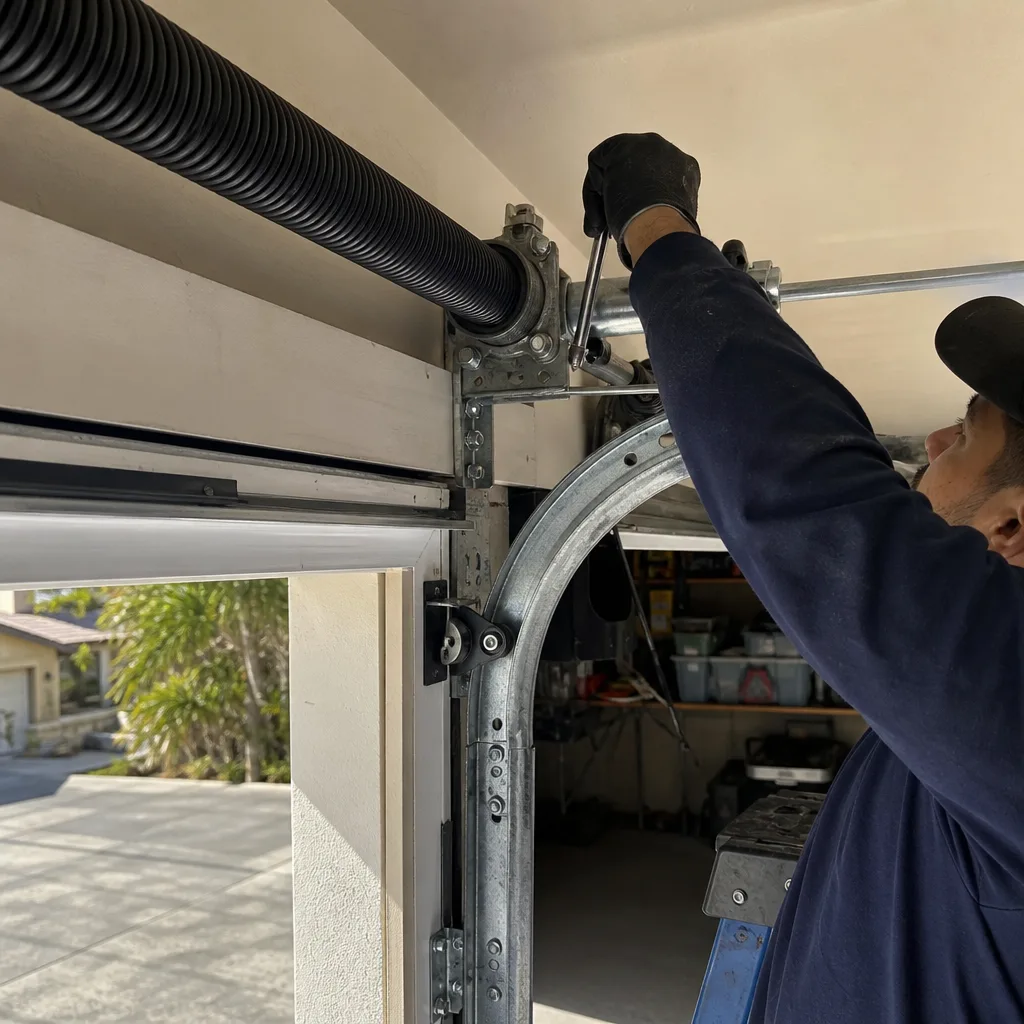 After
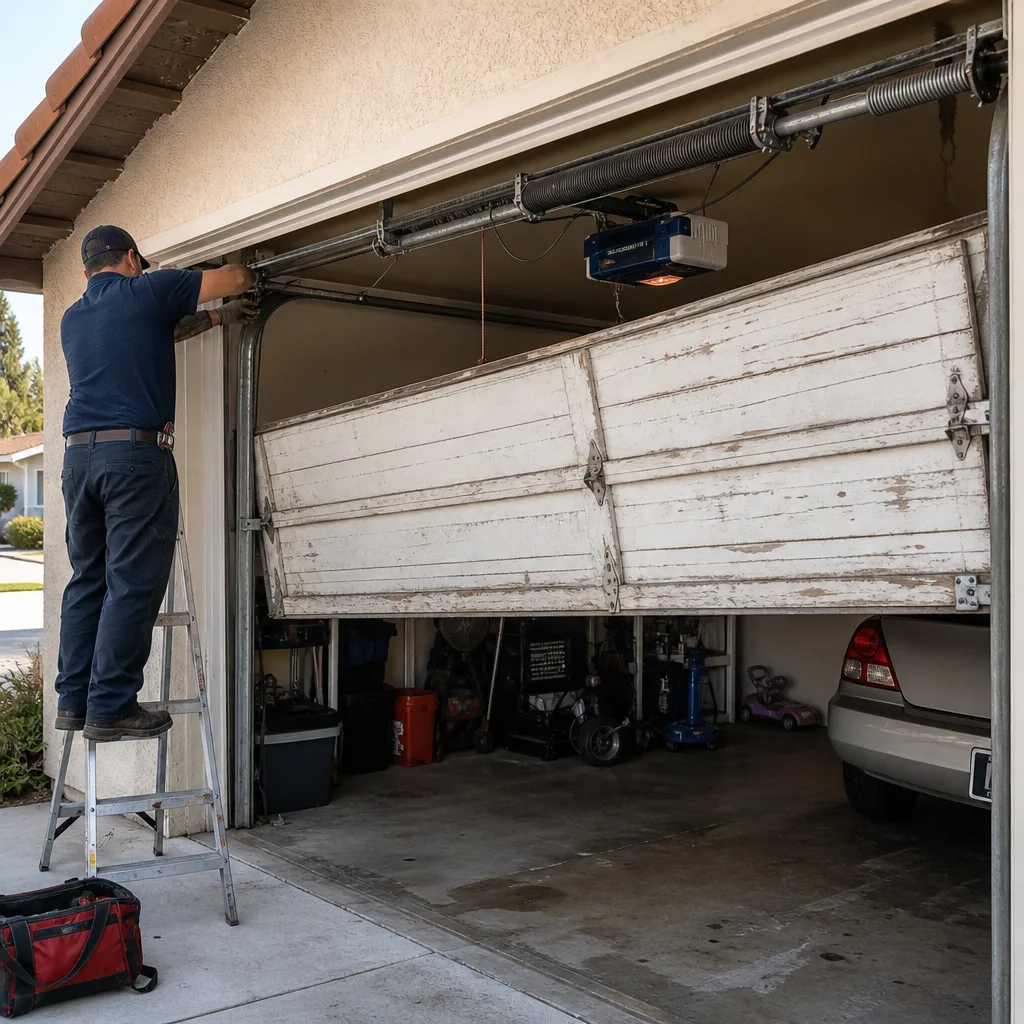 Before
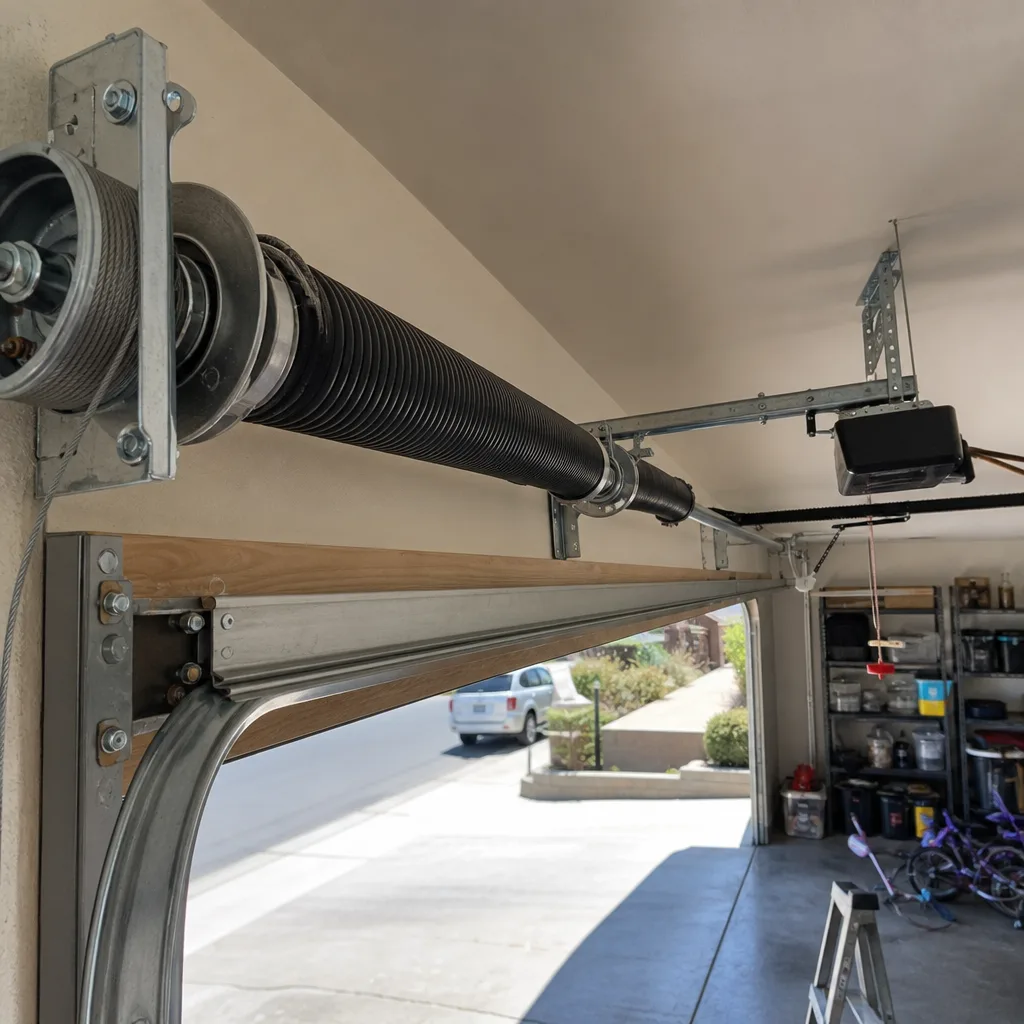 After
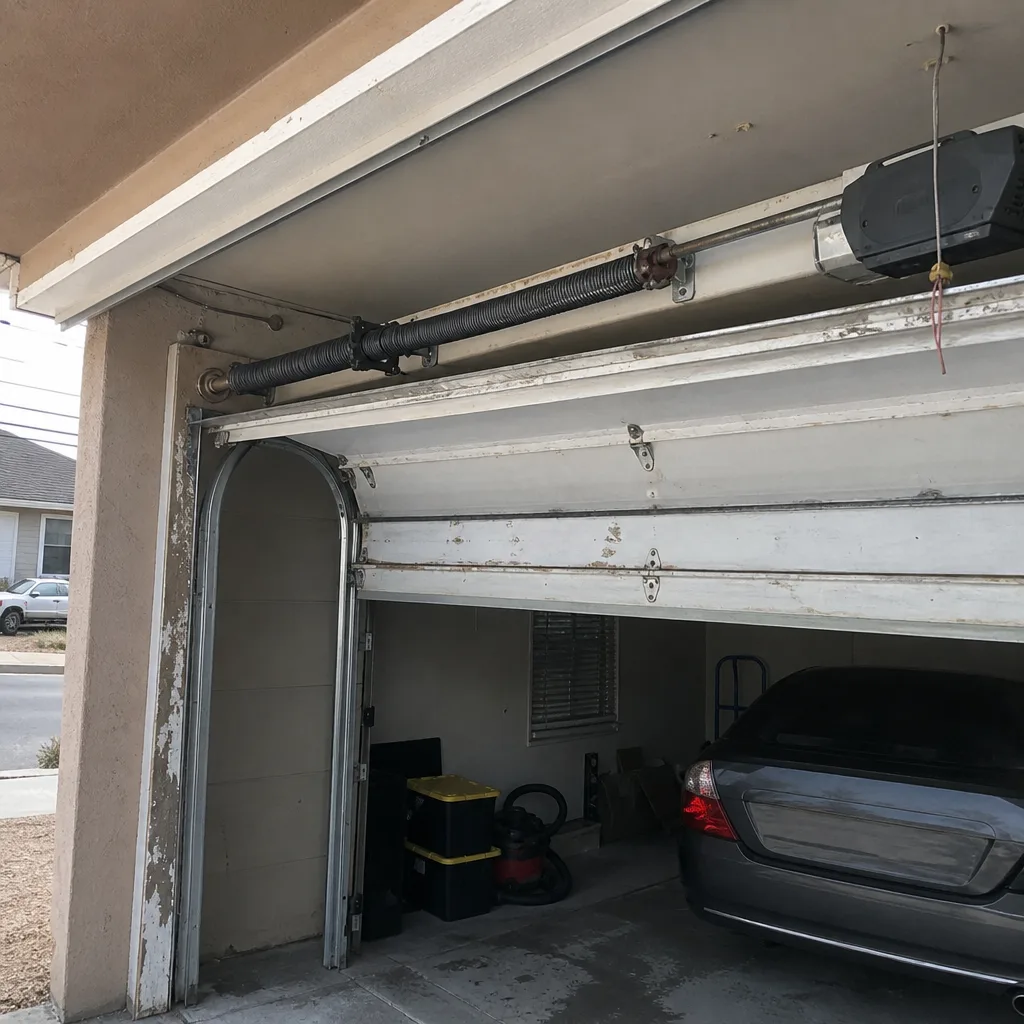 Before
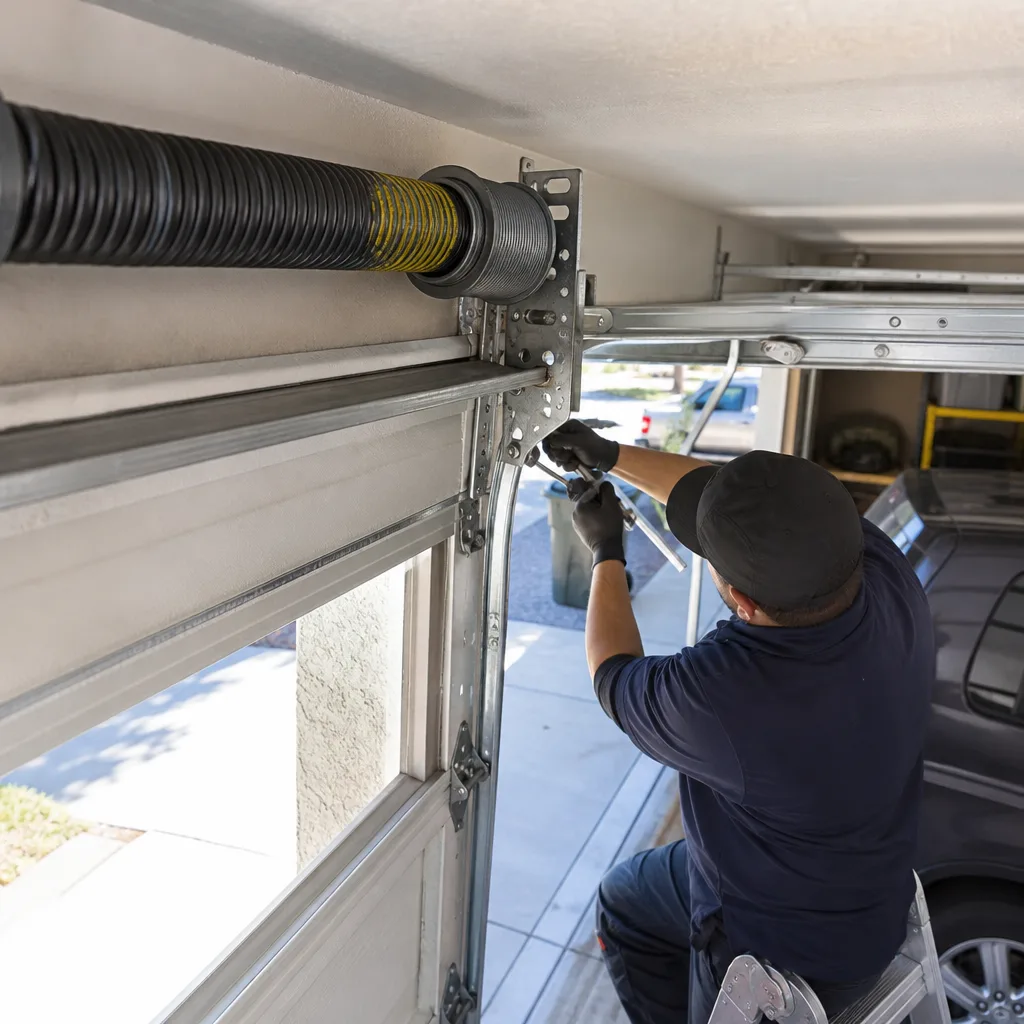 After
Frequently Asked Questions
Most San Bernardino garage door repairs run between $95 and $450 depending on the component. Roller replacement typically costs $95 to $180 per set, cable replacement $170 to $260, torsion spring replacement $220 to $400 for a pair, and opener gear replacement $180 to $320. Full opener replacement runs $350 to $800 plus labor. The price you’re quoted should always be agreed upon before work begins, and that’s how San Bernardino Garage Door Co operates. Call (855) 763-8905 for an exact quote on your specific door and brand.
Yes, for standard repairs like spring replacement, roller replacement, cable work, and most opener repairs, same-day service is available in San Bernardino. Our trucks carry the most common parts for LiftMaster, Chamberlain, Genie, Amarr, Clopay, Wayne Dalton, Craftsman, and Raynor doors and openers. Special-order panels or uncommon opener models may take a few days. Call (855) 763-8905 early for the best same-day availability.
No, not with us. We quote the full repair price before any work starts, and that’s the price you pay. If during the repair we find something unexpected, we stop, explain what we found, and get your approval before anything else is touched. You’ll never see a surprise line item on an invoice from San Bernardino Garage Door Co.
Yes. Standard torsion springs, extension springs, cables, rollers, hinges, photo-eyes, and opener gears for the major brands are stocked on our trucks. For most San Bernardino repair calls, that means one visit, diagnosis and repair included. Special-order items like custom door sections or rare opener models are quoted before anything is ordered.
LiftMaster and Chamberlain openers hold up best in our experience, provided the door they’re attached to is balanced and the rollers are in good shape. The opener failure we see most often in San Bernardino isn’t the motor or the board, it’s the plastic drive gear stripping because the door underneath was fighting friction. Keep the door itself healthy and the opener brand matters less.
A torsion spring rated for 10,000 cycles should last 7 to 10 years at typical San Bernardino usage of 3 to 4 cycles per day. But heat-accelerated grease loss shortens this in practice, and springs in non-insulated garages facing afternoon sun often fail in 5 to 7 years. If your spring is older than five years and showing any of the warning signs above, get it inspected before it snaps. Call (855) 763-8905 and we’ll come look at it.
The Bottom Line
San Bernardino’s climate punishes garage doors in predictable ways: heat kills spring grease, dust eats rollers, and winter cold exposes hidden imbalance. The homeowners who avoid emergencies are the ones who watch for early warning signs, maintain on a seasonal schedule calibrated to the Inland Empire, and call a specialist when something is genuinely wrong. The homeowners who get stuck are the ones who wait for the bang. Whether you need a spring replaced, an opener diagnosed, or a full new door, San Bernardino Garage Door Co home works on the brand you already have, and garage doors are all we do.
Written by the team at San Bernardino Garage Door Co, serving San Bernardino since 2016.