
Last updated October 30, 2026
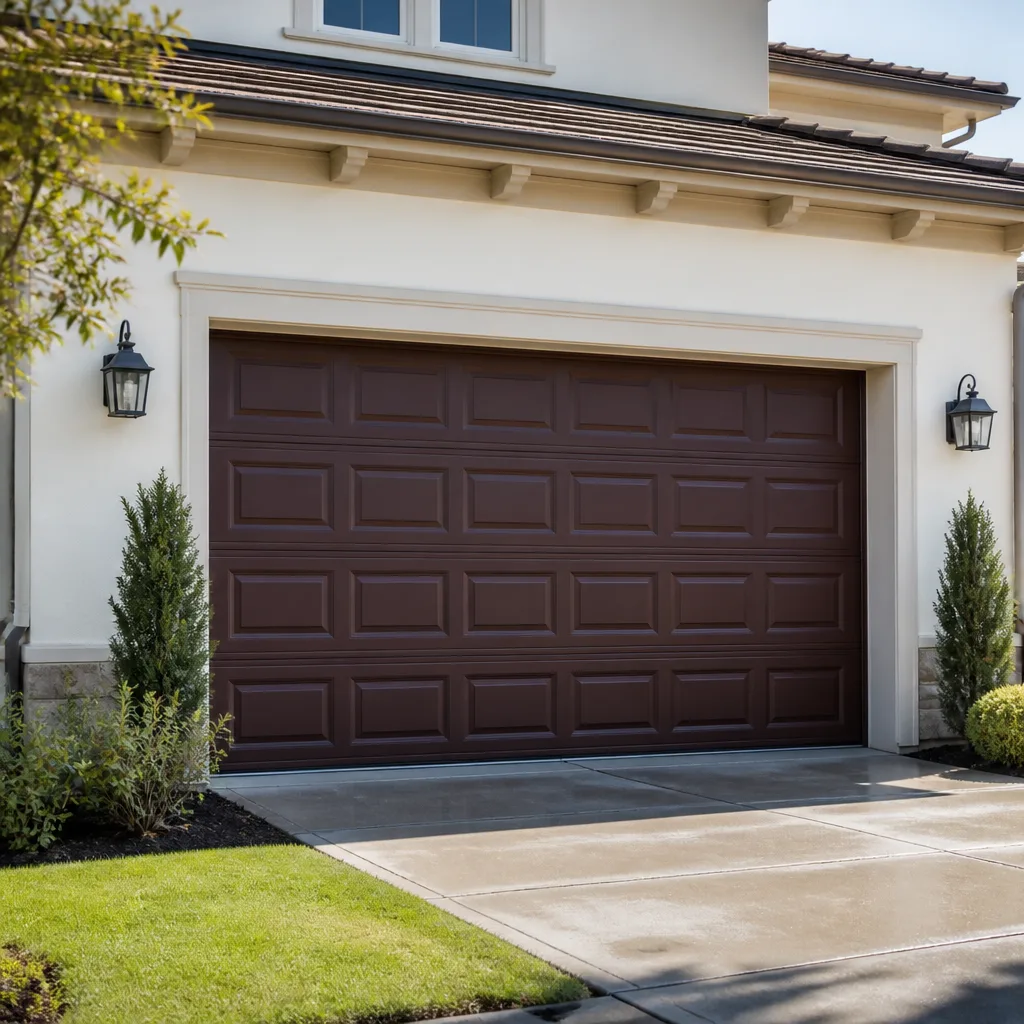 Raised-panel steel
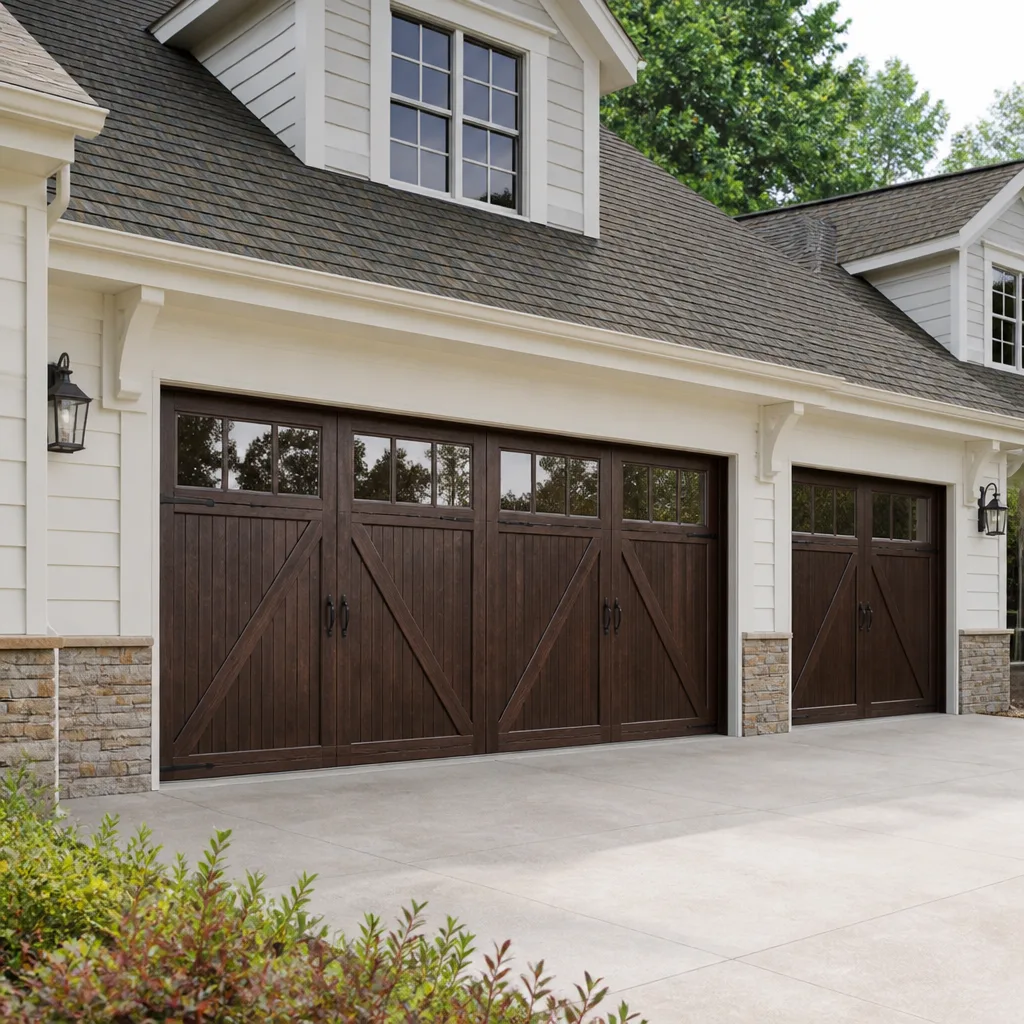 Carriage house
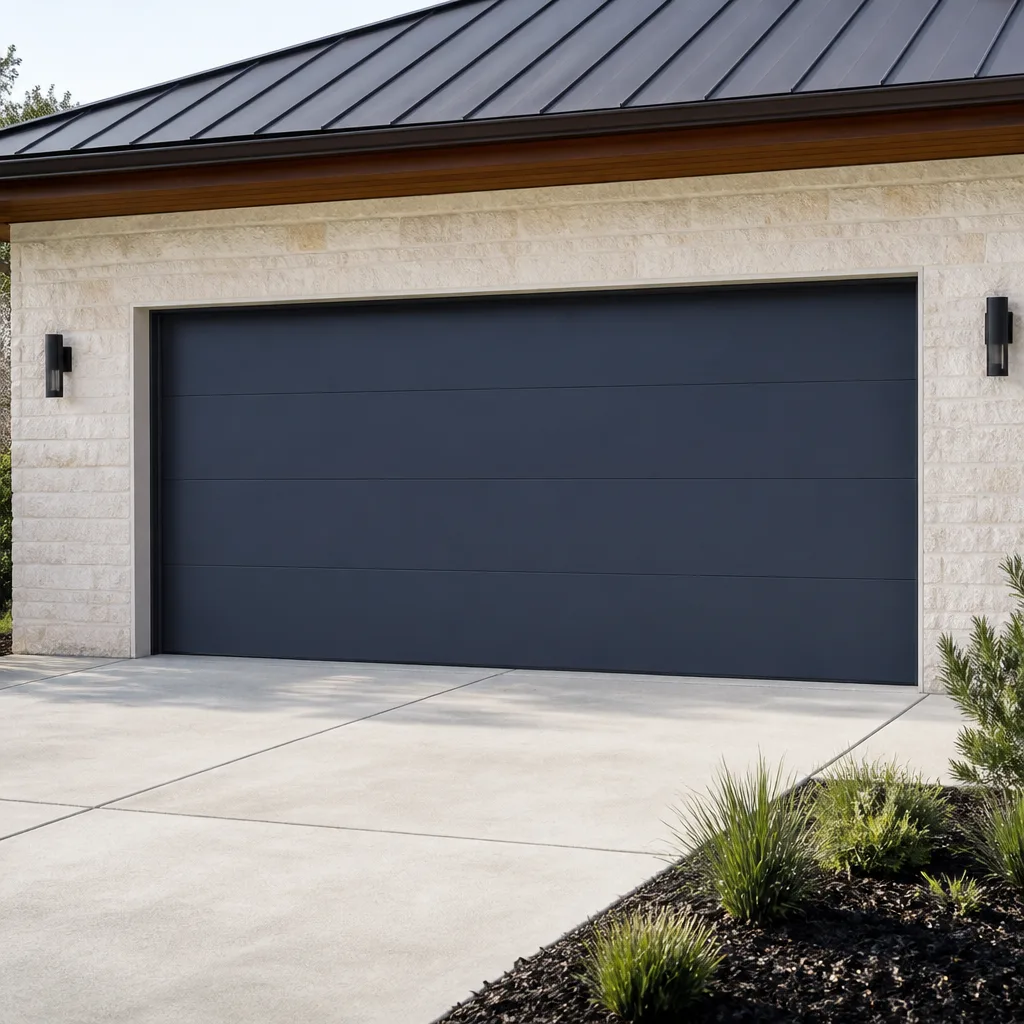 Modern flush
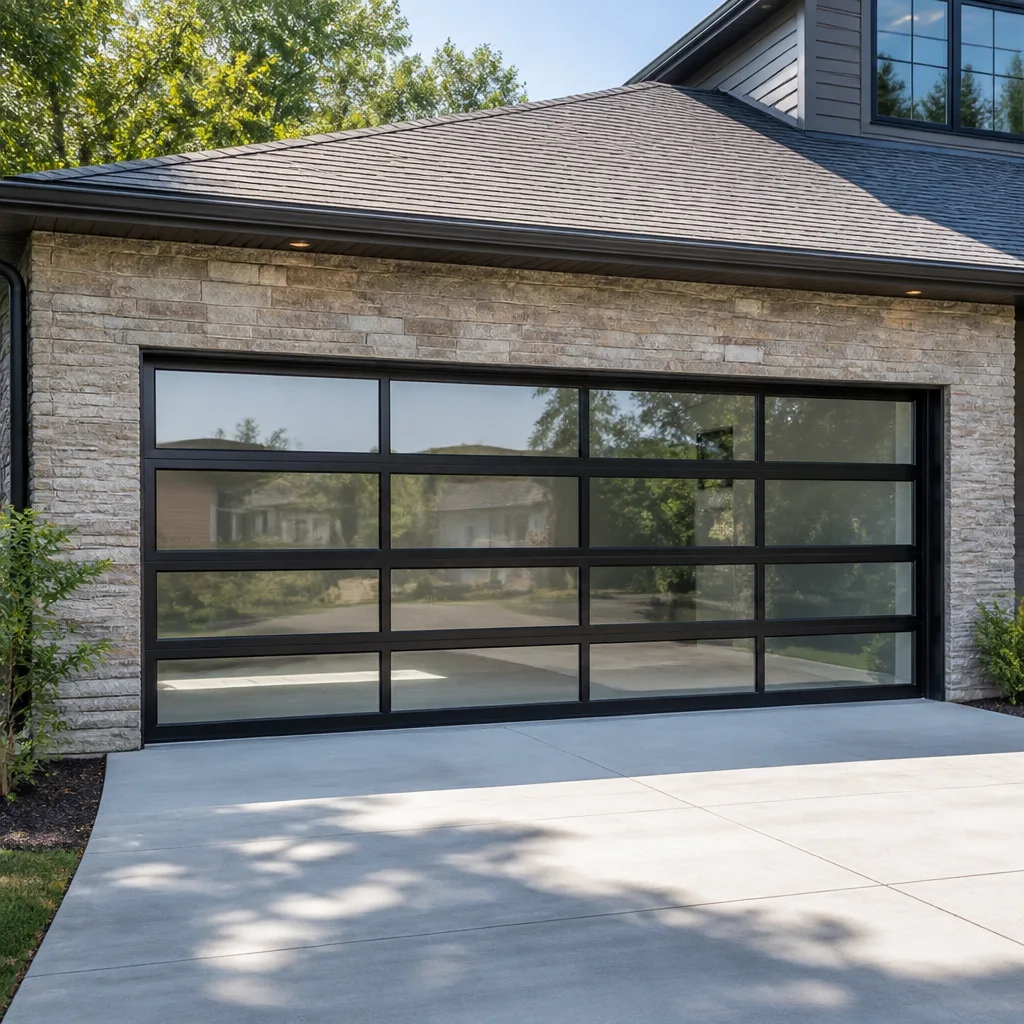 Full-view glass
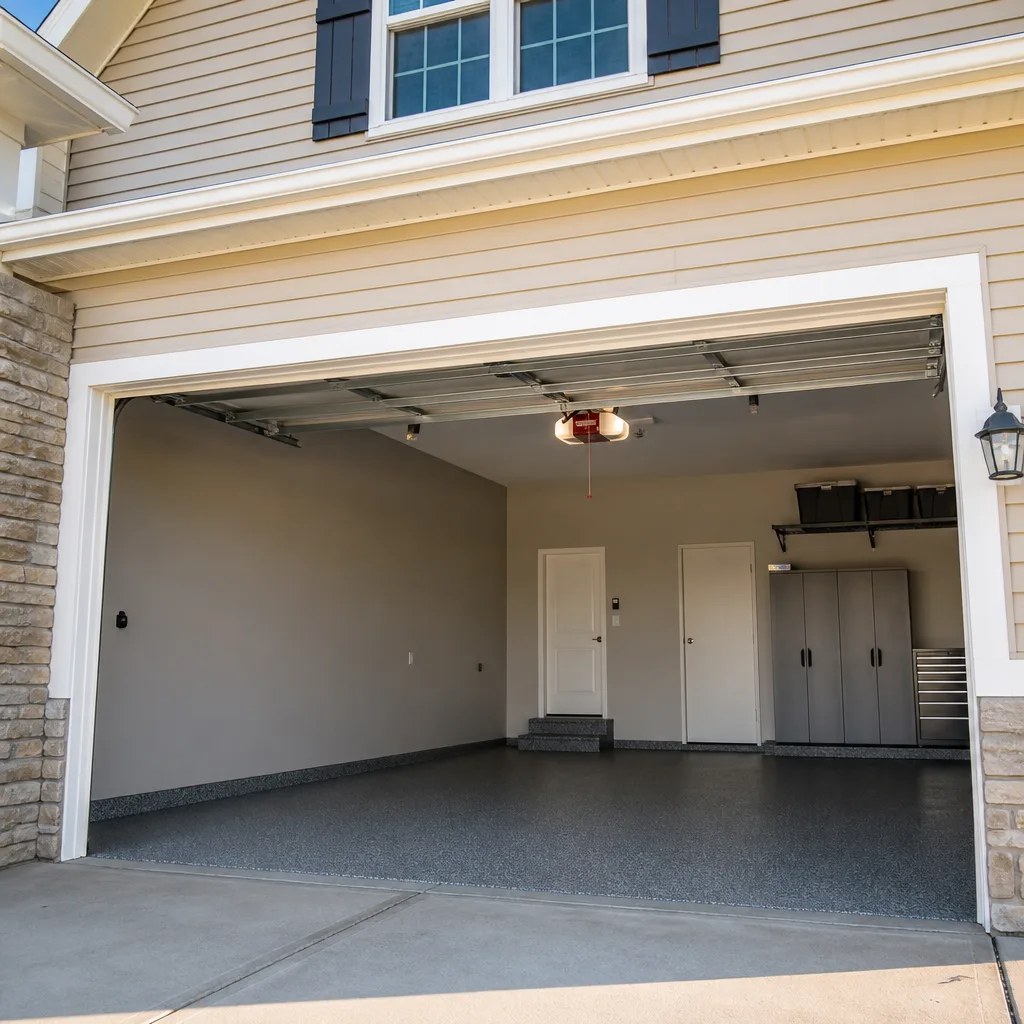 LiftMaster openers
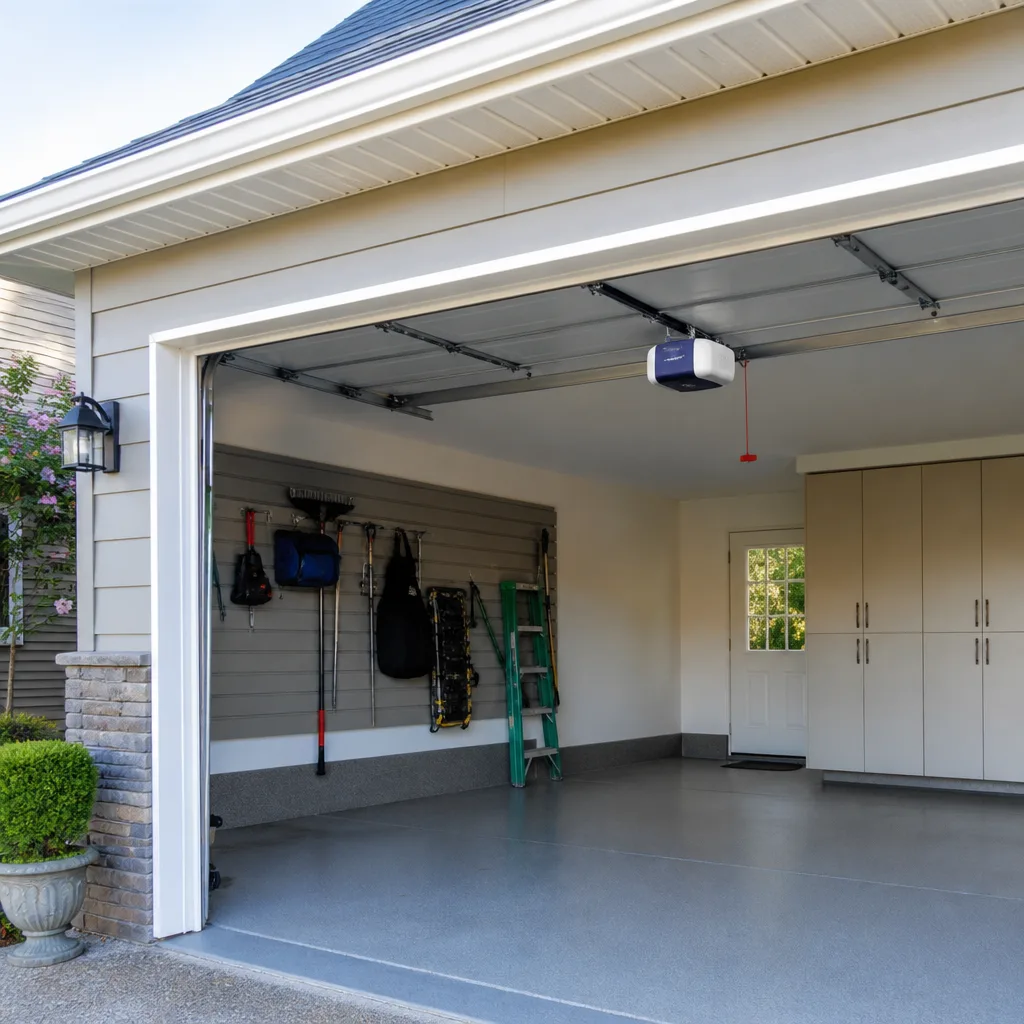 Chamberlain openers
Full 25-point door and opener safety check with every visit - springs, cables, rollers, tracks, and your LiftMaster or Chamberlain opener included
You get a price before we start. It does not change when the truck arrives.
Get your free estimateGarage Door Permits, Codes & Inspections in CA: What You Need to Know
Here’s the part nobody tells you until it’s too late: a garage door replacement in California is not always the quick “swap and done” job it looks like from the curb. Depending on where you live, the age of your home, and what your HOA has on file, that new door can trigger permit requirements, energy code checks, and seismic bracing rules that a surprising number of contractors quietly skip. We work on garage doors every day in San Bernardino, and we’ve walked into more than one garage where the previous install left the homeowner holding an unpermitted improvement they didn’t know existed. This guide explains exactly when California requires a permit, what inspectors actually check, and how to avoid a resale headache years down the road.
Styles & brands we work with
Quick Answer
In California, most garage door repairs do not require a permit, but full door replacements and new installations often do – especially when structural changes, new framing, or opener relocation is involved – so consult our Garage Door Warning Signs: A San Bernardino Homeowner’s Reference Guide to spot trouble early. Additionally, California’s Title 24 energy code and seismic bracing provisions apply to many replacement jobs, and local jurisdictions like San Bernardino add their own inspection steps. If you’re replacing a door, assume a permit is likely until proven otherwise, not the other way around.
Table of Contents
- When a Permit Is Actually Required in California
- Title 24 Energy Code: What It Means for Garage Doors
- Seismic Bracing Requirements for Openers
- San Bernardino Permits: City vs. County Rules
- HOA Overlays: What They Can and Can’t Restrict
- What an Inspector Looks At During a Garage Door Inspection
- Permit Costs and Timelines in San Bernardino
- Common Mistakes to Avoid
- When to Call a Professional
- Frequently Asked Questions
- The Bottom Line
When a Permit Is Actually Required in California
The line between “repair” and “replacement” is where most permit confusion starts. Under the California Building Code, a repair that restores a component to its original condition – replacing a broken spring, a bent track, a failed opener motor – generally does not require a permit. You’re fixing what’s already there, not changing what it is.
A full door replacement is different. When you remove the existing door, tracks, and sometimes the framing, and install a new system, you’re making an alteration to the building envelope. Most California jurisdictions treat this as work that requires a building permit, particularly when:
- The door size changes. Enlarging the opening means structural modification to the wall – always a permit trigger.
- New framing or header work is needed. Even replacing a rotted header requires an inspection.
- The opener is relocated or rewired. Moving an opener from the center to a side mount involves electrical work and new mounting points.
- The garage is attached to the house. Attached garages share walls and often a fire-rated ceiling with living space, which puts them under tighter code scrutiny.
In San Bernardino specifically, we’ve seen the city’s building department ask for permits on full door replacements in older homes where the opening wasn’t framed to current standards. The counter guy at the permit desk is not trying to make your life difficult – he’s flagging that a 1960s header probably doesn’t meet today’s load requirements. That’s a safety issue, not bureaucracy. A specialist who does garage door repair in San Bernardino daily will recognize when a job crosses from repair into replacement territory and tell you before work starts, not after.
The practical rule: if the existing door is staying and a component is being fixed, no permit. If the door is coming out and a new one is going in, call your city’s building department and ask. You’ll save yourself a resale disclosure problem.
Title 24 Energy Code: What It Means for Garage Doors
California’s Title 24 Building Energy Efficiency Standards are the strictest in the country, and they quietly extend to garage doors in specific situations. Here’s the direct answer: if your garage is conditioned space – meaning it’s heated, cooled, or attached to the house in a way that allows air exchange with living areas – then a replacement garage door must meet minimum insulation requirements. If your garage is unconditioned and detached, the energy code mostly leaves it alone.
For conditioned garages, Title 24 typically requires:
- Minimum R-value insulation in the door itself, usually R-6 or higher depending on the climate zone. San Bernardino falls in climate zone 10, which is hot-dry, and the code accounts for that heat load.
- Weatherstripping and sealing around the perimeter to prevent air leakage.
- Glazing limits if the door has windows – the window area and glass performance factor into the energy calculation.
We regularly install insulated Clopay and Amarr doors in San Bernardino for homeowners who use their garages as workshops, gyms, or laundry rooms. In those cases, the insulation isn’t just a code checkbox – it’s the difference between a garage that stays workable in July and one that feels like a convection oven. A steel door with a polyurethane core will meet Title 24 requirements and make the space genuinely usable, which matters when daytime highs sit above 100 degrees for weeks.
One correction to the common assumption: some homeowners think Title 24 only applies to windows and HVAC. That’s wrong. The code covers the entire building envelope, and a garage door is a large, hollow panel in that envelope. If a contractor tells you “energy code doesn’t apply to doors,” that contractor is either misinformed or hoping you won’t ask. Get a door that meets the standard once and you won’t have to think about it again.
Seismic Bracing Requirements for Openers
California is earthquake country, and the building code knows it. Current seismic provisions require that garage door openers mounted to the ceiling be adequately braced and supported to resist lateral movement during a quake. The intent is straightforward: in a strong shake, an unbraced opener can swing, pull loose from its mounts, or drop onto vehicles and people below.
What the code requires in practice:
- Opener unit must be securely fastened to structural framing, not just drywall anchors or thin strapping.
- Bracing struts or angle iron may be required depending on the mounting configuration and the distance from the ceiling joists.
- Header brackets and track supports must be anchored to solid wood or steel, not just the plaster or sheetrock.
- Jamb brackets require proper fasteners sized for shear loads.
In our experience across San Bernardino, the older the house, the more likely the original opener installation skips the seismic details. A 1980s Chamberlain unit hanging from two lag bolts into a rafter tie is common. It worked fine for forty years of minor tremors. That doesn’t mean it will hold through the next big one.
This is also where brand familiarity matters. A technician who knows LiftMaster, Genie, and Craftsman mounting patterns can spot a weak installation in two minutes, because those brands have specific mounting hole layouts and brace recommendations. A general handyman sees “opener on ceiling” and moves on. We don’t. Seismic bracing is not an upsell; it’s the difference between the opener staying put and becoming a projectile when the ground moves.
San Bernardino Permits: City vs. County Rules
San Bernardino is a patchwork of jurisdictions, and the rules shift depending on whether your address is inside city limits or on an unincorporated county parcel. The city of San Bernardino runs its own building department with its own fee schedule, inspection process, and turnaround times. Unincorporated areas fall under San Bernardino County’s Building and Safety Division, which has separate requirements, often with different fee structures and longer inspection lead times.
Here’s what that means in practical terms:
- City permits for a garage door replacement in San Bernardino typically run in the low hundreds of dollars and can be processed over the counter for straightforward jobs.
- County permits for the same work may require plan review for structural changes, especially in older unincorporated communities where building records are incomplete.
- Inspection timing differs too. The city can often schedule a final inspection within a few days to a week. The county runs on a broader service area and may take longer, particularly during peak building season.
We’ve done plenty of garage door installations in San Bernardino on both sides of that line. A door replacement on a house near downtown follows a different path than the same job on a parcel out near Devore. The customer doesn’t care about the bureaucracy behind the difference – they care that the job passes inspection the first time. That’s where experience with both jurisdictions saves time and callbacks.
The key practical takeaway: always confirm your jurisdiction before pulling a permit. An address that says “San Bernardino” does not automatically mean city government. Check your property tax bill or call the building department. The wrong assumption means a voided application and a wasted trip.
HOA Overlays: What They Can and Can’t Restrict
California is second only to Florida in HOA prevalence, and a substantial share of single-family homes in the San Bernardino area fall under an association’s covenants, conditions, and restrictions. The question that comes up constantly: can my HOA tell me what garage door I’m allowed to install? The answer is yes, within limits.
Under California Civil Code, specifically the Davis-Stirling Act, an HOA does have authority to regulate architectural changes, and garage doors fall under that umbrella. What a California HOA can typically restrict:
- Door material, style, and color. An HOA can require that doors maintain a consistent look across the development.
- Window configuration. If the original doors have no windows, the association may reject a windowed replacement.
- Brand specifications in some older CC&Rs. Some 1990s-era associations actually name specific door manufacturers, though this is less common now.
What a California HOA cannot do:
- Charge arbitrary review fees. Davis-Stirling caps what an association can collect for architectural review.
- Deny based on vague or unpublished standards. The HOA must have written guidelines it can point to.
- Overrule state building code. An HOA cannot require something that violates Title 24 or seismic safety standards.
The smart move is to get the HOA’s architectural application in hand before ordering a door. We’ve had customers pick out a specific Amarr style, pay a deposit, and then discover their association requires a completely different panel profile. That’s a costly reorder and a two-week delay. A quick call to the management company – or a look at the CC&Rs you got at closing – avoids the whole mess. This applies whether you’re getting a standard door or going through a full opener repair that changes the exterior appearance.
What an Inspector Looks At During a Garage Door Inspection
When you do pull a permit and schedule a final inspection – following our Garage Door Repair Maintenance Checklist for San Bernardino Homeowners helps – the inspector is not there to admire your new door. They’re working through a checklist tied to the California Building Code and the specific permit scope. Knowing what they check means you can have the job ready the first time.
Here’s what a typical final inspection covers for a garage door installation:
- Fire rating compliance. For attached garages, the door itself and the wall surrounding it must maintain the required fire separation from living space. This is non-negotiable.
- Fastener and anchor checks. Track brackets, jamb brackets, and header supports must be anchored with approved fasteners into solid framing.
- Opener safety reversal. The auto-reverse mechanism – the one that stops the door from crushing anything underneath – must function when tested with the inspector’s pressure gauge. This is the single most common inspection failure.
- Photoelectric sensors. The safety eyes near the floor must be mounted no higher than six inches and must reverse the door when the beam is broken.
- Seismic bracing, if applicable. The inspector will check that the opener is braced per current code.
- Weatherstripping and energy compliance. For conditioned garages, the inspector verifies the insulation value and sealing.
We’ve watched a lot of these inspections in San Bernardino, and the pattern is consistent. The doors that pass on the first visit are the ones where the installer followed the manufacturer’s instructions and the code requirements to the letter. The doors that fail are the ones where someone took a shortcut on sensor height or used drywall anchors where structural screws were required. Fixing a failed inspection means a second visit, another scheduling window, and a homeowner who has to take another afternoon off work. Do it right once.
Permit Costs and Timelines in San Bernardino
Let’s talk numbers, because budget matters. A garage door permit in the city of San Bernardino generally runs between $100 and $300 for a straightforward replacement without structural changes. The county fee schedule is similar but can climb higher when plan review is required. These are not exact quotes – the building department sets its own schedule and updates it – but it’s the realistic range for most residential door swaps.
Timeline expectations:
- Over-the-counter permit: Same day for simple jobs with no plan review. Bring your property information and a description of the work, pay the fee, walk out with a permit number.
- Plan review required: Three to ten business days in most cases. This applies when the opening size changes, structural work is involved, or the inspector wants to see engineering on the header.
- Final inspection scheduling: One to five business days after the work is complete, depending on the jurisdiction’s inspector load.
The lesson from years of doing this work in San Bernardino: the permit is seldom the expensive or slow part of the job. The expensive part is not getting one, then trying to retroactively permit work that was done two years ago and isn’t visible anymore because the wall is finished. That’s when fees double and inspectors want to open walls. Spend the $150 and the three days up front. It’s the cheapest insurance on the project.
Common Mistakes to Avoid
- Skipping the permit on a full replacement because “it’s just a door swap.” The city doesn’t see it that way, and neither will a buyer’s inspector. An unpermitted garage door shows up as a gap in the city’s records during a resale check, and it becomes a negotiating point against you.
- Using drywall anchors for track or opener mounting. This is the fastest way to fail an inspection in San Bernardino. The code requires structural fasteners into solid framing, and the inspector will check.
- Ignoring the HOA until the door is ordered. California HOAs can and do reject door replacements that violate their architectural standards. Get the approval in writing before the door ships.
- Buying a non-insulated door for a conditioned garage. If your garage is heated or cooled, Title 24 requires insulation. A cheap uninsulated door fails the energy code and makes the space unpleasant in San Bernardino’s summer heat.
- Not checking whether your address is city or county. Both jurisdictions issue permits, but the process, fees, and timelines differ. Guessing wrong wastes a trip and restarts the clock.
- Forgetting the safety sensor height rule. Photoelectric eyes must sit no higher than six inches off the floor. Mount them at knee height and the inspector will flag it.
- Assuming the original opener bracing is fine because it hasn’t fallen down yet. Code requirements have changed since that 1985 Chamberlain went up. An unbraced opener is a seismic liability, and an inspector can require it to be corrected before passing the job.
When to Call a Professional
Some garage door work is genuinely DIY territory – replacing a wireless remote, greasing a hinge, tightening a loose bolt – and our Garage Door Repair Troubleshooting: Common Problems and How to Fix Them covers when to handle it yourself. Permit-related work is not. If your job involves a full door replacement, changes to the opening, opener relocation, or any structural component, you want a specialist who pulls permits regularly and knows what the San Bernardino inspectors expect.
We’ve corrected a lot of unpermitted installations from well-meaning handymen who didn’t know California’s code triggers. The fix is always more expensive than doing it right the first time. San Bernardino Garage Door Co works exclusively on garage doors – no plumbing calls, no electrical side jobs, no general contracting. It’s doors, openers, springs, and hardware, every call. If you’re in San Bernardino and not sure whether your job needs a permit, call (855) 763-8905 and ask. We’ll walk you through what applies to your specific address and give you a straight answer. Estimates are free.
Frequently Asked Questions
Yes, in most cases. A full garage door replacement typically requires a building permit in California because it alters the building envelope, especially when the garage is attached to the home or the opening size changes. Simple repairs to existing components – springs, cables, openers – generally do not require a permit. When in doubt, call your local building department or ask a specialist before work begins. Call (855) 763-8905 if you’re in San Bernardino and want a straight answer on your specific job.
No, replacing a garage door opener with a like-for-like unit in the same location does not require a permit in San Bernardino, provided you’re not relocating the opener or changing the electrical wiring. If the opener moves to a different mounting position or new circuits are added, a permit may be required. The electrical connection is the trigger point, not the opener itself.
Doors between an attached garage and living space must provide a fire separation rating as specified in the California Building Code, typically requiring a solid-core door or a listed fire-rated door assembly. The garage door itself, as part of the exterior, must meet the code’s requirements for the opening. Inspectors in San Bernardino check this during the final inspection on any permitted garage door work.
Under California’s Davis-Stirling Act, an HOA cannot require a specific brand unless that requirement is written into the governing CC&Rs and was disclosed when you bought the property. They can restrict style, color, and material for architectural consistency. If your association’s rules name a brand, review the documentation carefully – many older brand-specific clauses have been invalidated or are unenforceable.
A residential garage door replacement permit in San Bernardino typically costs between $100 and $300 for a straightforward job without structural changes. County permit fees for unincorporated areas are comparable but can be higher if plan review is required. The exact fee depends on the scope of work and the current fee schedule. The permit cost is almost always cheaper than fixing an unpermitted installation later.
You’ll discover the problem at resale. A buyer’s home inspector and the title company’s permit search will flag the missing permit, giving the buyer leverage to demand a price reduction or requiring you to pull a retroactive permit, which involves opening walls so the work can be inspected. In San Bernardino, retroactive permits for concealed work often cost several times the original permit fee. It’s cheaper and faster to permit the job correctly the first time.
The Bottom Line
California treats garage door work with more regulatory attention than most homeowners expect. Repairs are largely permit-free. Replacements are not. Title 24 adds energy requirements for conditioned garages. Seismic bracing rules apply to openers in earthquake territory. San Bernardino splits into city and county jurisdictions with different processes. HOAs layer architectural restrictions on top of everything else. None of this is designed to make your life harder – it’s designed so the door stays on the wall, opens safely, and doesn’t leak energy. For more guides & resources, visit our blog. Get the permit, pass the inspection, and you’ll never think about it again. Skip it, and you’ll think about it at the worst possible time.
Written by the team at San Bernardino Garage Door Co, serving San Bernardino since 2016.
See the difference
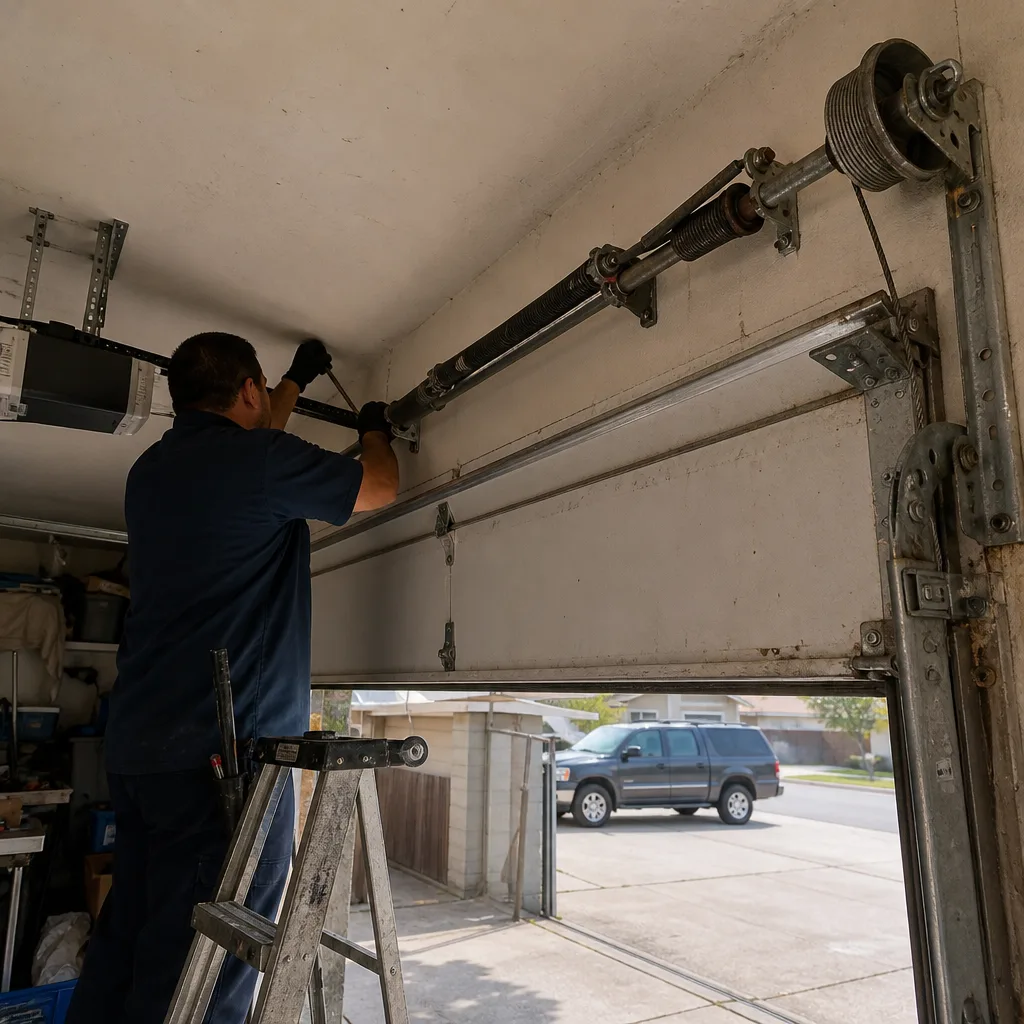 Before
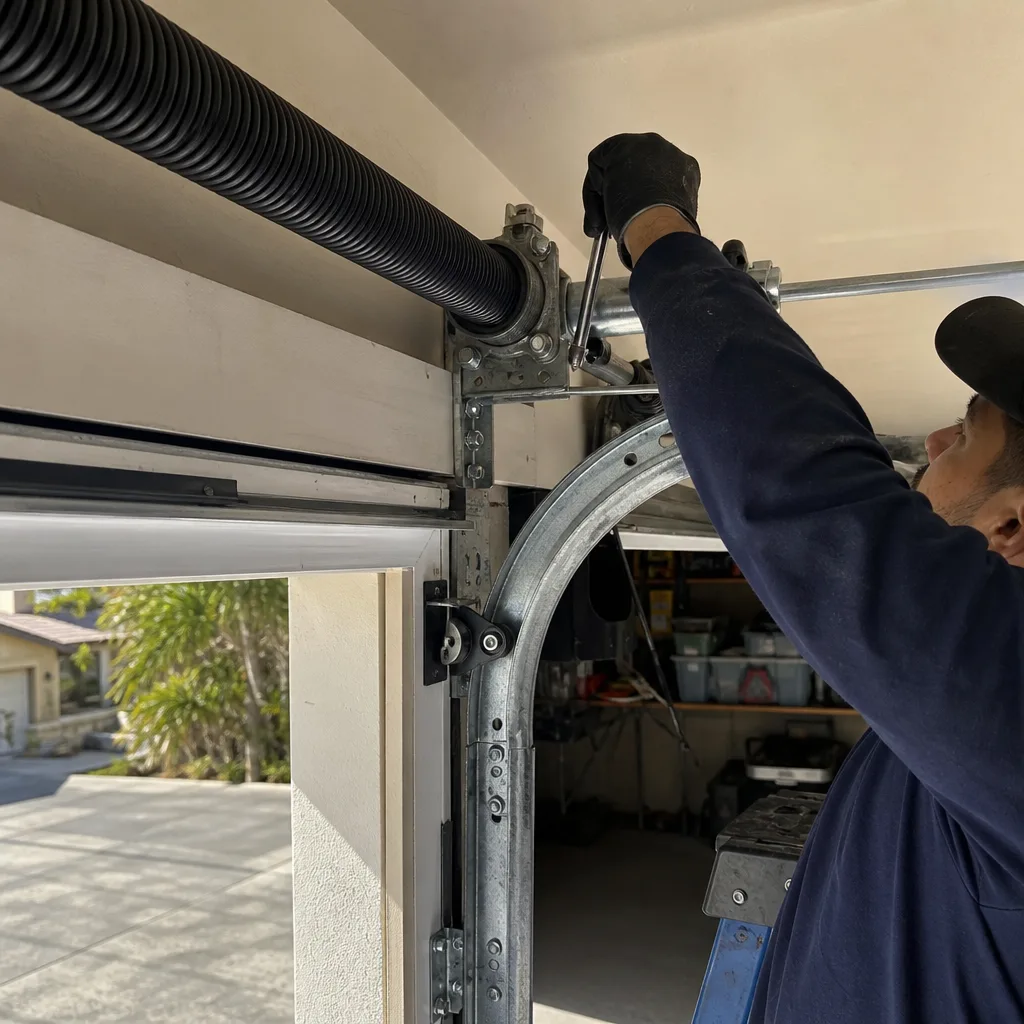 After
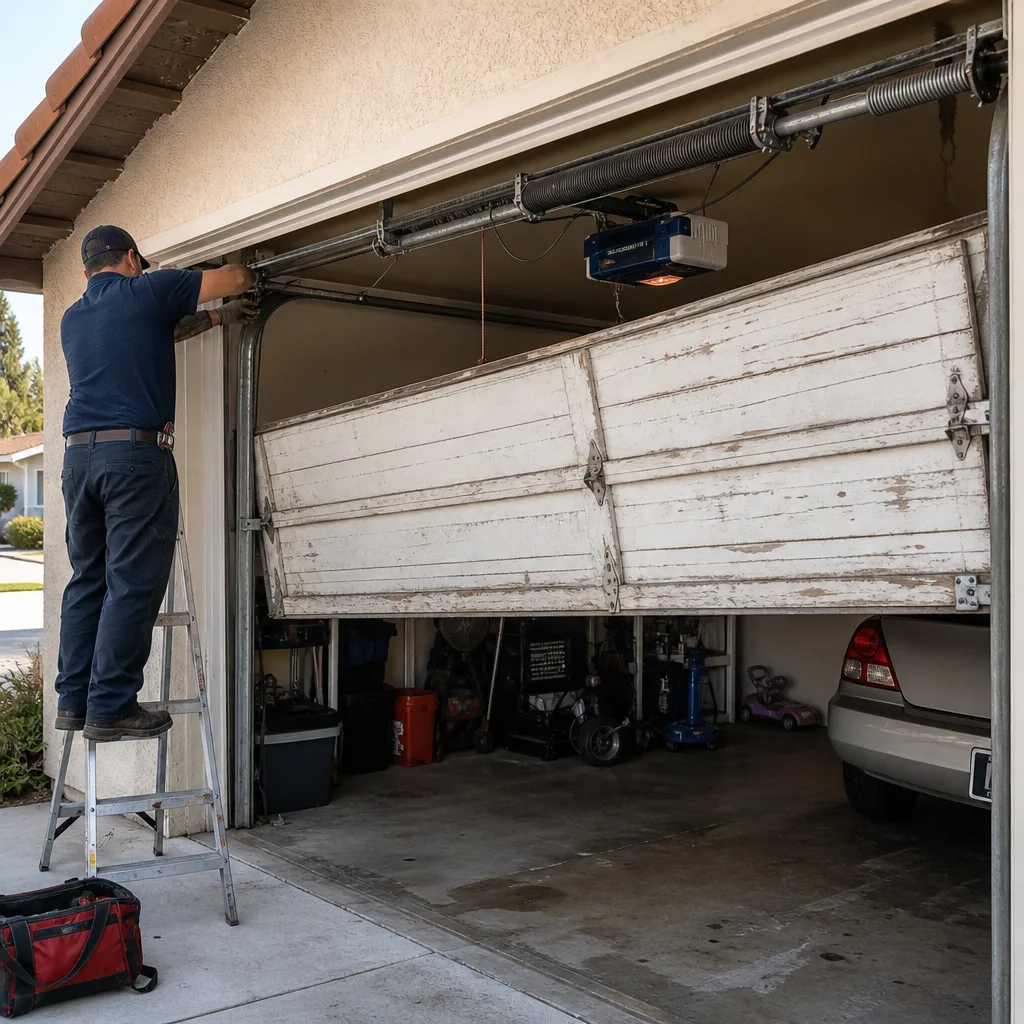 Before
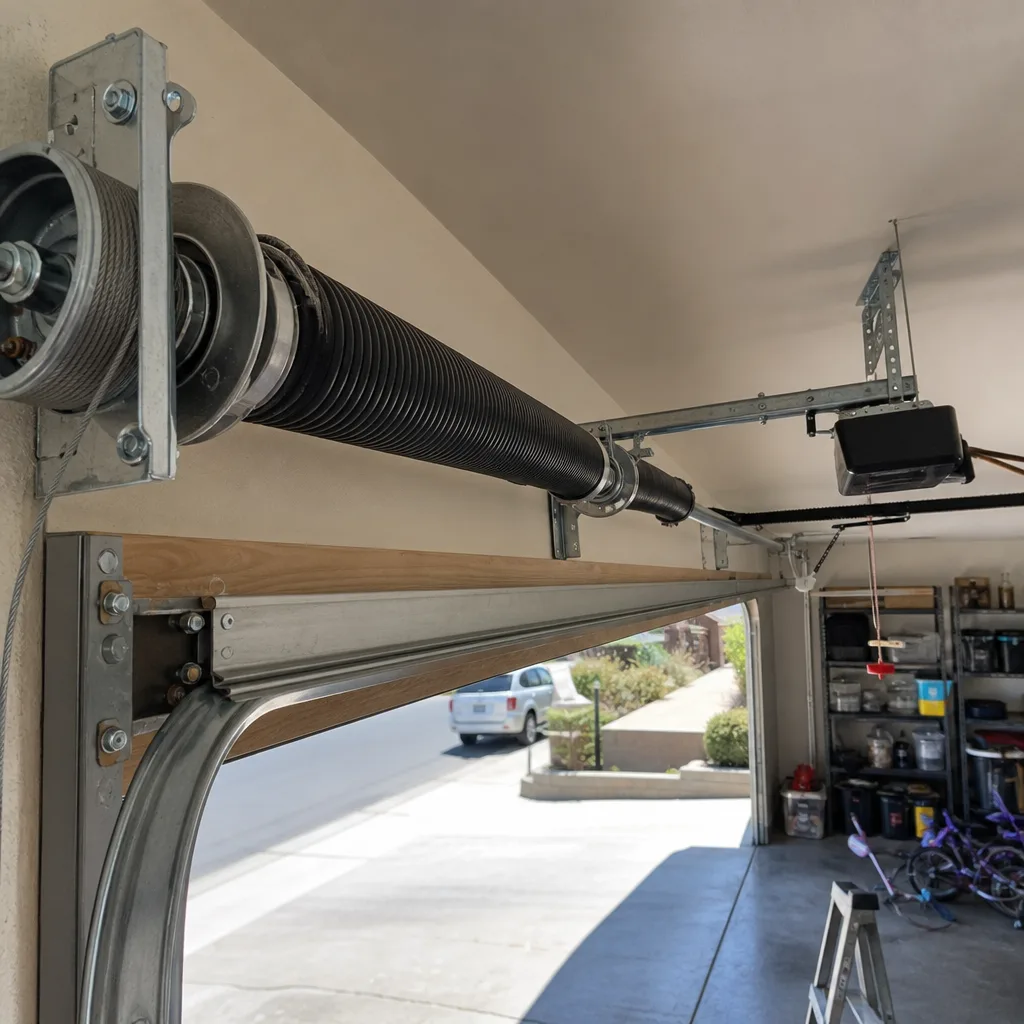 After
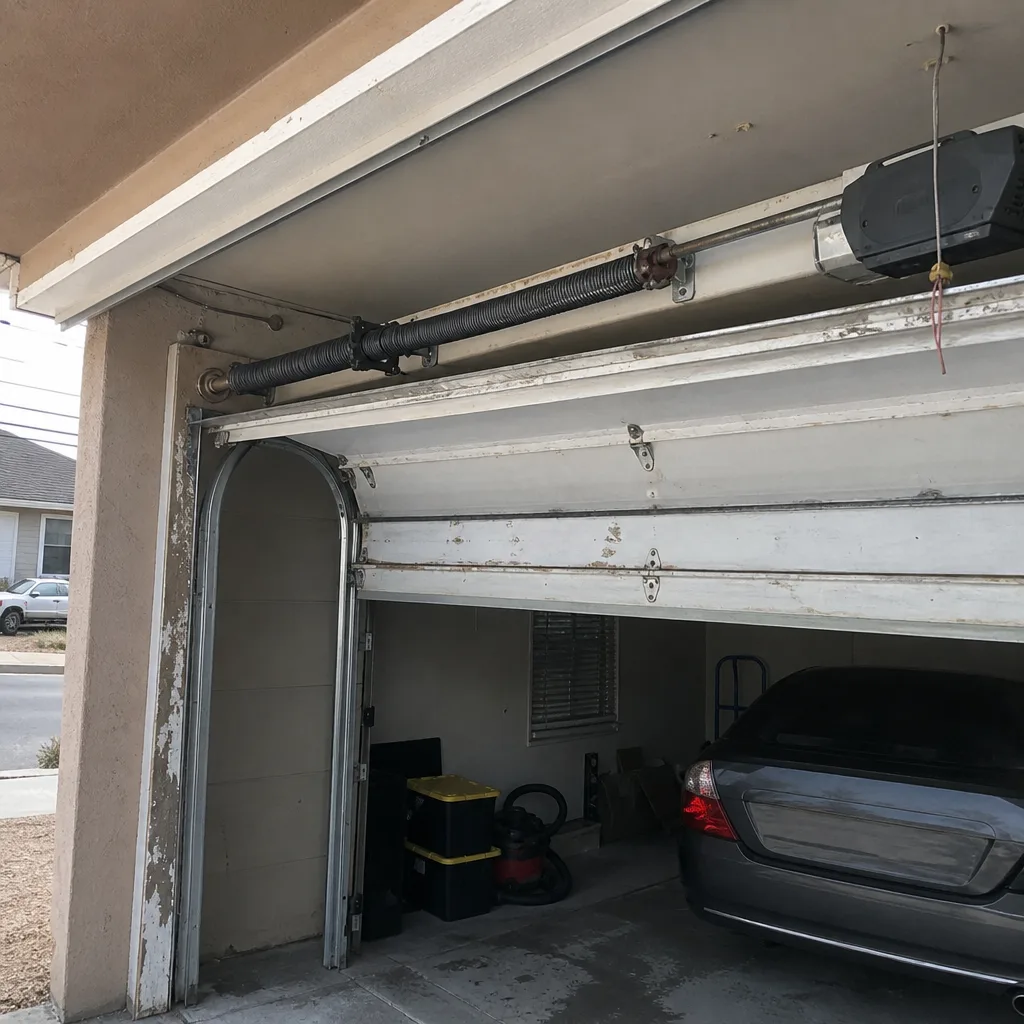 Before
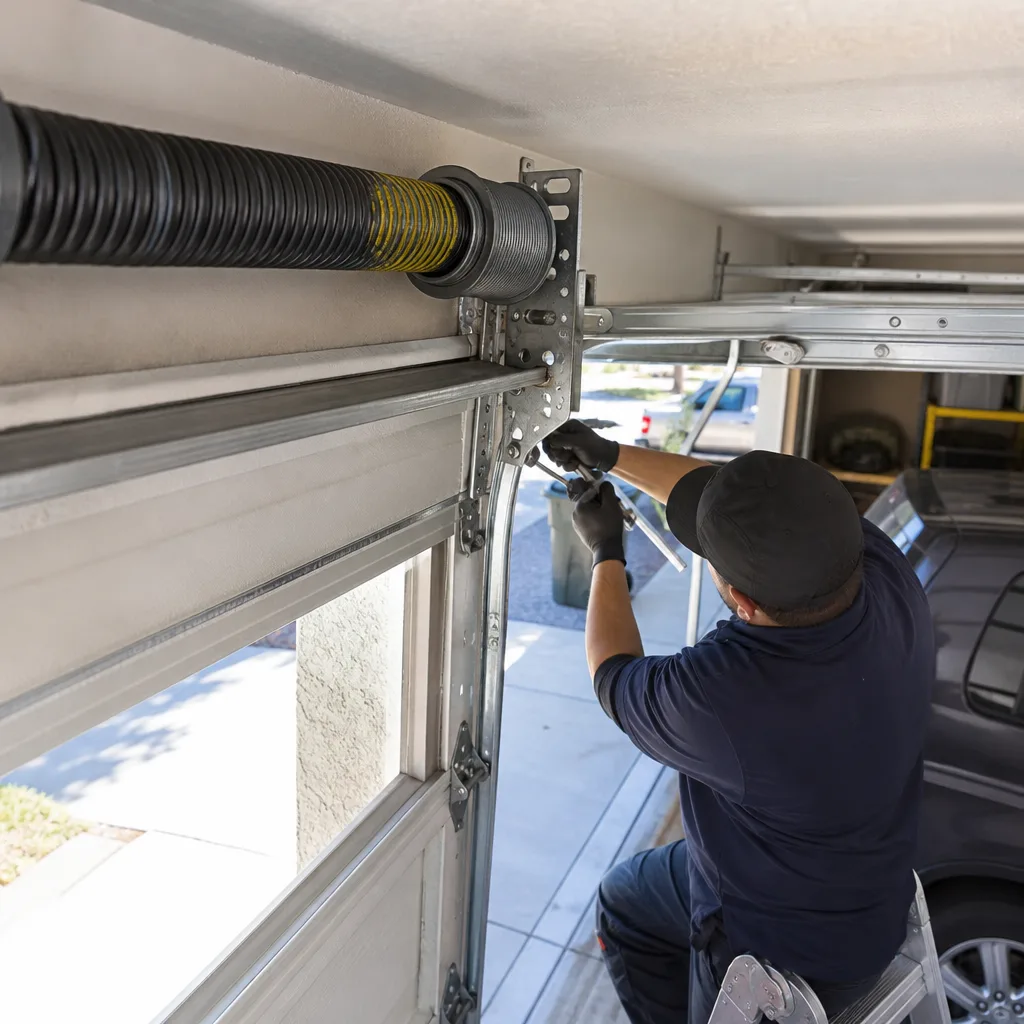 After