Last updated October 30, 2026
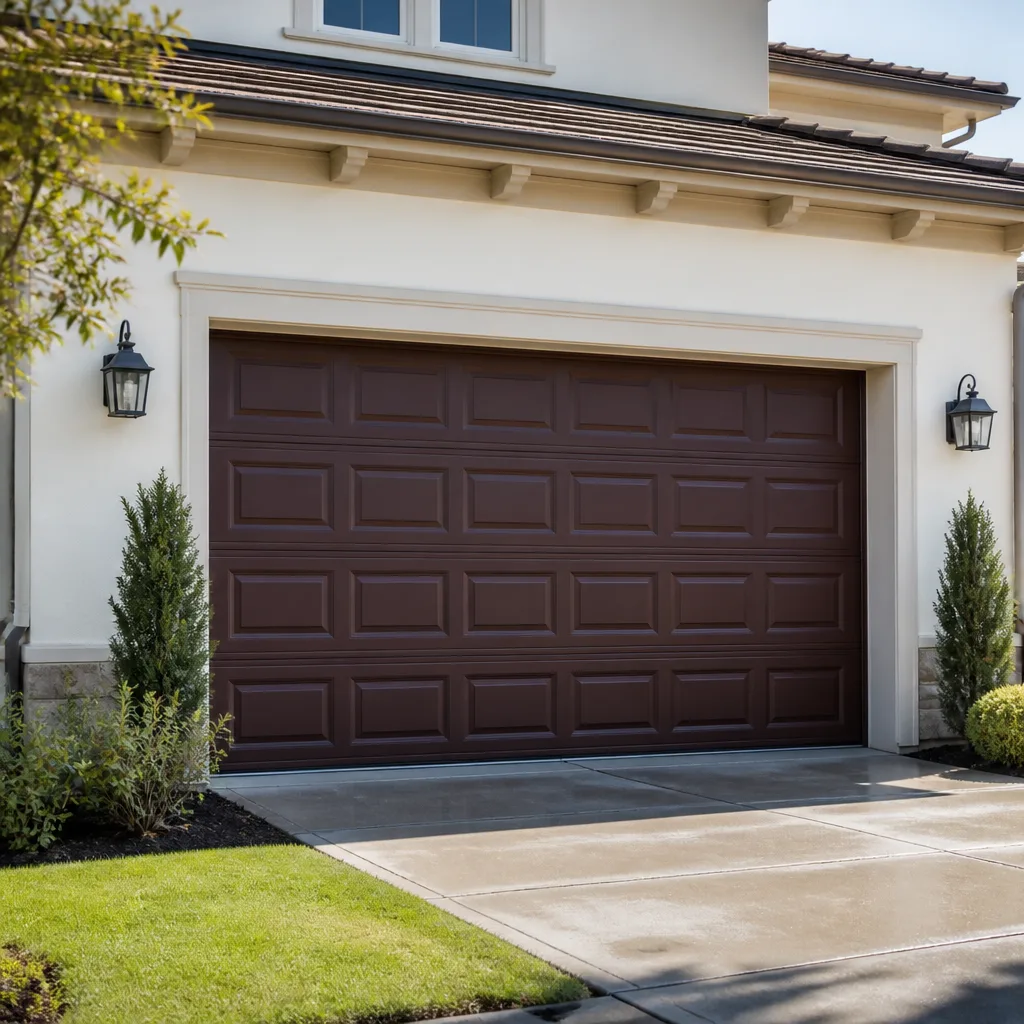 Raised-panel steel
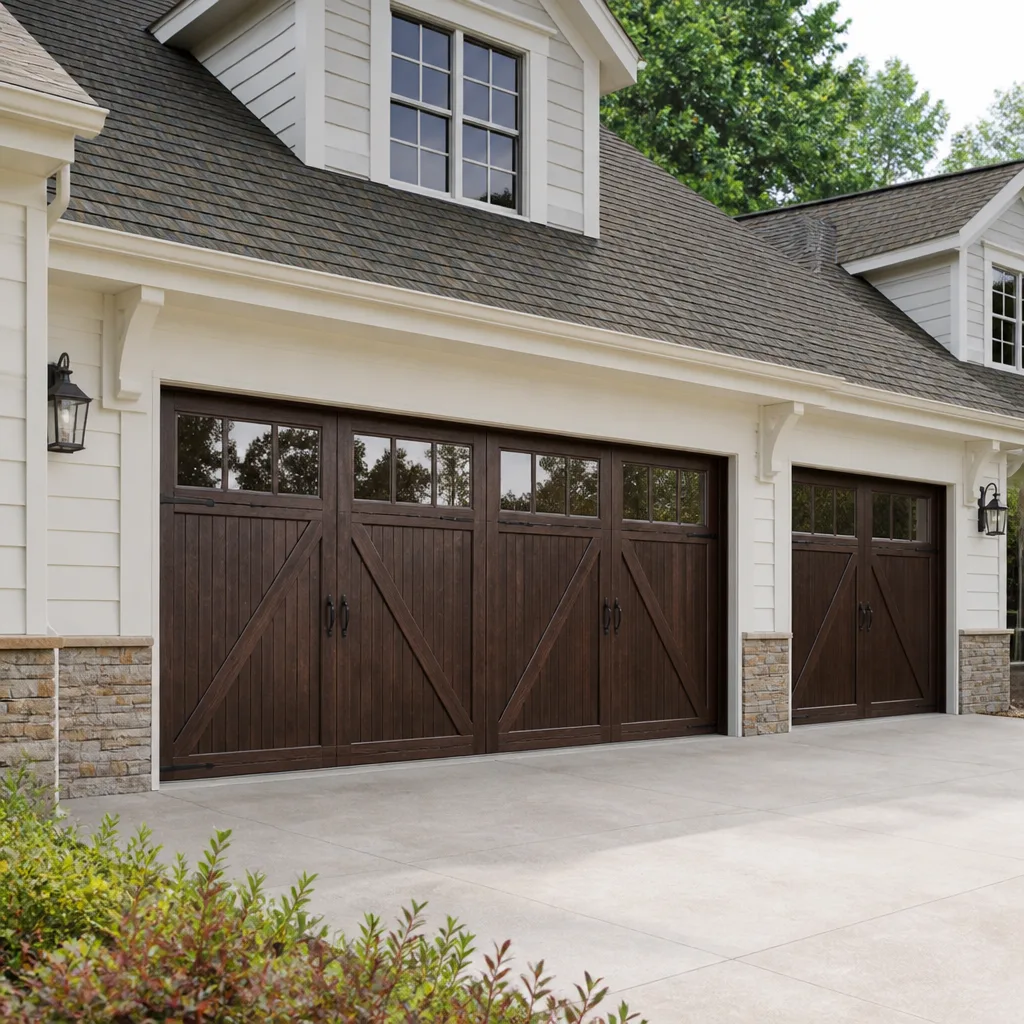 Carriage house
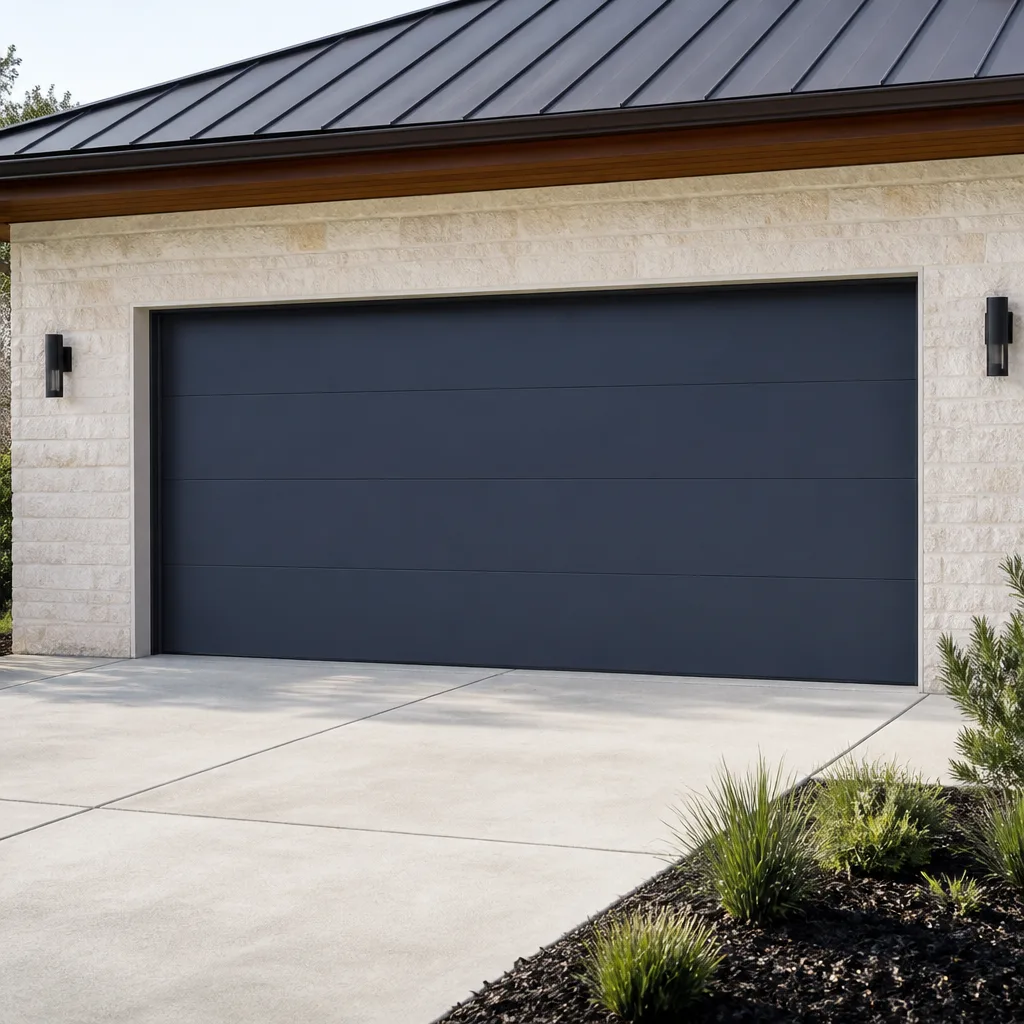 Modern flush
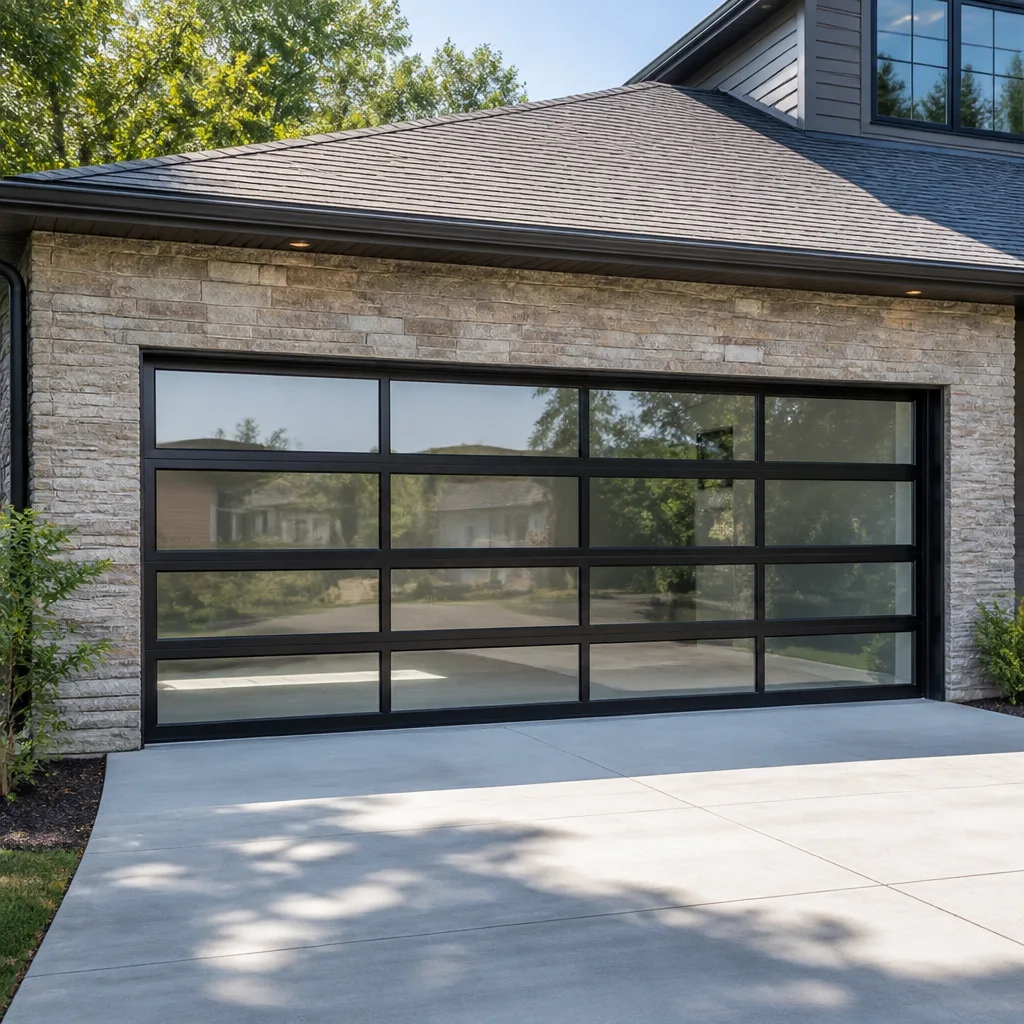 Full-view glass
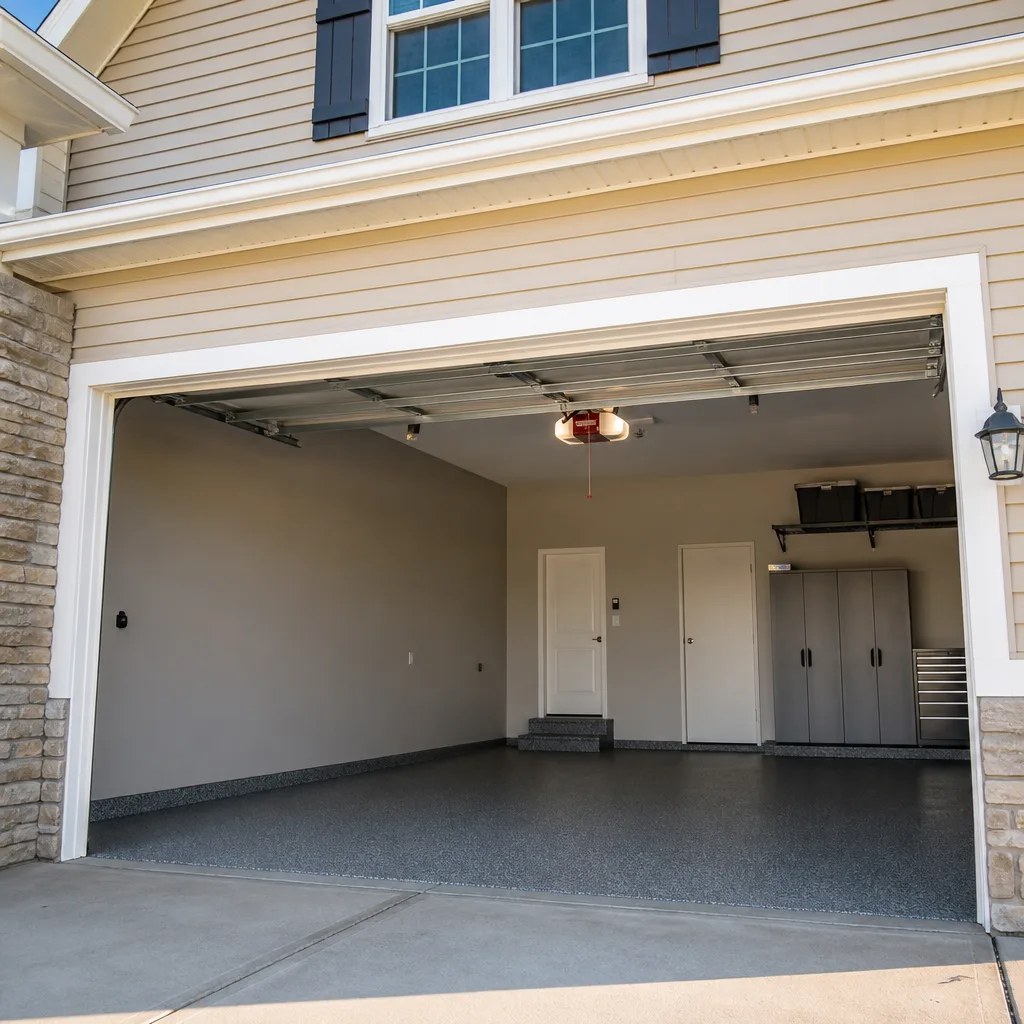 LiftMaster openers
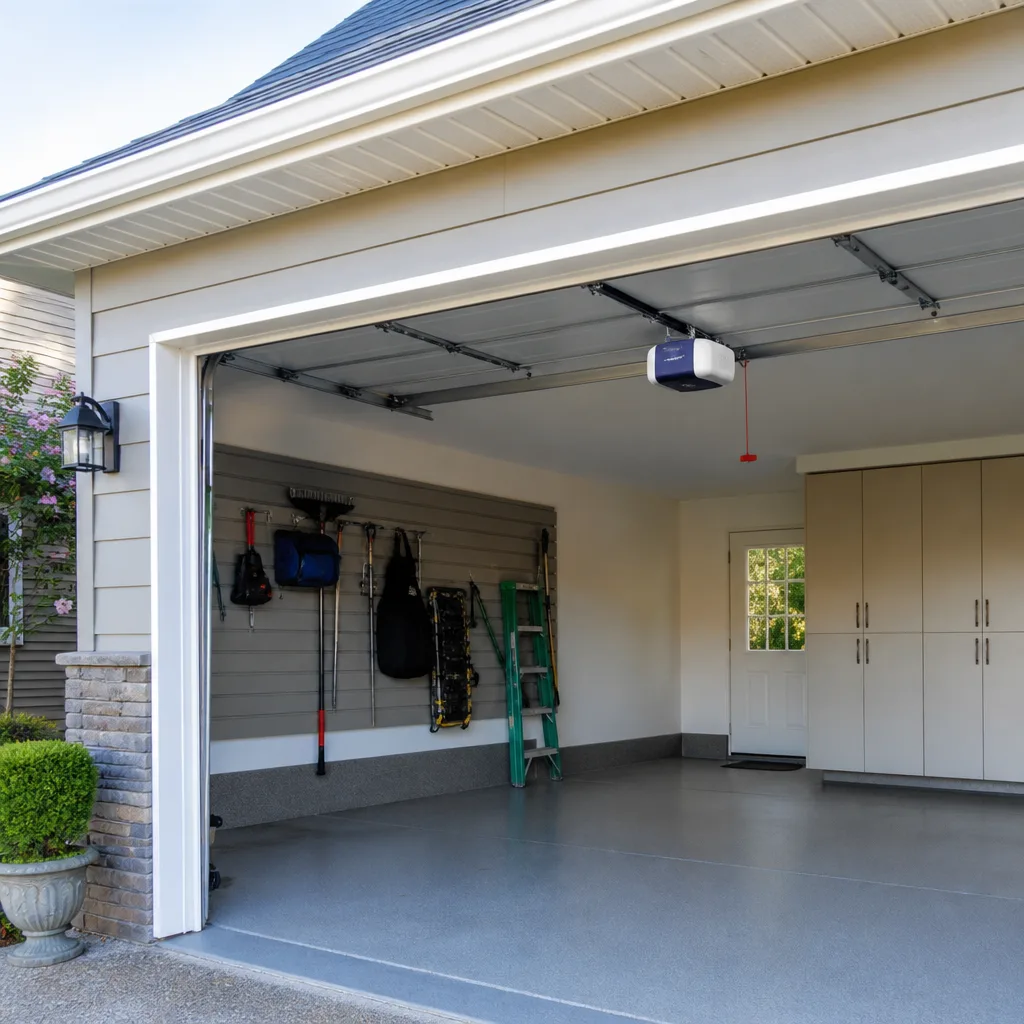 Chamberlain openers
Full 25-point door and opener safety check with every visit - springs, cables, rollers, tracks, and your LiftMaster or Chamberlain opener included
You get a price before we start. It does not change when the truck arrives.
Get your free estimateThe Complete Guide to Garage Door in San Bernardino
San Bernardino has a housing quirk most residents never think about until the garage door stops working. A large portion of the city’s single-family homes went up between 1950 and 1980, which means garages from that era were framed around door sizes, header clearances, and opener systems that have largely vanished from manufacturer catalogs. So when a spring snaps on a 1962 ranch on Del Rosa or a 1974 two-car off Kendall Drive, the fix isn’t as simple as ordering whatever door tracks are on sale at the nearest big-box store. This guide walks through how the Inland Empire’s housing stock, climate, and installer landscape should shape every decision you make about your garage door in San Bernardino. You’ll learn how to read an existing door’s condition, what actually drives costs, which materials survive local weather, when permits get triggered, and how to spot the difference between a real specialist and someone who just dabbles in doors.
Quick Answer
The right garage door decision in San Bernardino starts with knowing what you already have: the door’s age and dimensions, the brand stamped on the opener, and the condition of springs and tracks. Older homes here often need either custom-fit parts for discontinued hardware or a full track-and-door replacement sized for a non-standard opening. A dedicated garage door specialist who works across multiple brands can service what’s already installed in your garage, while a general handyman or single-brand dealer will too often push you toward whatever replacement earns them a margin rather than what your home actually needs.
Styles & brands we work with
Table of Contents
- Why San Bernardino’s Housing Stock Changes Everything
- Specialist, Handyman, or Single-Brand Dealer: What Each Actually Offers
- Door Materials That Survive the Inland Empire
- How to Read Your Door: Repair vs. Replacement
- Permit Triggers in San Bernardino and San Bernardino County
- Opener Compatibility in Older Garages
- What Multi-Brand Fluency Actually Means for a Homeowner
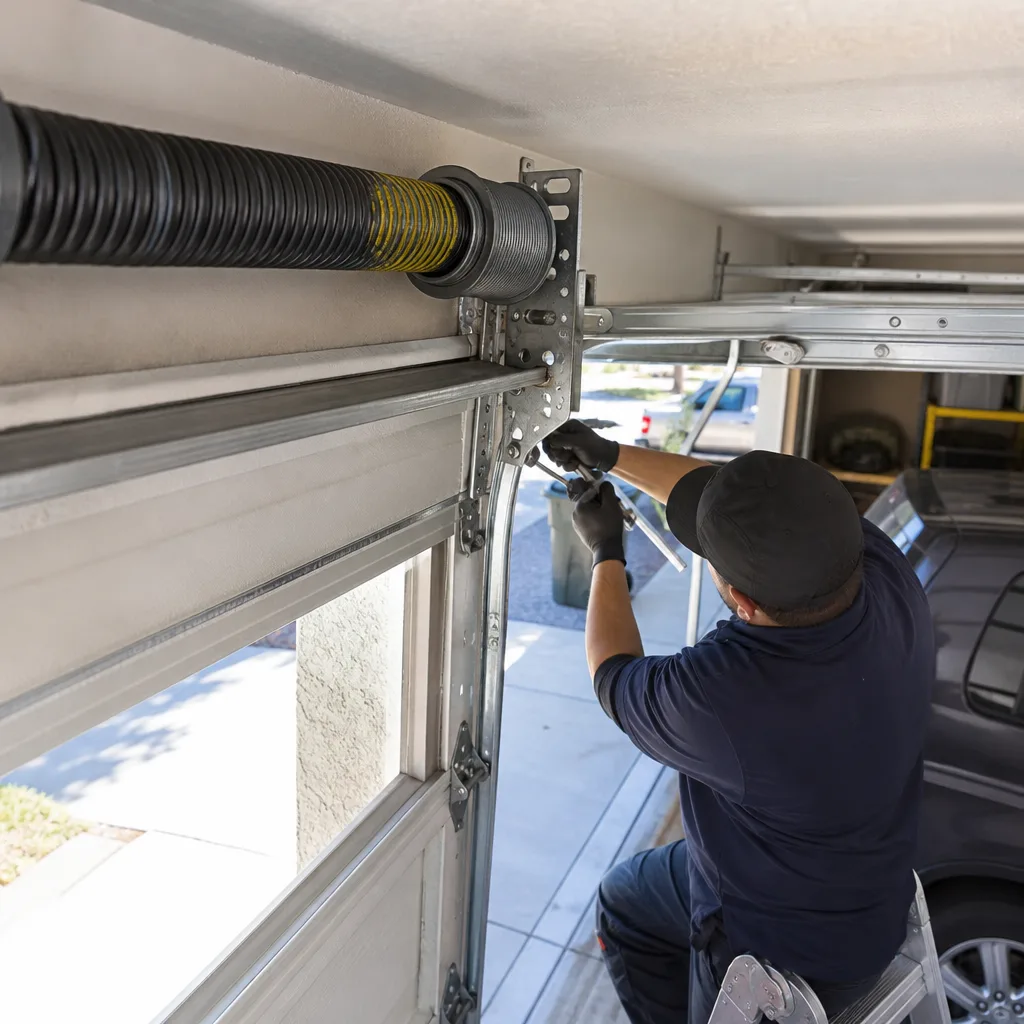
- Springs, Cables, and the Parts You Shouldn’t Touch
Why San Bernardino’s Housing Stock Changes Everything
If you live in a San Bernardino home built before 1980, your garage was likely framed for a door that isn’t made anymore. Builders in that era worked with standard widths of 8 or 9 feet and heights of 7 feet, but the track systems and header clearances were often tighter than what modern doors require. We regularly see homes near the 215 corridor where the original door was a one-piece tilt-up, later retrofitted with sectional track hardware that never quite fit the opening. That retrofit may have worked for decades, but when a section warps or a track bends, finding a direct replacement panel becomes a scavenger hunt.
The practical consequence is that homeowners in San Bernardino face a decision tree different from someone in a new-build community. A 2005 tract home has a predictable opening: 16 feet wide, 7 feet high, standard steel sections, standard track radius. A 1965 home might have a 15-foot opening, or an 8-foot-high door with a low ceiling, or wood framing that has shifted enough over sixty years to make the door bind at certain points along the track. The fix often requires custom-cut sections, altered track layouts, or a full conversion to a modern door with modified hardware rather than just swapping parts. This is why the first question a competent local specialist asks is not “what door do you want” but “what’s actually in there now.”
Specialist, Handyman, or Single-Brand Dealer: What Each Actually Offers
The garage door industry in San Bernardino splits into three rough categories, and knowing which one you’re dealing with changes the advice you’ll receive. A general handyman will diagnose the most visible problem and often default to the simplest available fix, which is fine for a loose bolt or a misaligned sensor but dangerous territory when a high-tension spring is involved. A single-brand dealer knows one product line deeply but struggles with everything else, meaning a Raynor homeowner who calls a Clopay-only shop may hear that their entire door needs replacing when a compatible section would solve it.
A garage-door-only specialist operates differently. Garage doors are all we do, which means the tools, the stock, and the diagnostic instincts are all built around one trade. From panel to opener to spring, a specialist sees the system as connected components rather than isolated problems. When a Genie opener fails on a Wayne Dalton door mounted on a Craftsman-era track, the diagnosis doesn’t require guessing across trades; it requires knowing how those brands interact and which parts are interchangeable across product generations.
What This Means for Multi-Decade Homes
- Parts sourcing: A specialist carries or can source parts for discontinued models. A handyman shops retail and comes up empty. A single-brand dealer won’t even try.
- Diagnostic accuracy: The right repair, not just the fast one, comes from seeing the same failure patterns across hundreds of doors in the same city.
- Replacement advice: A specialist can tell you when a door is genuinely done versus when a $40 part buys you another five years. That distinction alone can save $1,500 or more.
- Code awareness: San Bernardino has specific permit triggers (covered below). A specialist knows them. A handyman often doesn’t, and that’s the homeowner’s liability.
Door Materials That Survive the Inland Empire
San Bernardino’s climate punishes certain door materials in ways coastal California never does. Summer temperatures routinely pass 100°F, Santa Ana winds kick up dust and debris, and winter nights occasionally drop below freezing. Each condition affects door components differently.
Steel
Steel doors are the most common choice in San Bernardino for good reason: they hold up to heat without warping and resist denting well enough for most households. The drawback is that low-gauge steel sections can bow slightly under sustained direct sun on west-facing garages, and salt or chemical runoff from nearby foothill roads can accelerate rust on scratched panels. A quality steel door with a factory-applied finish and periodic washing will last 20 years or more in this climate. For homes on the north end of the city near the 210, steel handles the temperature swings between summer and winter without issue.
Wood and Wood-Composite
Solid wood doors look right on certain San Bernardino architectural styles, especially the mid-century ranches south of Highland Avenue and the craftsman-era homes near downtown. But wood expands and contracts with every seasonal shift, and the Inland Empire’s dry heat pulls moisture out of wood faster than coastal air does. Expect to repaint or reseal a wood door every two to three years. Wood-composite doors, which use a fiberboard or mineral core, split the difference: the look of wood with more dimensional stability. Clopay and Amarr both make composite lines that perform well in high-heat, low-humidity environments.
Aluminum and Glass
Aluminum doors with glass panels are common on San Bernardino homes that want daylight in the garage without full windows. Aluminum resists rust completely, which makes it a smart choice for properties near the wash corridors where moisture lingers in winter. The trade-off is that aluminum dents more easily than steel and transfers heat more readily, so an uninsulated aluminum door on a south-facing garage becomes an oven in July. If you opt for aluminum, pay attention to the insulation rating.
In our experience, the most frequent material failure in San Bernardino garages isn’t the panel itself; it’s the weatherstripping and bottom seal. The dry heat bakes rubber seals brittle within three to five years, and once the seal fails, dust, rodents, and hot air move in. A $25 seal replacement done annually prevents the slow degradation homeowners only notice when the door starts sticking or the garage smells like the attic.
How to Read Your Door: Repair vs. Replacement
The default advice from someone who wants to sell you a new door is that an old one isn’t worth fixing. The correct answer depends on a condition audit. Walk through this checklist before calling anyone.
- Open and close the door by hand (with the opener disengaged). Note whether it glides evenly or hesitates, grinds, or twists at any point along the track. Uneven travel usually means a track problem, a worn roller, or a shifting frame, not a dead door.
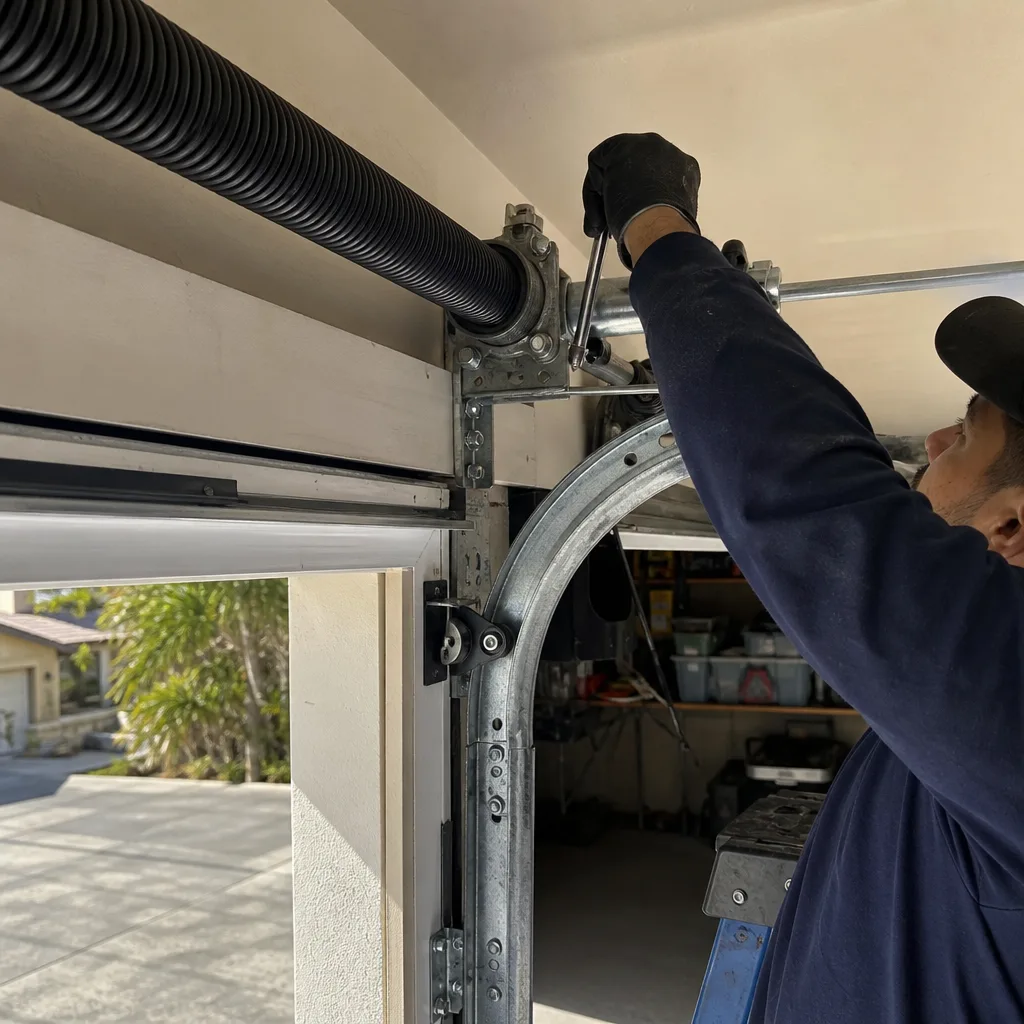
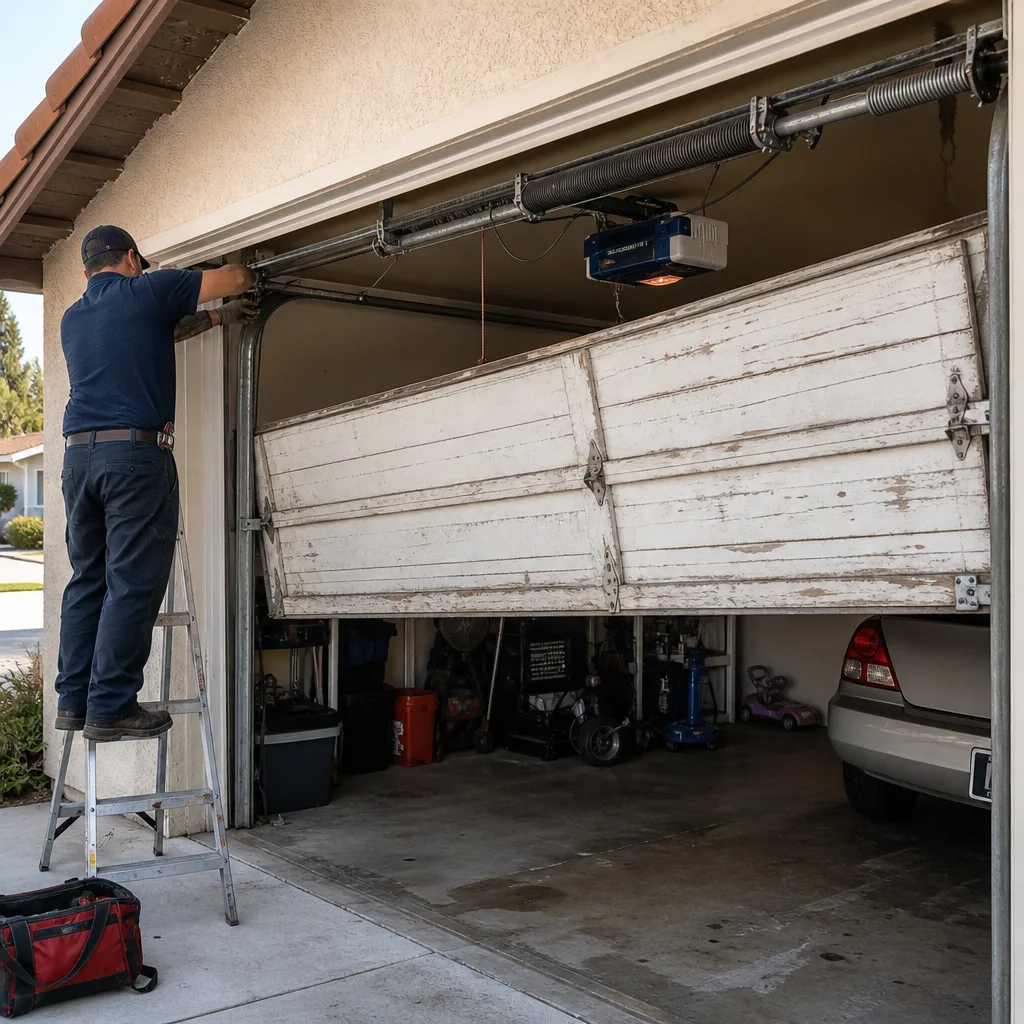
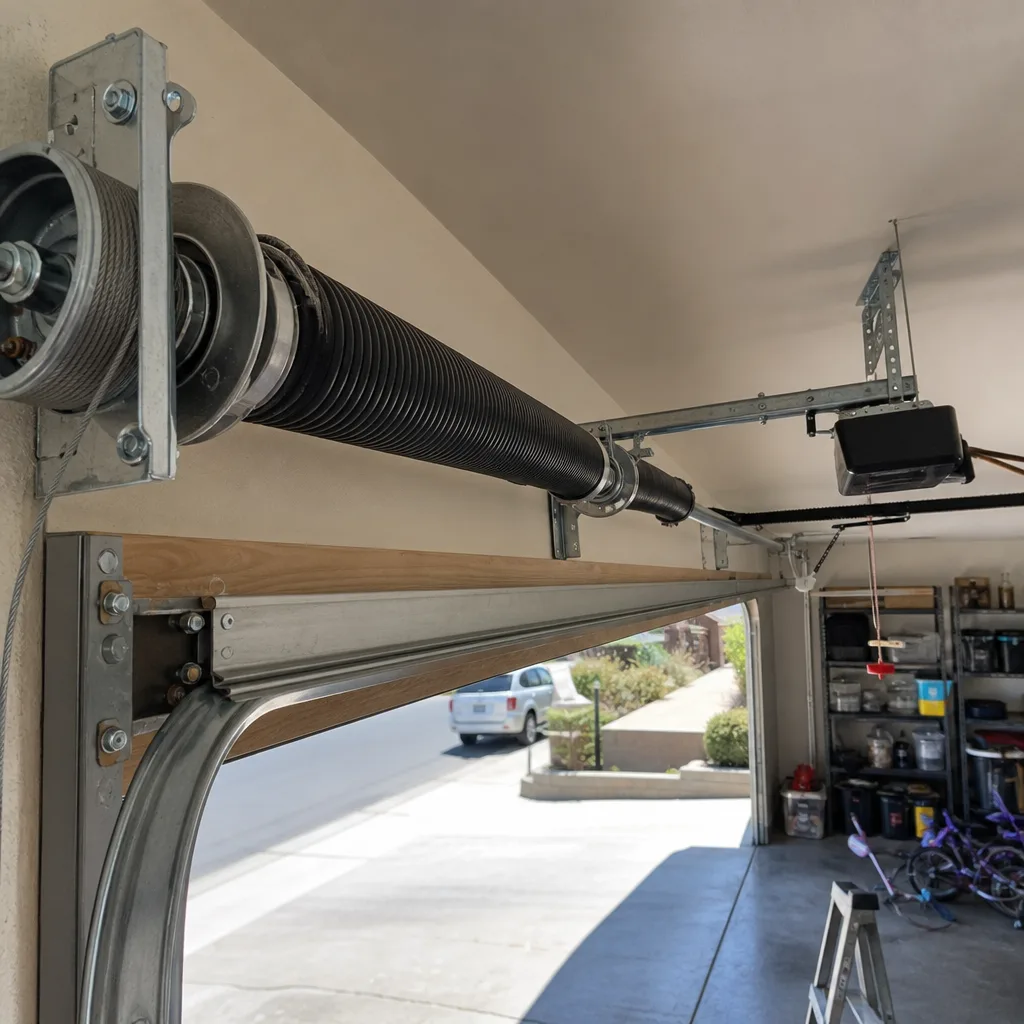
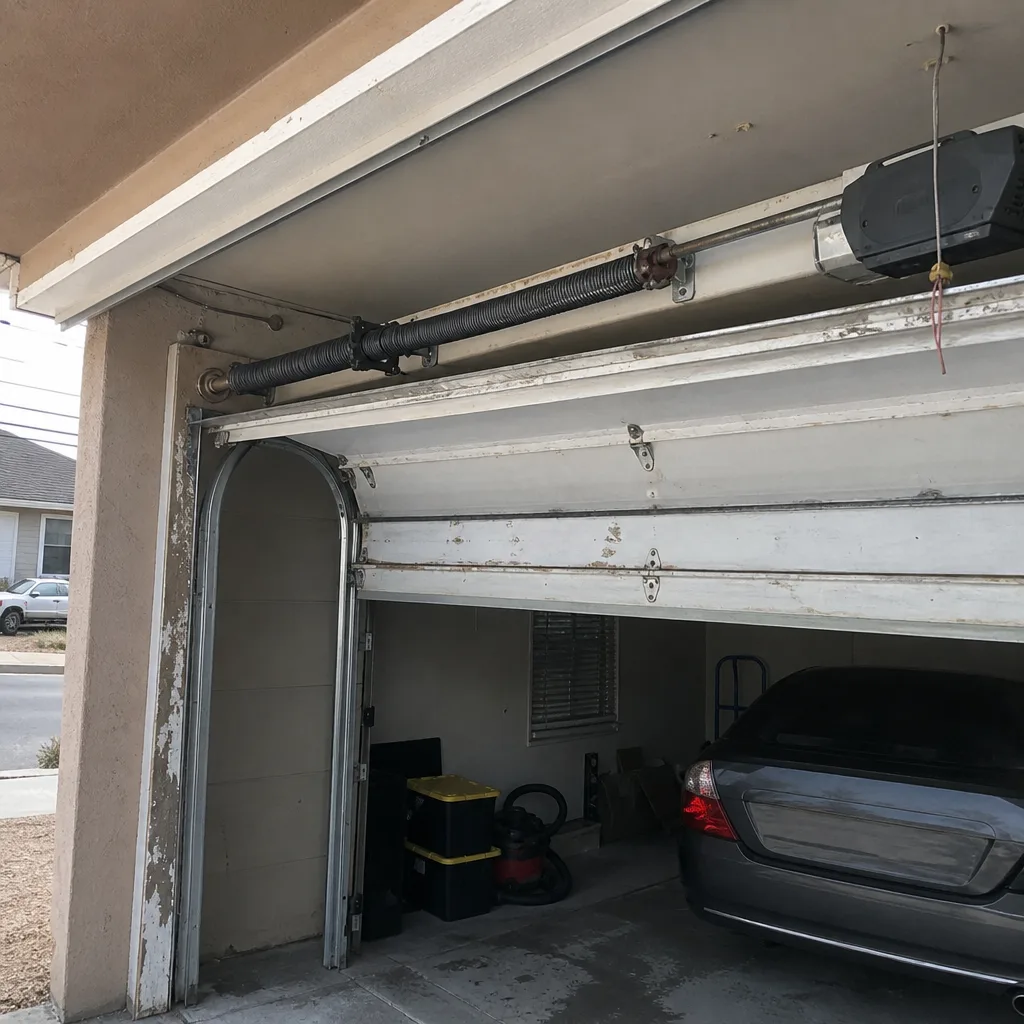
- Inspect the springs. Look for visible gaps in torsion springs or stretched-out extension springs. A broken spring is the single most common San Bernardino garage door failure, and it’s independently repairable without replacing the door itself.
- Check the panels. Surface rust, dents, and warped sections matter aesthetically but don’t affect function unless they’re severe enough to bind in the track. A door with cosmetic damage and sound mechanics can serve another decade.
- Test the opener separately. Pull the emergency release and run the door by hand. If the door moves fine manually but struggles under power, the problem is the opener, not the door.
- Measure the gap at the bottom seal. If the seal is cracked or missing, air, water, and pests are entering. This is a maintenance item, not a replacement trigger.
The replacement threshold is met when one of these conditions appears: the door’s framing has shifted enough that the door binds regardless of track adjustment; multiple sections are rusted through or structurally compromised; the track itself is bent beyond safe repair; or the cost of parts plus labor approaches 60% of a new door’s installed price. A specialist who sees doors across San Bernardino every day can make that call accurately because they’ve seen the full range of what’s salvageable.
Permit Triggers in San Bernardino and San Bernardino County
San Bernardino enforces permit requirements for garage door work in more situations than most homeowners expect. The rule of thumb: any change to the structural opening of the garage requires a permit. A like-for-like replacement of the door itself, where the opening and framing remain untouched, typically does not. But there are local wrinkles.
In the city of San Bernardino, enlarging a garage door opening, adding a new opening where none existed, or converting a carport to an enclosed garage all trigger the permitting process through the city’s Building and Safety Division. The same applies if you’re modifying headers or load-bearing framing above the door. In unincorporated San Bernardino County, the county’s Land Use Services department applies similar rules, and certain foothill and wildfire-adjacent zones add vegetation clearance and ember-resistance requirements that can affect door material choices.
What surprises homeowners most is that installing a new opener on an older home can trigger electrical permit review if the circuit feeding the opener isn’t up to current code. Homes built before 1980 often have the opener wired to an ungrounded circuit or sharing a circuit with lighting or other outlets. A reputable installer will flag this before pulling the opener out. A handyman likely won’t mention it until the inspector does.
Opener Compatibility in Older Garages
The opener question in San Bernardino is not just about horsepower. It’s about whether the opener’s drive system matches the door’s weight, balance, and track configuration. Older garage doors are heavier than modern ones; a solid wood door from the 1960s can weigh 300 pounds or more, while today’s insulated steel doors often come in under 150. An opener rated for a modern lightweight door will burn out its motor or shred its drive gear within a couple of years if asked to lift a 60-year-old wood panel system.
Chamberlain and LiftMaster dominate the San Bernardino market, and parts for them are widely available. Genie and Craftsman systems are also common, particularly in homes that got their first opener in the 1980s or 1990s. The problem homeowners run into is that manufacturers have changed their rail systems and logic boards multiple times over the decades, so a “Genie-compatible” remote from a retail shelf may not communicate with a 25-year-old Genie head unit. This is where dedicated opener repair matters: a technician who handles opener repair as its own service, not as an afterthought, can identify the specific generation of the unit and match parts accordingly. Opener repair in San Bernardino often comes down to that: recognizing which era of hardware is hanging from the ceiling.
What Multi-Brand Fluency Actually Means for a Homeowner
When a technician says they work on eight brands, the point isn’t the number. The point is that they can walk into any San Bernardino garage and identify what’s there without a catalog lookup. LiftMaster and Chamberlain share a parent company and much of their parts architecture, but their rails and remotes differ by generation. Wayne Dalton uses a unique torque-master spring system that many technicians have never opened, and attempting a standard torsion spring repair on one causes serious damage. Raynor doors have their own track profile on certain models. Amarr and Clopay both make good doors, but their section profiles differ enough that panels are not interchangeable between brands.
The practical benefit for you is diagnostic speed and honest advice. We work on the brand you already have, which means the recommendation isn’t dictated by what we’re authorized to sell; it’s dictated by what’s actually wrong. In San Bernardino, where homes often carry a patchwork of components accumulated across decades, that neutrality matters. A Chamberlain opener mounted on a Wayne Dalton door with Clopay replacement panels isn’t unusual here; it’s Wednesday. A technician who only knows one brand’s ecosystem will misread that system.
Full installation capability across Clopay, Amarr, Wayne Dalton, and Raynor door product lines also means that when replacement is the right call, the conversation stays within brands we know rather than pivoting to whatever happens to be in a regional warehouse that month.
Springs, Cables, and the Parts You Shouldn’t Touch
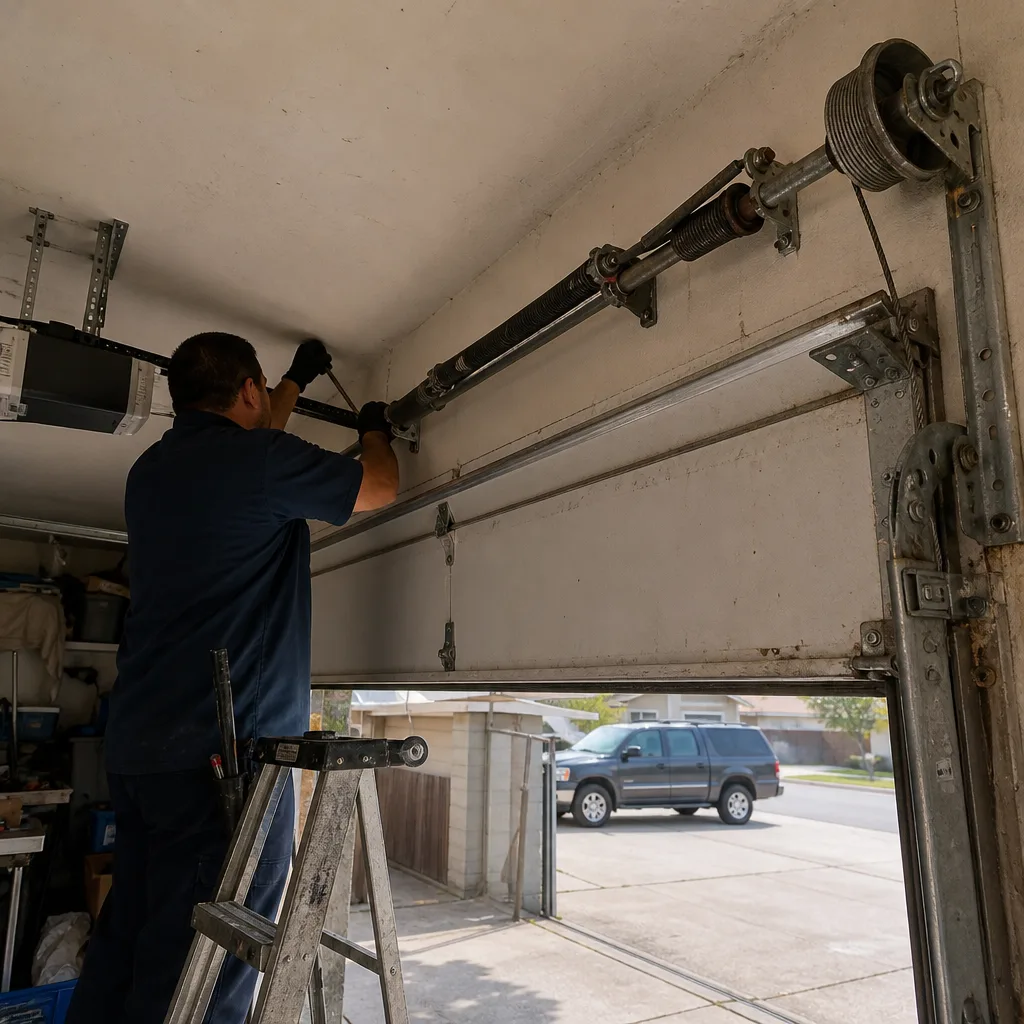
Garage door springs hold enormous stored energy. A torsion spring under tension carries enough force to break bone or worse if it releases unexpectedly, and extension springs stretch under load in ways that can turn a loose cable into a projectile. This is not a component to experiment with. Even a seemingly simple cable replacement becomes dangerous when the door’s weight is uneven or the spring still holds tension. In San Bernardino, where older doors often have weathered springs that have been adjusted repeatedly over the years, the risk compounds: you’re working against metal that has already fatigued.
What you can safely do as a homeowner is inspect visually: look for a visible separation in torsion springs, listen for grinding or popping when the door moves, and watch whether the door stays put when lifted halfway. If the door drops or creeps upward on its own, the spring tension is wrong, and that’s a sign to call someone who does this daily. Spring replacement is a routine job for a trained technician with the correct winding bars and replacement springs matched to the door’s exact weight. It is not a routine job for a homeowner with a pair of screwdrivers and a YouTube tutorial.
For any spring, cable, or track work on a San Bernardino garage door, the safest move is a direct call to a specialist who carries the right parts on the truck and has done this particular repair hundreds of times in this city’s homes.
Common Mistakes to Avoid
- Replacing a door when a spring is the only problem. A broken torsion spring costs a fraction of a new door. We’ve seen San Bernardino homeowners quoted $2,000 for a full replacement when the actual fix was a $220 spring swap.
- Assuming an old opener can’t be fixed. Many 20-year-old Genie and LiftMaster units fail because of a $15 capacitor or a worn drive gear, not because the whole system died. Diagnosing the specific failure beats replacing the unit blindly.
- Buying a door off the shelf at a big-box store. Those doors are sized for standard openings. A San Bernardino home built in 1965 often isn’t standard, and you’ll discover that after the old door is already out.
- Ignoring the bottom seal. The Inland Empire’s dry heat kills rubber seals fast. A failed seal lets in dust, rodents, and hot air, and the damage accrues quietly.
- Letting a handyman touch a torsion spring. This is the single most common source of garage door injuries. High-tension springs require proper tools and technique.
- Adding a modern opener to a heavy wood door. The opener will die young. You either need a higher-horsepower unit matched to the door’s weight or a door replacement first.
- Skipping the permit when modifying the opening. Enlarging or adding a garage opening in San Bernardino without permits creates problems at resale and with insurance.
See the difference
 Before
 After
 Before
 After
 Before
 After
When to Call a Professional
Call a professional when the door won’t open or close safely, when you hear unusual grinding or popping noises, when the door is visibly sagging or tracking unevenly, when a spring is visibly broken or a cable is frayed, or when the opener runs without moving the door. Those are mechanical failures that worsen with use. Also call when you’re considering a replacement and want an honest read on whether your existing door has life left in it. San Bernardino Garage Door Co offers free estimates in San Bernardino – call (855) 763-8905 to schedule an inspection. For more on what a repair service call covers, see our Garage Door Repair in San Bernardino page. If the opener is the issue, our Garage Door Opener Repair in San Bernardino service handles that as its own dedicated call.
Frequently Asked Questions
Most San Bernardino garage door repairs fall between $150 and $450, depending on which parts failed. A spring replacement typically runs $180 to $340 including parts and labor, while a broken cable or roller set costs less. The exact quote depends on your door’s weight, size, and brand, and a good shop will confirm the price before any work starts, meaning the invoice matches the quote. Call (855) 763-8905 for a free exact estimate covering your specific door.
Repair calls in San Bernardino are often completed same-day when the issue is a spring, cable, or opener failure, since a specialist carries the common parts on the truck. Oddball parts for discontinued doors may take a day or two to source. If the door is stuck open or won’t close, treat it as an urgent call because an open garage is an invitation to both weather and people.
No, if the technician diagnosed correctly over the phone and the breakdown matches the description. What changes quotes is discovering additional failures that weren’t visible before the door was opened up. Any honest company will tell you the price for the quoted work before starting and call you with the new number if they find something else. That’s how San Bernardino Garage Door Co operates on every repair.
Most common parts for LiftMaster, Chamberlain, Genie, Craftsman, Wayne Dalton, Clopay, Amarr, and Raynor systems are stocked on service trucks, including springs, cables, rollers, sensors, and opener logic boards for recent generations. Rarely, an unusual part for a discontinued model needs to be ordered. The technician will tell you this before scheduling, not after arriving.
Like-for-like replacement where the opening and framing remain unchanged does not require a permit in the city of San Bernardino. Modifying the opening, changing header structure, or converting the space to a different use triggers permits through Building and Safety. Same goes for new electrical runs to an opener. Your installer should know which situation applies to your home before starting.
Installation work includes Clopay, Amarr, Wayne Dalton, and Raynor door lines, paired with openers from LiftMaster, Chamberlain, Genie, and Craftsman. The right choice depends on your home’s exposure, the existing track system, and whether you want to match an older home’s design style or modernize. You can explore options on our Garage Door Installation in San Bernardino page.
The Bottom Line
The garage door decision in San Bernardino starts with the house you already live in, not the door a salesperson wants to sell you. Older framing, non-standard openings, five-decade-old hardware, and the Inland Empire’s punishing dry heat all narrow your real options in ways that generic advice never captures. A dedicated specialist who works on the brand you already have and handles everything from panel to opener to spring can make that call accurately. Whether you need a spring replaced, an opener diagnosed, or an honest assessment of a 1963 door that’s been making noise for years, the process starts with a phone call. Reach Garage Door Repair in San Bernardino for repairs, Garage Door Opener Repair in San Bernardino for opener issues, or Garage Door Installation in San Bernardino for replacements. For a free estimate, call (855) 763-8905. The price is quoted and agreed before any work starts.
Written by the team at San Bernardino Garage Door Co, serving San Bernardino since 2016.