
Last updated October 30, 2026
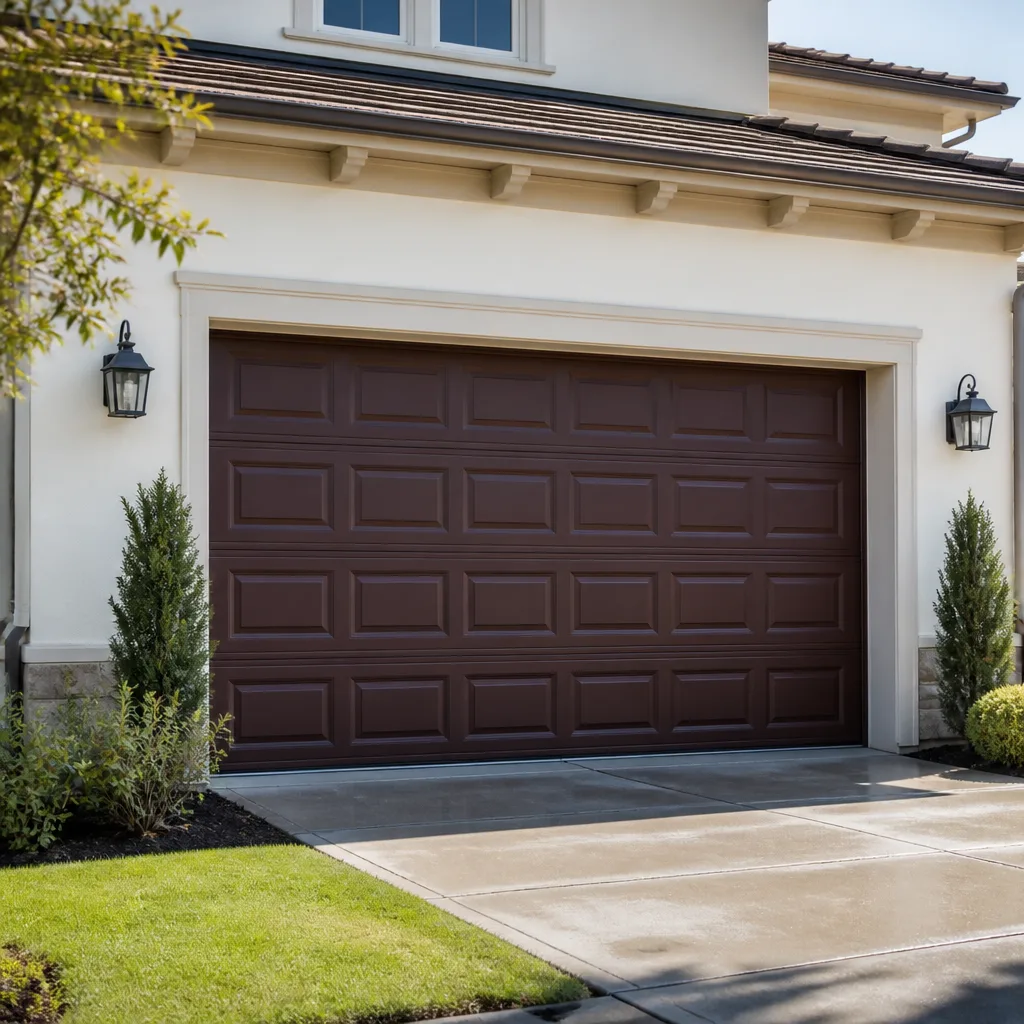 Raised-panel steel
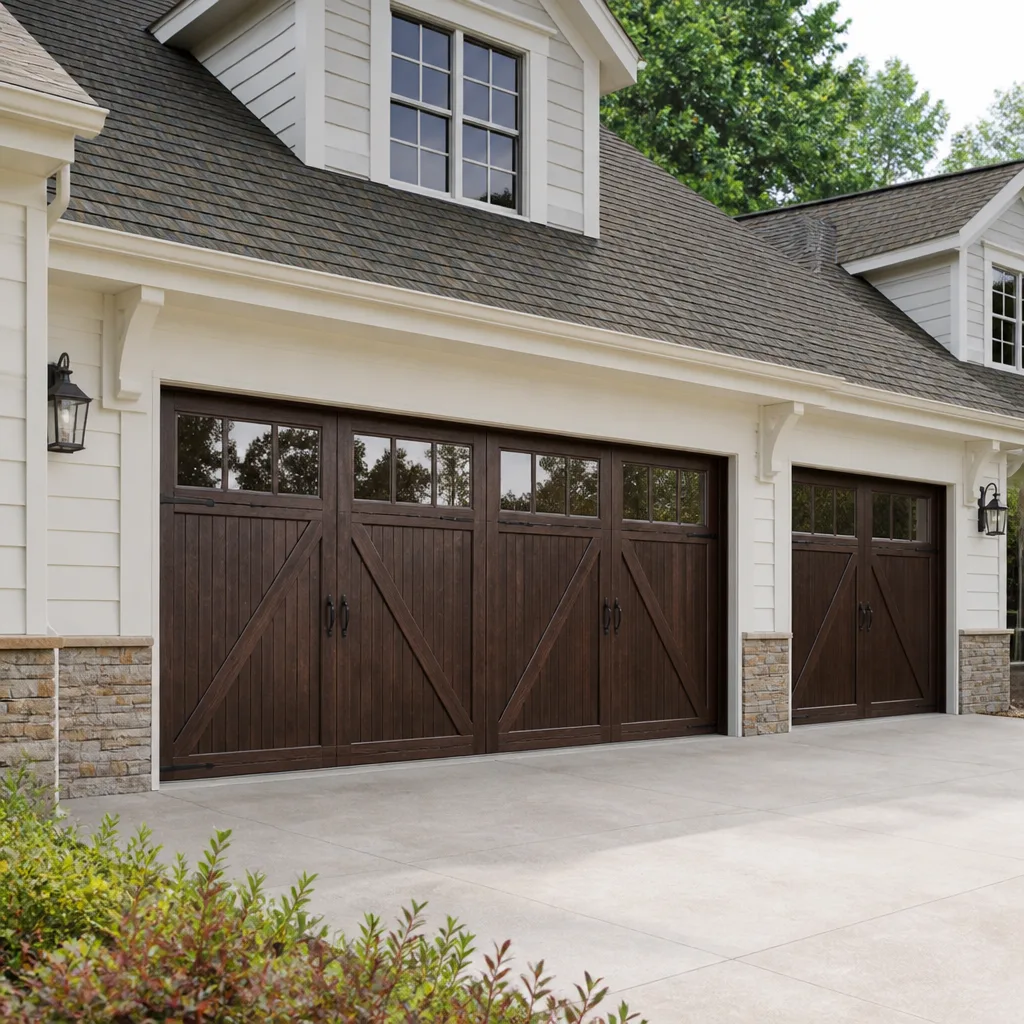 Carriage house
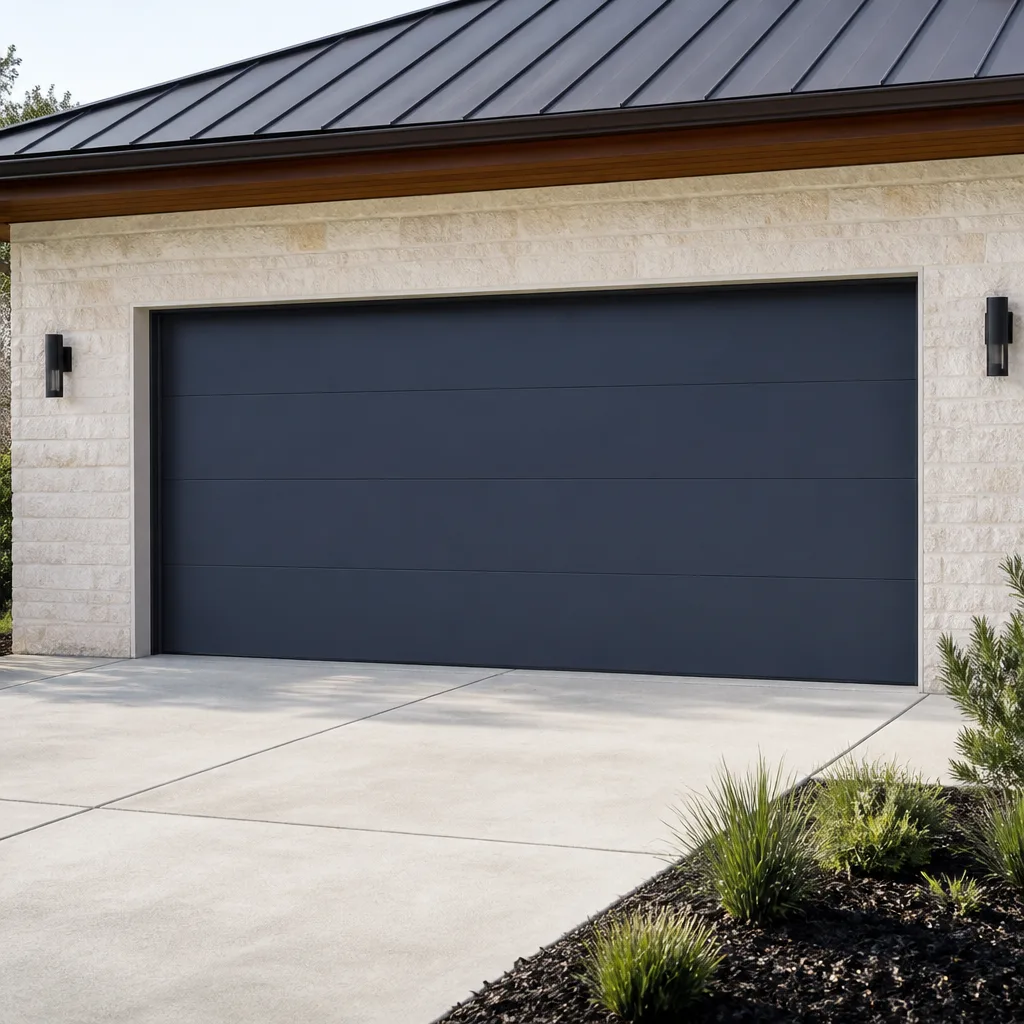 Modern flush
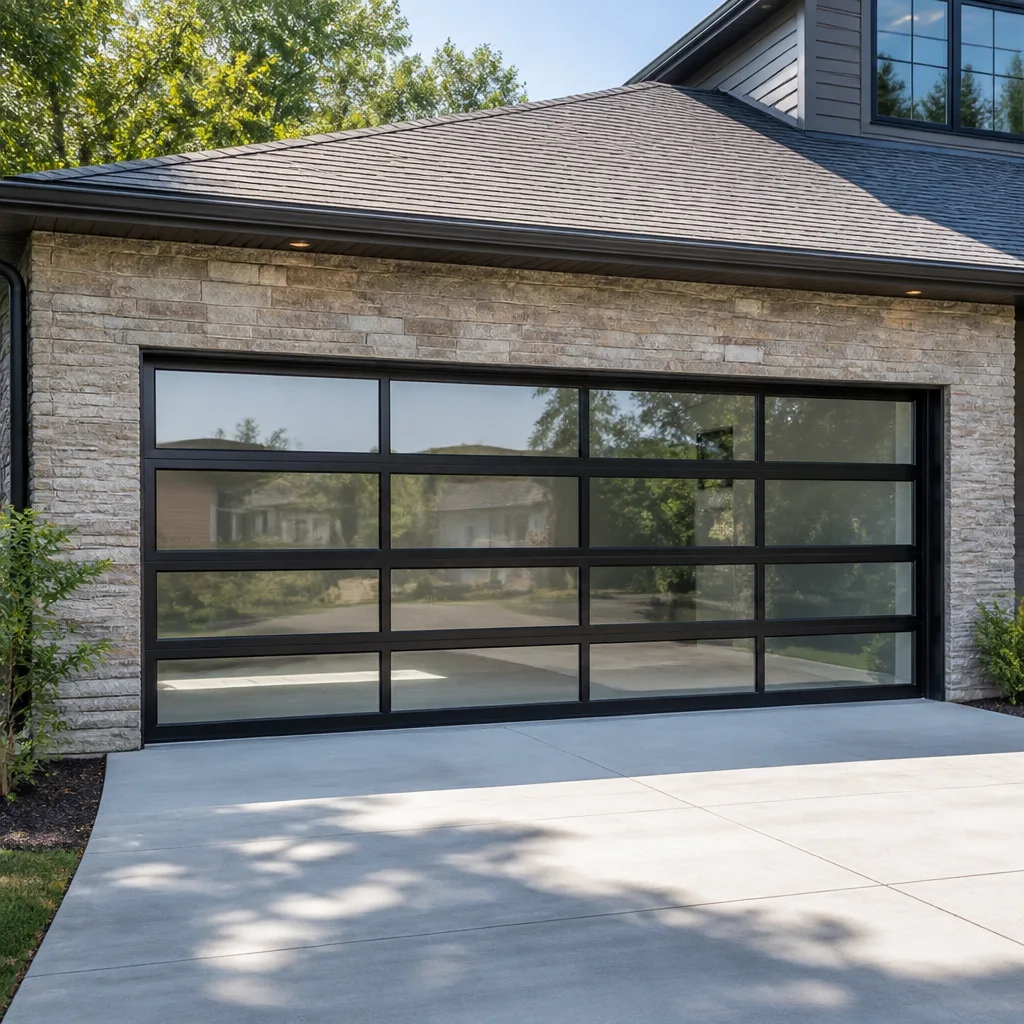 Full-view glass
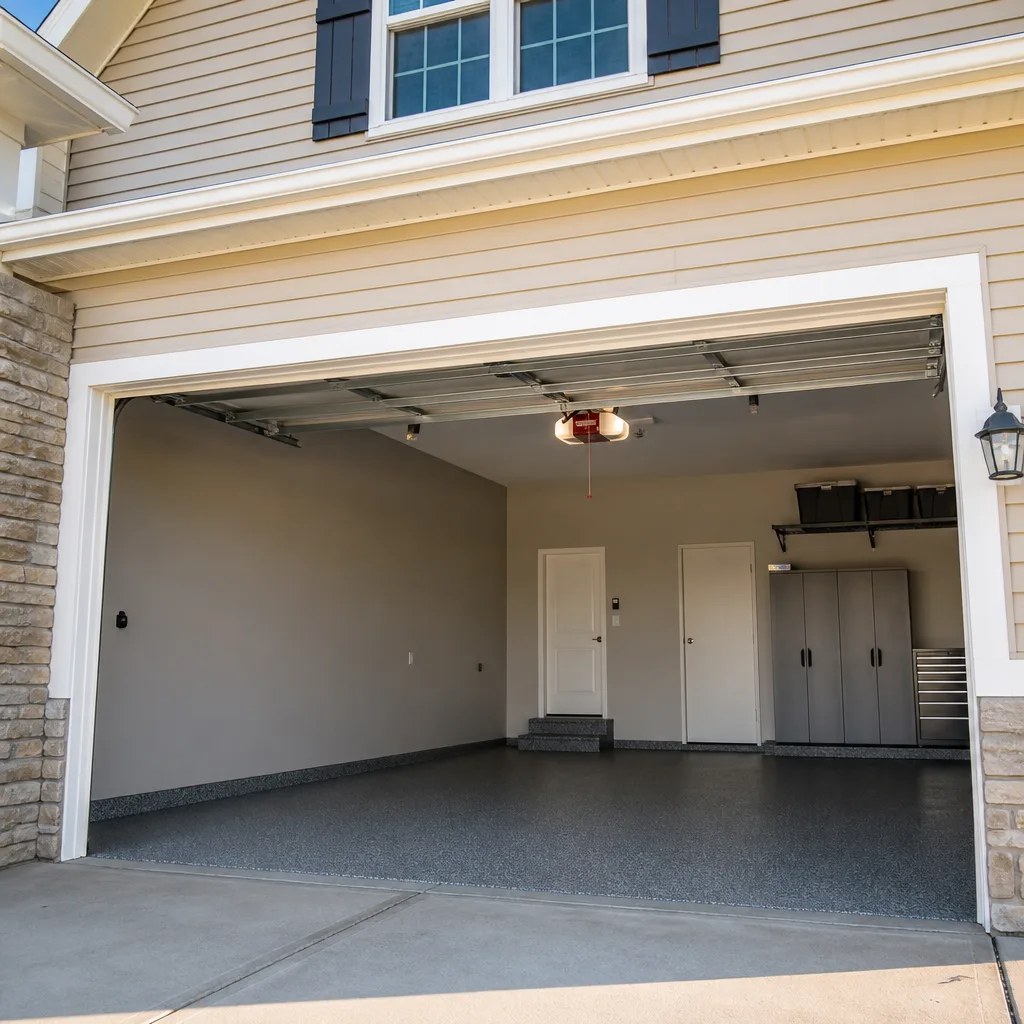 LiftMaster openers
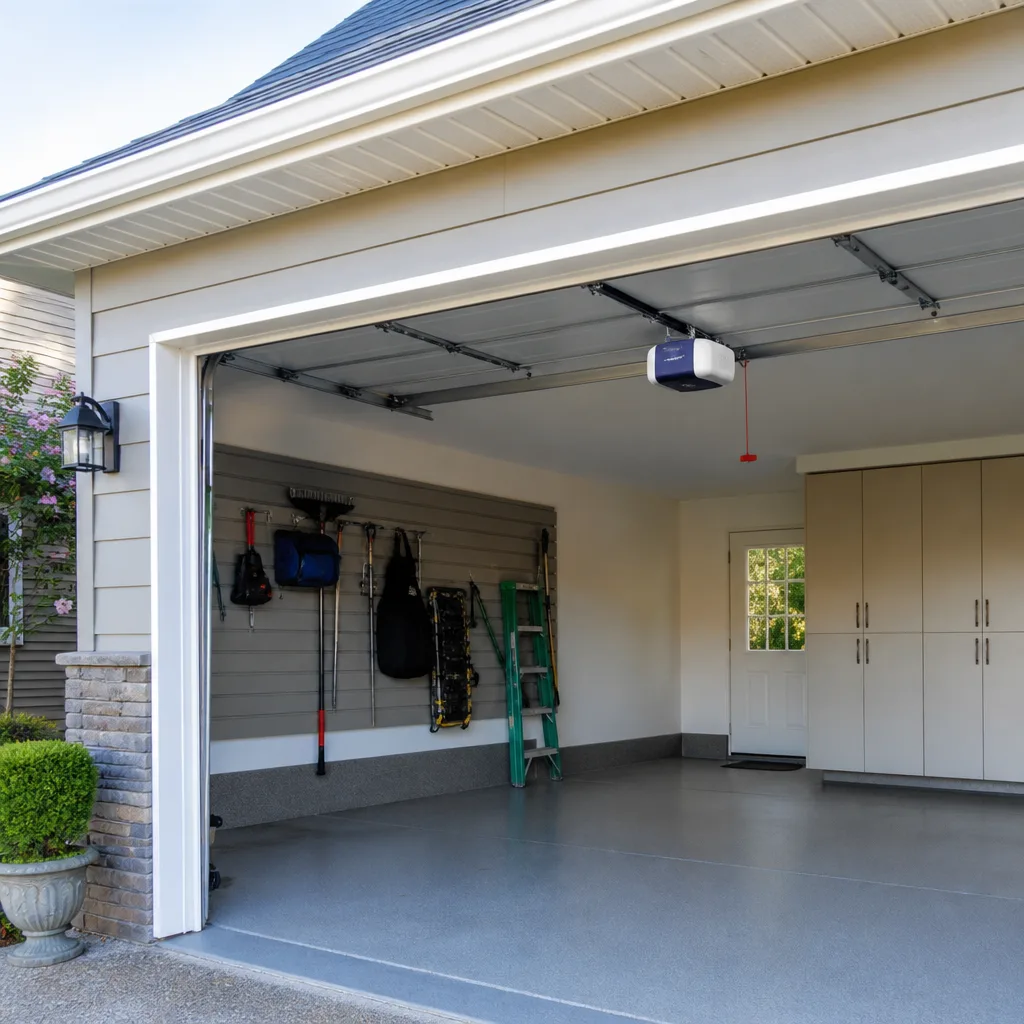 Chamberlain openers
Full 25-point door and opener safety check with every visit - springs, cables, rollers, tracks, and your LiftMaster or Chamberlain opener included
You get a price before we start. It does not change when the truck arrives.
Get your free estimateGarage Door Emergency Preparedness Guide for San Bernardino Homes
During the rolling blackouts and wildfire-driven outages that have hit the Inland Empire over the past several years, a pattern kept repeating on San Bernardino streets: cars trapped in garages. Homeowners stood in driveways staring at doors that would not budge, not because the door was broken, but because they had never pulled the red emergency release cord hanging from the opener trolley. Many did not even know the cord existed. This guide exists so that never happens to you. We’ll cover manual release operation, battery backup reality, wildfire sealing, post-earthquake inspection, and a one-page household reference card you can post in your garage this weekend.
Styles & brands we work with
Quick Answer
Garage door emergency preparedness in San Bernardino means three things: knowing how to manually open your door when power fails, verifying your door seals against wildfire ember intrusion, and inspecting track and spring integrity after seismic events, as detailed in our Garage Door Repair Maintenance Checklist for San Bernardino Homeowners. The red cord hanging from your opener releases the trolley so you can lift the door by hand. Test it today, not during the next outage.
Table of Contents
- How to Manually Release Your Garage Door by Opener Type
- Battery Backup Openers: What Actually Holds Charge
- Wildfire Evacuation and Ember Sealing
- Post-Earthquake Garage Door Inspection
- Creating a One-Page Emergency Reference Card
- San Bernardino Power Outages and Your Garage Door
- Spring and Cable Safety During Emergencies
- Common Mistakes to Avoid
- When to Call a Professional
- Frequently Asked Questions
- The Bottom Line
How to Manually Release Your Garage Door by Opener Type
The manual release mechanism differs enough between opener models that guessing during an emergency wastes precious minutes. Here is the step-by-step for the four most common opener types found in San Bernardino garages, from the older Craftsman chain-drive units still operating in north-end homes built in the 1980s to the belt-drive Chamberlain and LiftMaster models common in newer foothill subdivisions.
- Chamberlain and LiftMaster (belt or chain drive, post-1995): Locate the red rope hanging from the trolley rail above your car. Pull straight down firmly. You will hear a click as the trolley disengages from the carriage. Lift the door by hand using the bottom handles. The door should raise smoothly with moderate effort. If it feels heavy or binds, stop and call a technician.
- Craftsman (chain drive, 1990s and earlier): These units use the same pull-down release as Chamberlain, but the cord often sits slightly forward on the rail. Pull down and back toward the garage interior, not toward the door. On older Craftsman models, the release lever may need a second tug to fully seat. Test before you need it.
- Genie (screw drive and belt drive): Genie openers, especially the screw-drive models common in San Bernardino’s mid-century ranch homes, use a release cord that pulls straight down and then forward. The carriage has a visible red release lever that snaps open. After pulling, push the door up manually by grasping the handle or bottom edge, never the top panel.
- Wayne Dalton and Raynor (wall-mount and specialty units): Wall-mount openers mounted beside the door rather than above it have a release mechanism on the unit itself, typically a pull cord or a small lever. The door releases at the shaft, not the trolley. Lift manually from the bottom. These units are less common in San Bernardino but appear in newer downtown lofts and converted commercial spaces.
A critical point: once you release the door manually, it no longer locks to the opener. That means someone could lift it from outside. If you are evacuating, close the door behind you when possible, then re-engage the trolley by pulling the release cord back or running the opener until it clicks back in. If you’re sheltering in place during an extended outage, consider securing the door with a slide lock if your track has one installed.
Our technicians at Garage Door Repair in San Bernardino have walked hundreds of homeowners through this release operation over the phone during outages. The number one thing people tell us afterward: “I wish I had practiced it once.” Release pulls take ten seconds when you know where the cord is and how it moves.
Battery Backup Openers: What Actually Holds Charge
Not all battery backup systems are equal, and some San Bernardino homeowners discovered that the hard way during the multi-day outages that followed Inland Empire wind events. A backup battery that promises “up to 24 hours of operation” typically delivers about 5 to 8 open-and-close cycles before performance degrades. Through a 24-hour outage, most openers with a healthy battery will still open the door on hour 20, but the motor runs slower and the battery LED flashes a warning. By hour 30, many systems are dead.
Here is what real-world use shows across the brands we service:
- Chamberlain and LiftMaster 8550 series with battery backup: These hold charge through roughly 20 to 25 open-close cycles or about 24 hours of standby. This is the most common backup system in San Bernardino homes, and it is generally reliable if the battery is replaced every two years.
- Genie battery backup units: Typically deliver fewer cycles because the screw-drive motor draws more current per cycle. Realistically, plan for 8 to 10 cycles before the battery drains.
- Craftsman and older Chamberlain belt drives: Many pre-2015 Craftsman openers in San Bernardino did not ship with battery backup at all. If your opener has no backup and the power fails, the manual release is your only option.
A battery backup is only as good as the battery inside it. These are lead-acid batteries that lose capacity with heat and age, and San Bernardino summers routinely push garage temperatures past 100 degrees, which shortens battery life. If your backup battery is more than three years old, assume it will not perform as rated. Replacement batteries are available for most Chamberlain, LiftMaster, and Genie models, and installation takes under fifteen minutes.
One more consideration: a battery backup powers the opener motor, not the door springs. If your torsion spring breaks during an outage, the backup battery will not lift that door. The opener will strain, the battery will drain fast, and the door will stay put. This is where Garage Door Opener Repair in San Bernardino comes into play: a technician can assess whether your opener, backup system, and springs are all working together or whether one failure is masking another.
Wildfire Evacuation and Ember Sealing
San Bernardino sits at the base of the San Bernardino Mountains, and several of the city’s neighborhoods, from Verdemont to the Cajon corridor, are in or near wildfire evacuation zones. During a wildfire, your garage door plays a role that most people never think about: it is the largest single opening in the front face of your home, and if it does not seal correctly, wind-driven embers get inside. See our full guide to Garage Door Permits, Codes & Inspections in CA: What You Need to Know for regulatory context.
Here is the wildfire protocol we recommend to every San Bernardino homeowner in an evacuation zone:
- Close the garage door during a fire event. Even if you normally leave it cracked for ventilation or pets, close it. An open door creates a low-pressure zone that pulls embers into the garage like a chimney.
- Verify the bottom seal before fire season. Run your hand along the rubber weather seal at the bottom of the door. Cracks, tears, or gaps wider than a quarter-inch let embers slide under. Replacements are inexpensive and can be swapped by a technician in one visit.
- Check the side and top seals. Most San Bernardino homes have vinyl weatherstripping along the door jamb. If it is brittle or pulling away, it is not sealing. Ember intrusion at the sides is less common than at the bottom, but it happens.
- Know the material of your door. Steel doors with foam insulation resist ember ignition better than uninsulated aluminum or older wood doors. Clopay and Amarr both make steel insulated doors with fire-rated cores. If you’re replacing a door in a high-risk zone, material choice matters.
- Do not leave the door open during an evacuation, even if you are just running back inside for something. Embers need about two seconds to enter a garage. The time you save leaving the door up is not worth the risk you are bringing inside.
During the Line Fire and other recent burns in the mountains above San Bernardino, our technicians fielded calls from homeowners who returned to find ash and ember debris inside garages where the seal had failed. The good news is that seal inspection and replacement is one of the least expensive and fastest services we offer. The bad news is that most people do not think about it until there is ash on their car.
Post-Earthquake Garage Door Inspection
San Bernardino sits near the San Andreas and San Jacinto fault zones. Significant seismic activity, even a moderate shaker, can move a garage door out of alignment in ways that are not immediately visible. After any earthquake strong enough to rattle dishes, walk through this inspection before operating your door:
- Inspect the header bracket. The header bracket is the steel plate bolted above the center of the door where the opener rail attaches. Look for pulled screws, new gaps between the bracket and the header, or drywall cracking around the bolts. If the bracket has shifted, the opener will pull unevenly and can damage the top panel.
- Check spring anchor bolts. Torsion springs are mounted on a shaft above the door with anchor brackets on both ends. After a quake, these bolts can loosen. If a torsion spring shifts while under tension, it can uncoil violently. Do not touch the springs. Look for new gaps or off-center positioning and call a professional if anything looks moved.
- Examine track alignment. Stand at the back of the garage and sight down each vertical track. The track should be straight and parallel to the wall. A gap at the top means the track pulled away from the jamb. Do not force the door open if the track is out of line; the rollers can bind and the door can come off the track.
- Test the door balance. Pull the manual release and lift the door halfway. It should stay in place when you let go. If it drops, a spring is failing. If it shoots up, the spring is over-tensioned. Both conditions require service before using the opener again.
- Run the opener through one full cycle while watching and listening. Grinding, straining, or visible hesitation means something moved during the quake that should not have.
We do not expect you to fix any of these issues yourself. The inspection is about knowing what to look for so you can describe the problem accurately when you call. A broken spring after an earthquake is a serious safety risk, and no one should attempt a repair on a torsion spring without proper training and tools.
Creating a One-Page Emergency Reference Card
The simplest emergency tool you can create costs one sheet of paper and ten minutes of time. Post it on the wall next to your garage door opener button or inside a cabinet door where you will see it during a power outage.
Here is exactly what to include:
- Opener brand and model number. Look on the back or side of the motor housing. For example: “LiftMaster 8550W” or “Chamberlain B550.” This matters because the manual release and battery replacement process differ by model.
- Door brand and approximate age. Brands like Wayne Dalton, Clopay, Amarr, and Raynor all make doors with different spring systems and track hardware. Knowing the door brand helps a technician bring the right parts on the first trip.
- Manual release location and how to pull it. Write one line describing exactly where the red cord hangs and which direction to pull. Test it once and record what you felt.
- Battery backup status. Write “yes” or “no” and the date the battery was last replaced if applicable.
- Where the garage door breaker switch is in your electrical panel. During an outage, you may need to cut power to the opener to prevent a surge when power returns. Label the breaker now.
- Emergency service phone number. Our number here at San Bernardino Garage Door Co is (855) 763-8905. Write it on the card. During post-earthquake or post-wildfire recovery, phone service can be spotty, so it helps to have the number written down rather than only saved on a dead phone.
Laminate the card or cover it with clear packing tape. San Bernardino garages get dusty, and the card needs to survive heat and grime. Make a second copy for the glove box of each vehicle you park in the garage.
San Bernardino Power Outages and Your Garage Door
Southern California Edison has implemented Public Safety Power Shutoffs in wind events across San Bernardino and the surrounding foothills, and rolling blackouts hit the Inland Empire during heat waves when grid demand spikes. Your garage door opener is one of the few electrical devices in your home that can lock you out of your own property when power fails. The fix is simple: know how to open the door manually, and occasionally test it.
Here is the counterintuitive part: during extended outages, do not leave the garage door partially open for ventilation if you cannot secure it. A half-open door is a security invitation and a fire risk in dry conditions. Better to open it fully, move your car, close it manually, and re-engage the opener so it locks to the trolley. If you need access again, release and repeat.
If power has been out for more than six hours and you have a battery backup on your opener, use the opener sparingly. Treat each open-close cycle as currency. Do not run the door up and down just to check if it still works. Each cycle drains battery that might be needed later for an actual emergency. Think of it like fuel in a car during an evacuation: you do not drive around the block to make sure the gas tank still works.
If you live in one of San Bernardino’s older neighborhoods where garages were converted from single-car to storage space, you may have an opener from the 1990s or earlier that lacks battery backup entirely. That is fine if you know the manual release. A manual door with good springs requires only moderate effort to lift. If your door is heavy or hard to lift by hand, the springs are suspect, and that is a separate conversation worth having before an emergency. We cover this in detail on our Garage Door Installation in San Bernardino page for homeowners considering an upgrade to a modern spring system.
Spring and Cable Safety During Emergencies
There is one part of your garage door that deserves its own warning: the torsion spring. It stores enough mechanical energy to lift the door, and if it breaks or releases suddenly, that energy goes somewhere. Emergency preparedness includes knowing what not to touch.
Here is the rule we at San Bernardino Garage Door Co tell every customer: torsion springs, extension springs, and lift cables are never a do-it-yourself repair. They are under constant tension even when the door is closed. A broken spring is not just inconvenient; it is a stored-energy hazard that can cause serious injury or death if mishandled. If you pull the manual release during an outage and the door slams down or will not stay up, a spring has likely failed. Do not attempt to fix it. Close the garage if you can, lock any secondary doors, and call a professional.
During a power outage, you may notice the door feels heavier than usual when you lift it manually. Some of that is normal because you are doing the work the opener normally does. But if the door will not stay at the halfway point or feels dramatically heavier on one side, stop. That is not a power problem. That is a spring or cable problem, and operating the door further risks damaging the panels, the tracks, or the opener.
We work on doors and openers from eight of the most widely installed brands in North America: LiftMaster, Chamberlain, Genie, Clopay, Amarr, Wayne Dalton, Craftsman, and Raynor. When we arrive at a San Bernardino home for an emergency call, our technicians already know the spring diameter, winding direction, and replacement spec for the brand installed in that garage. That is not true of a general handyman who splits his week between plumbing, electrical, and whatever else comes through the door. Garage doors are all we do, and spring work is the core of that work.
Common Mistakes to Avoid
- Never testing the manual release until you need it. The red cord is there for emergencies, and emergencies are the worst time to learn how it works. Test it once a quarter. It takes ten seconds and tells you immediately if your door is balanced and lifting smoothly.
- Assuming all battery backups work through a full-day outage. Many San Bernardino homeowners discovered that “24-hour battery” marketing does not match real-world cycles, especially in a hot garage. Plan for fewer cycles than the box promises.
- Leaving the garage door open during a wildfire evacuation. Ember intrusion through an open garage door has destroyed vehicles and converted garages into ignition points. Close the door, even if it costs you thirty extra seconds.
- Ignoring a heavy-feeling door after pulling the release. A door that feels unusually heavy when lifted manually is telling you something about the springs. Forcing it open anyway bends tracks and damages panels.
- Operating the opener immediately after an earthquake without inspecting the header bracket and tracks. A shifted track will bind rollers and can throw the door off the rail. Five minutes of visual inspection prevents a much bigger repair.
- Panicking and forcing the door when it will not open. If the door is stuck during an emergency, forcing it is the fastest way to cause damage. Pull the release, lift manually, and call us if it will not budge. The number is (855) 763-8905.
When to Call a Professional
You do not need a technician to pull a manual release cord or check a bottom seal. You do need one when the door will not lift manually, when a spring has broken, when the track is out of alignment after an earthquake, or when the opener’s battery backup has failed and you want it replaced correctly. Some San Bernardino homeowners try to reset a tripped opener or reposition a jumped cable themselves, and those are the calls we get after the damage is done. Call us before the frustration builds, not after. San Bernardino Garage Door Co home service area covers the entire San Bernardino Valley. If you are not sure whether your issue is an emergency, call anyway. Estimates are free, and we will tell you honestly whether it needs same-day attention or can wait. The number is (855) 763-8905.
Frequently Asked Questions
Pull the red emergency release cord hanging from the opener trolley, then lift the door by hand from the bottom. The cord disengages the opener so the door moves freely. In San Bernardino homes with Chamberlain, LiftMaster, Craftsman, Genie, or Wayne Dalton openers, the cord pulls straight down, though Genie units often require a forward motion after the pull. Test it once and it becomes second nature. Call (855) 763-8905 if the door will not lift smoothly after release.
Only if it has a battery backup system. Standard openers run on house power and will not operate during an outage. Backup batteries typically deliver 5 to 20 open-close cycles depending on the model and battery age. Chamberlain and LiftMaster systems with battery backup are common in San Bernardino and generally perform well through a 24-hour outage. Genie screw-drive models drain faster. If your opener lacks backup, the manual release is your method.
Emergency garage door service in San Bernardino typically ranges depending on the repair needed, with spring replacement, cable repair, and opener troubleshooting each carrying different price points. Call (855) 763-8905 for a specific quote, and the price is agreed before any work starts.
Yes, San Bernardino Garage Door Co offers emergency response in San Bernardino and the surrounding valley. Call (855) 763-8905 and describe what happened. Our technicians carry parts for the eight major brands we service, so most calls are completed in one visit. Estimates are free, and the price is confirmed before work begins.
Closed, always. An open garage door creates a low-pressure zone that pulls wind-driven embers directly into your garage and toward the house. Even a cracked door invites ember intrusion. Verify the bottom and side seals meet the door tightly before fire season. Steel insulated doors from brands like Clopay and Amarr resist ember ignition better than older wood doors in San Bernardino’s fire-adjacent neighborhoods.
Check the header bracket above the door for pulled screws or drywall cracks, examine spring anchor bolts for loosening, sight down both tracks to confirm they are straight and parallel, and test door balance by pulling the manual release and lifting the door halfway. If anything looks shifted or the door binds, do not force it. Call (855) 763-8905 for a professional inspection in San Bernardino.
The Bottom Line
Garage door emergency preparedness in San Bernardino is not about expensive equipment. It is about knowing the hardware you already have. The manual release cord works on every opener ever installed, but only if you know where it is and how to pull it. Battery backups are insurance, not certainty, and they fail silently as they age. Wildfire sealing and post-earthquake inspection are fifteen-minute routines that catch problems before they trap you. Post the reference card, test the release once a quarter, and keep our number where you will see it: (855) 763-8905. For more guides & resources, visit our blog. From panel to opener to spring, we work on the brand you already have. The right repair, not just the fast one.
Written by the team at San Bernardino Garage Door Co, serving San Bernardino since 2016.
See the difference
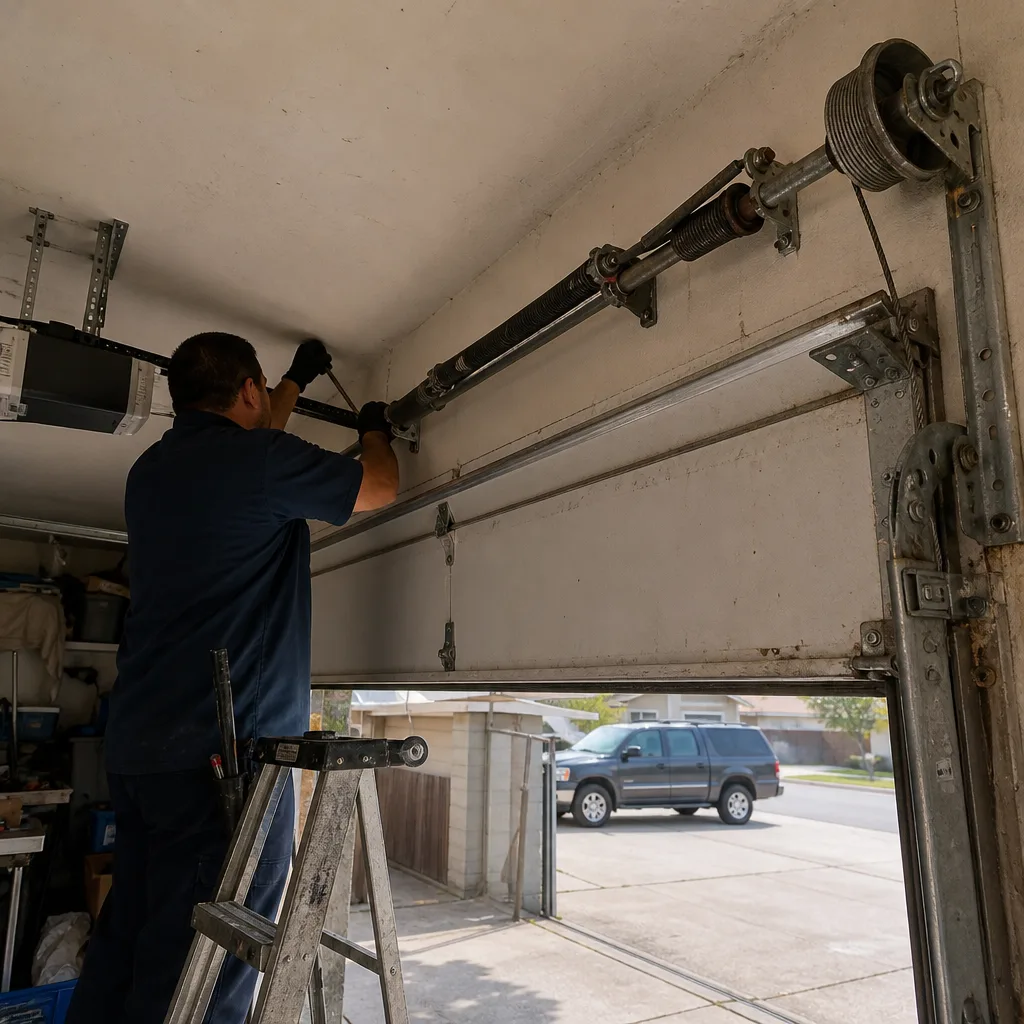 Before
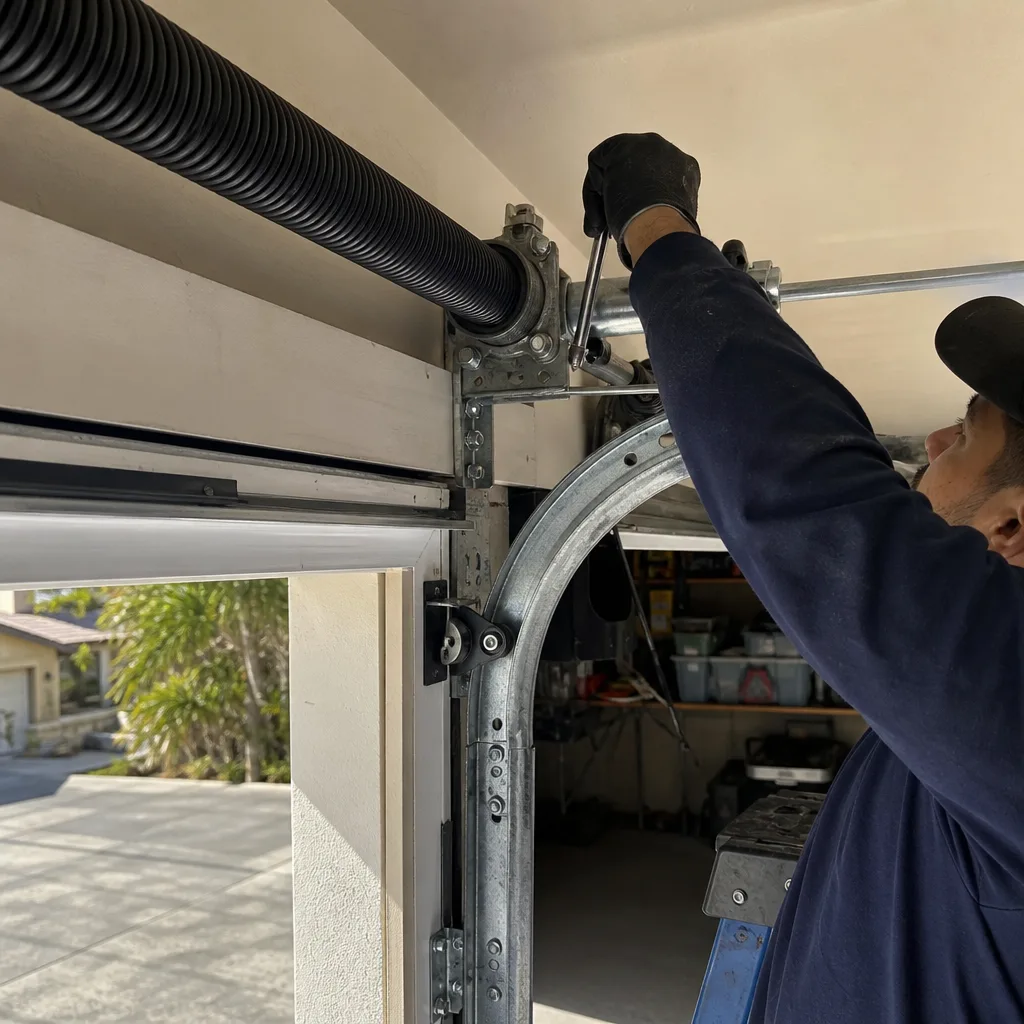 After
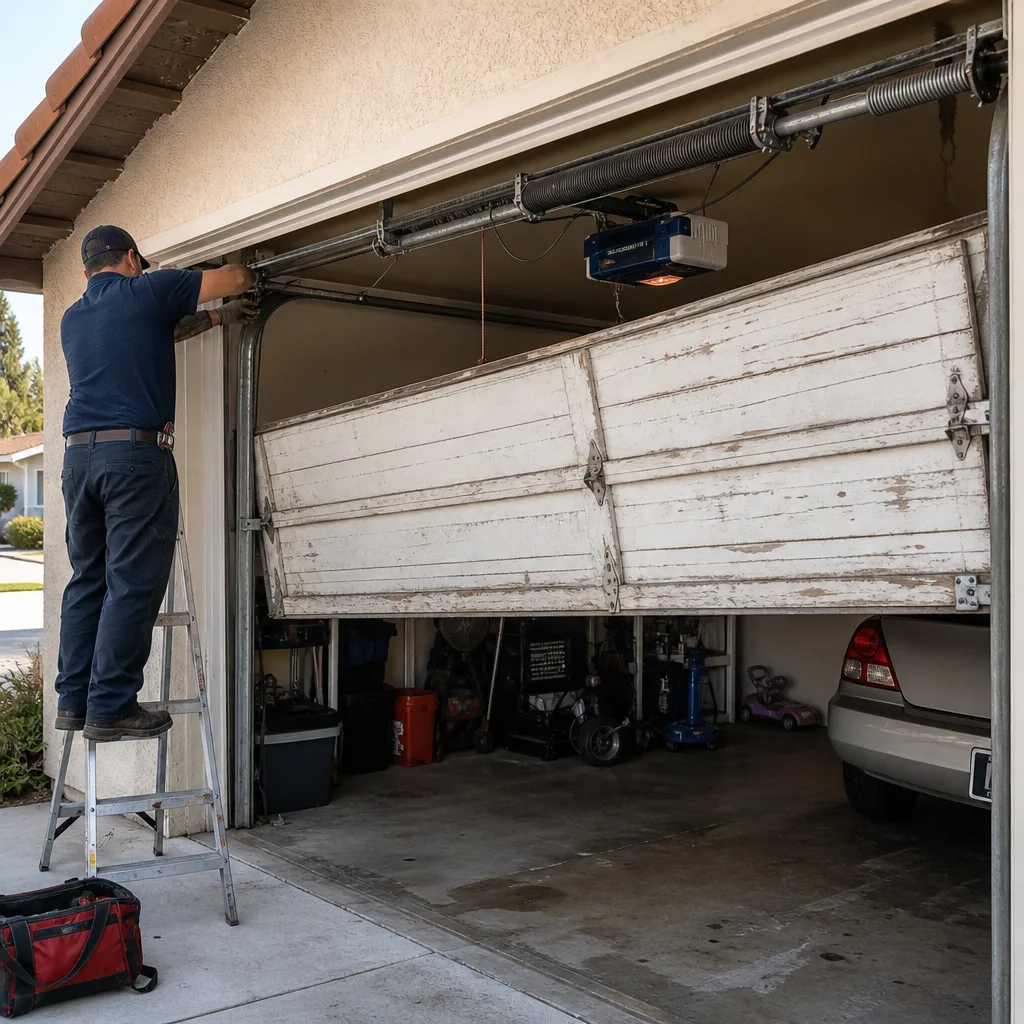 Before
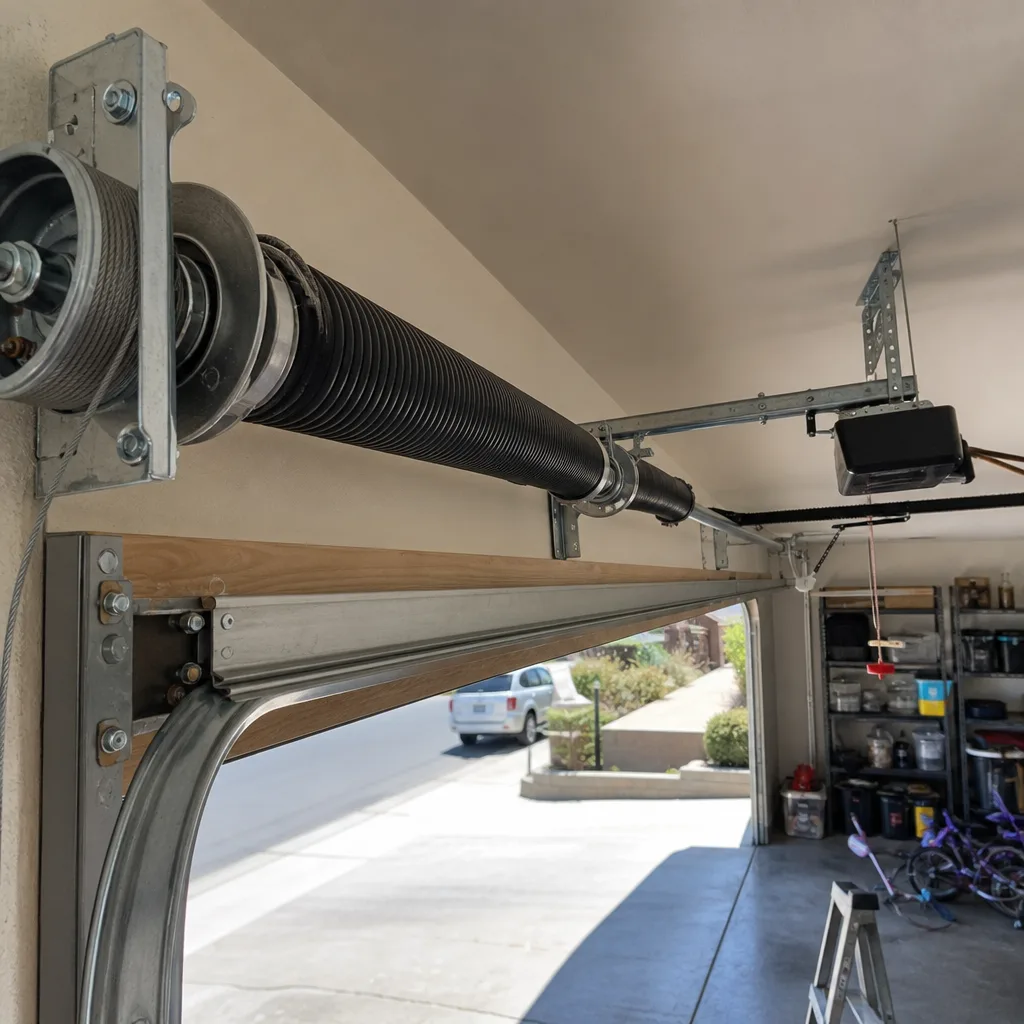 After
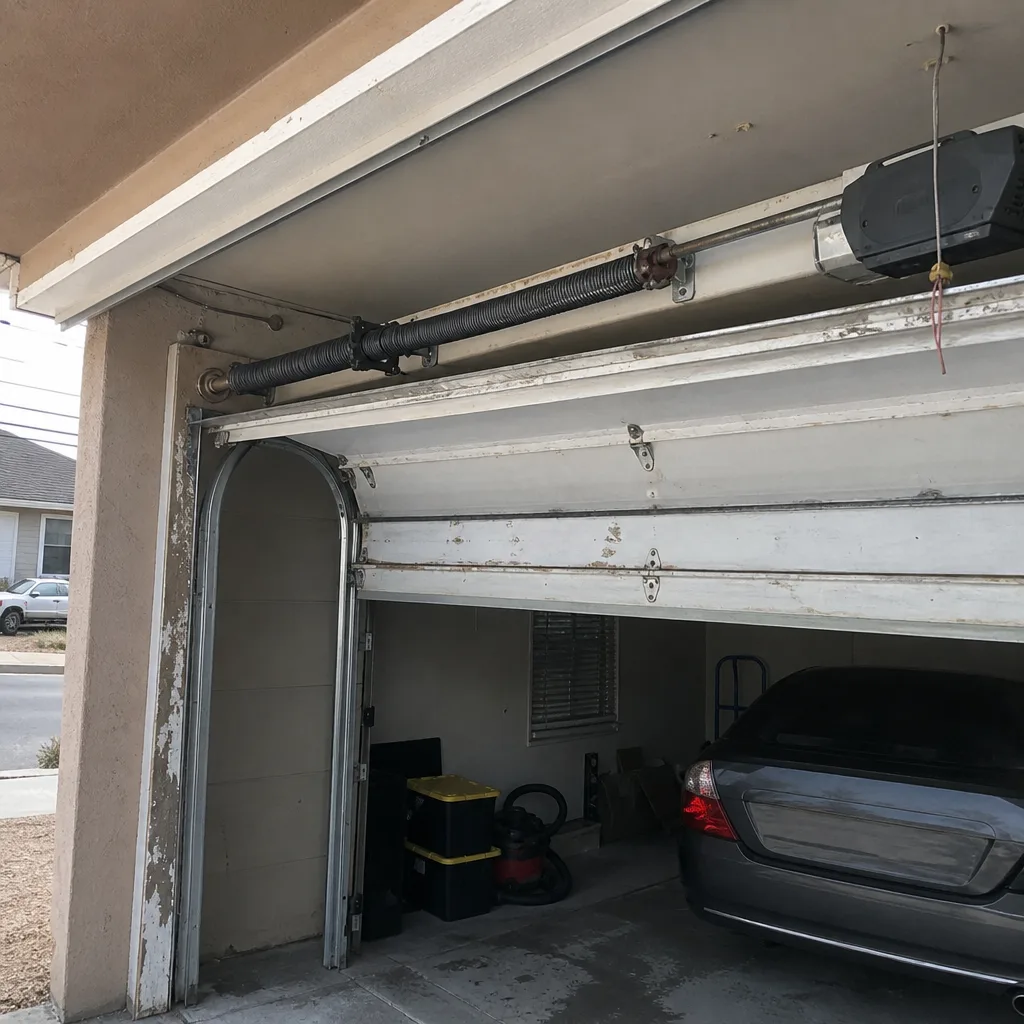 Before
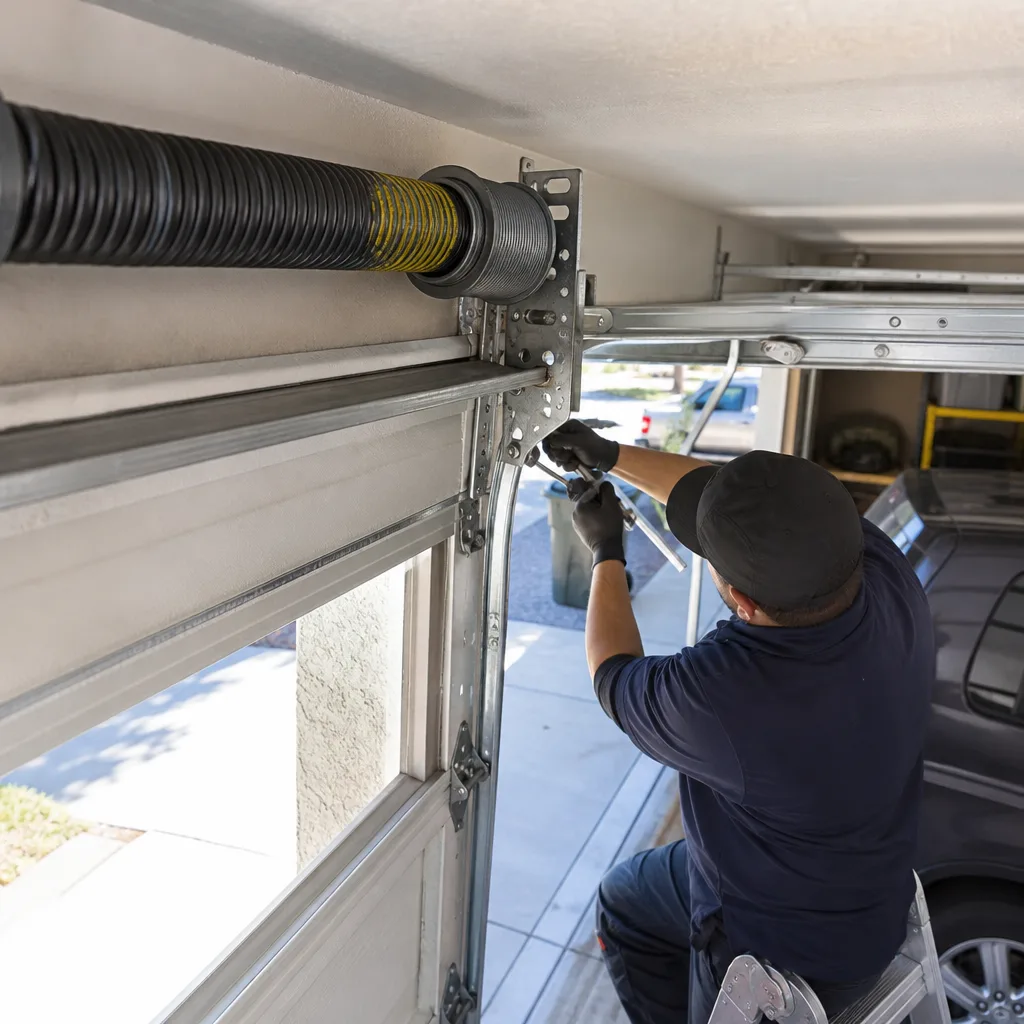 After